
Last updated September 20, 2026
Free on-site gate assessment - hinges, posts, and your LiftMaster or Nice gate operator checked before anything is quoted
The assessment is free and the quote is the invoice.
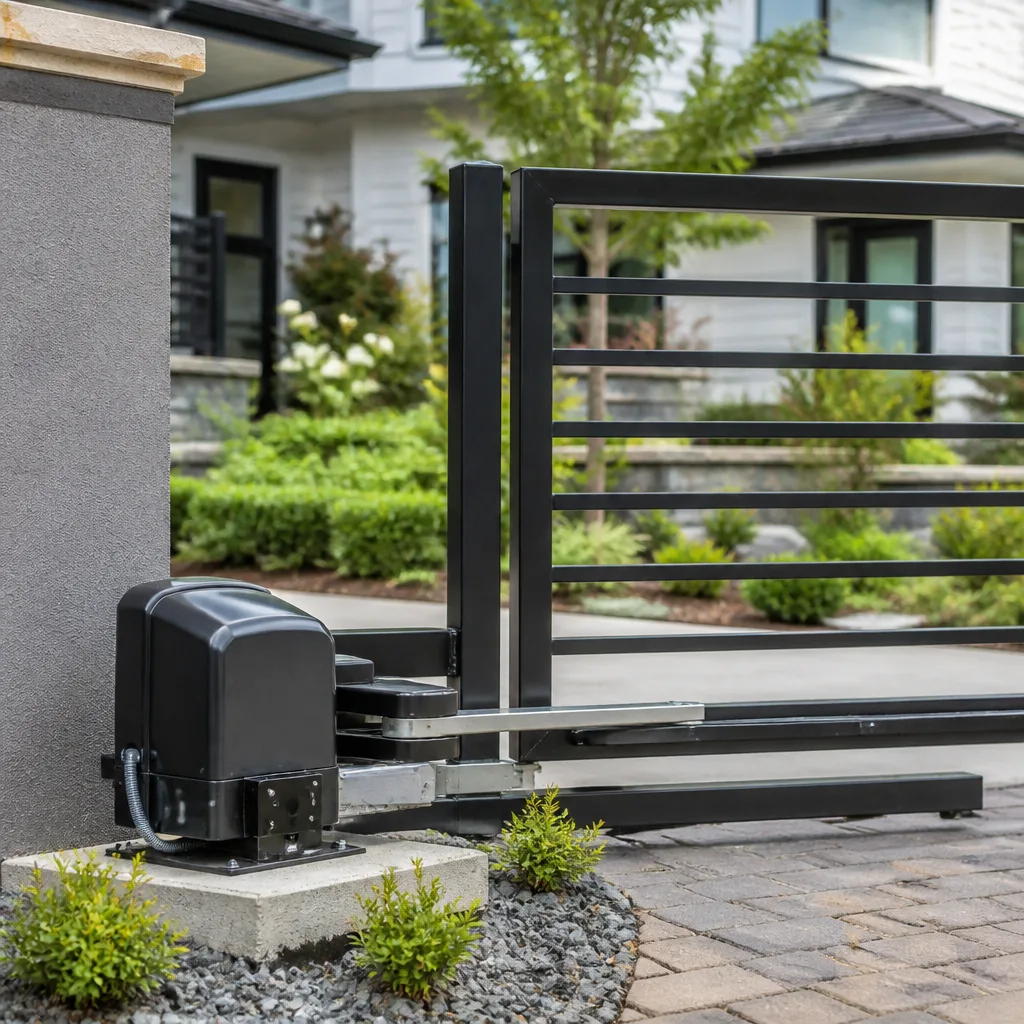
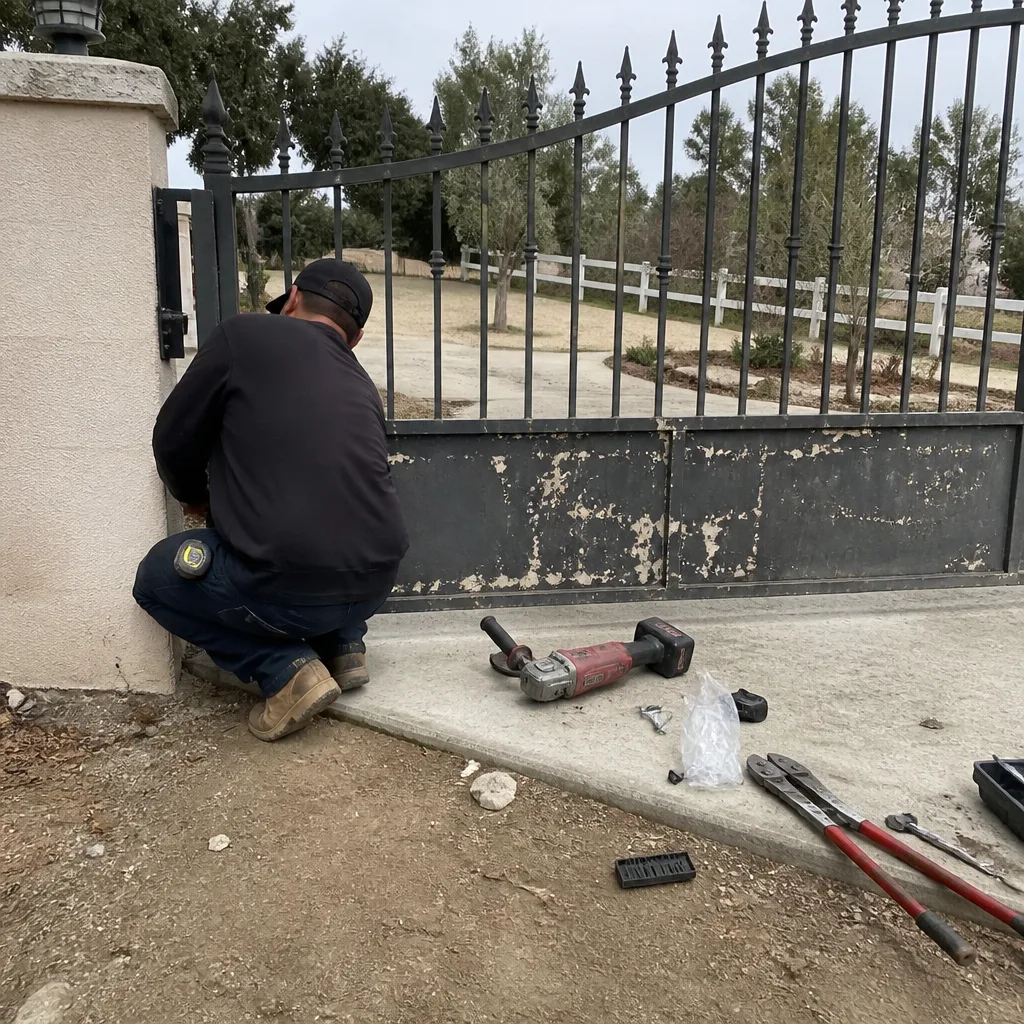 Before
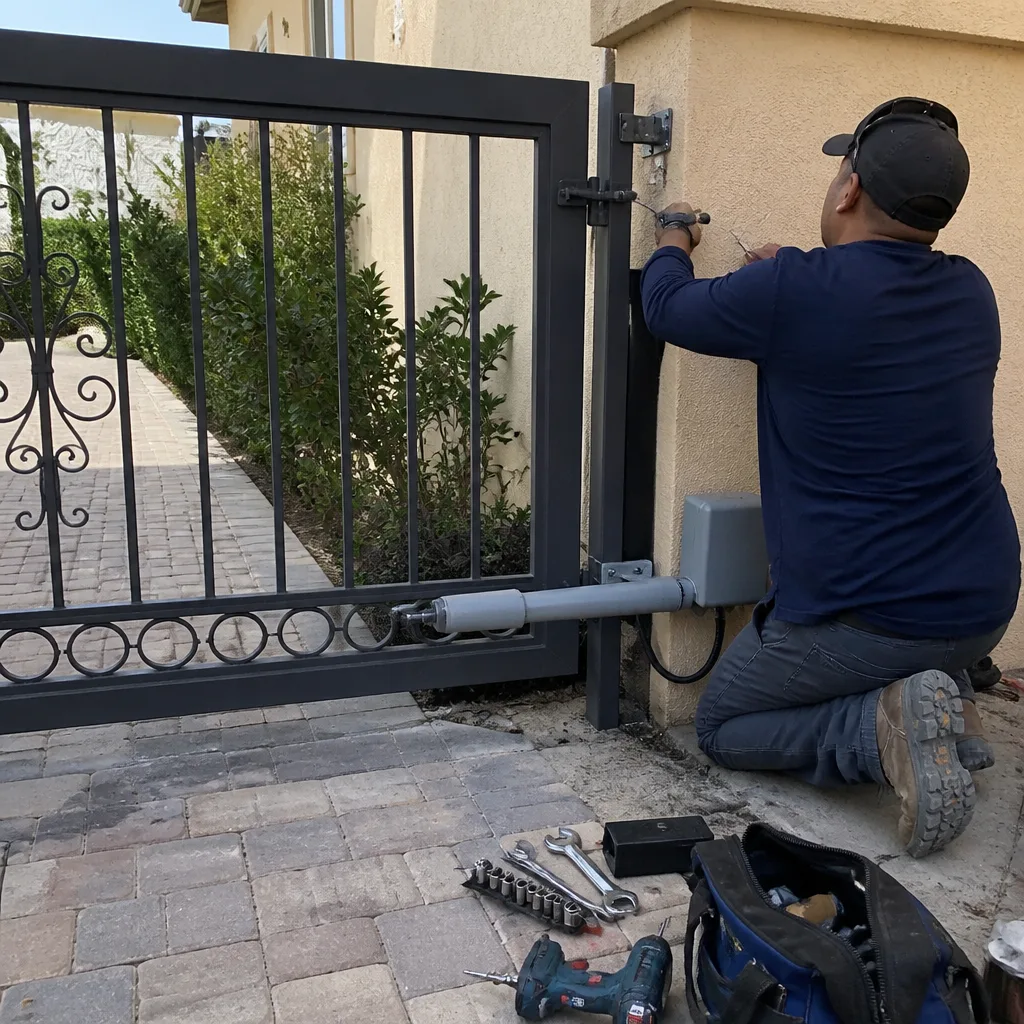 After
After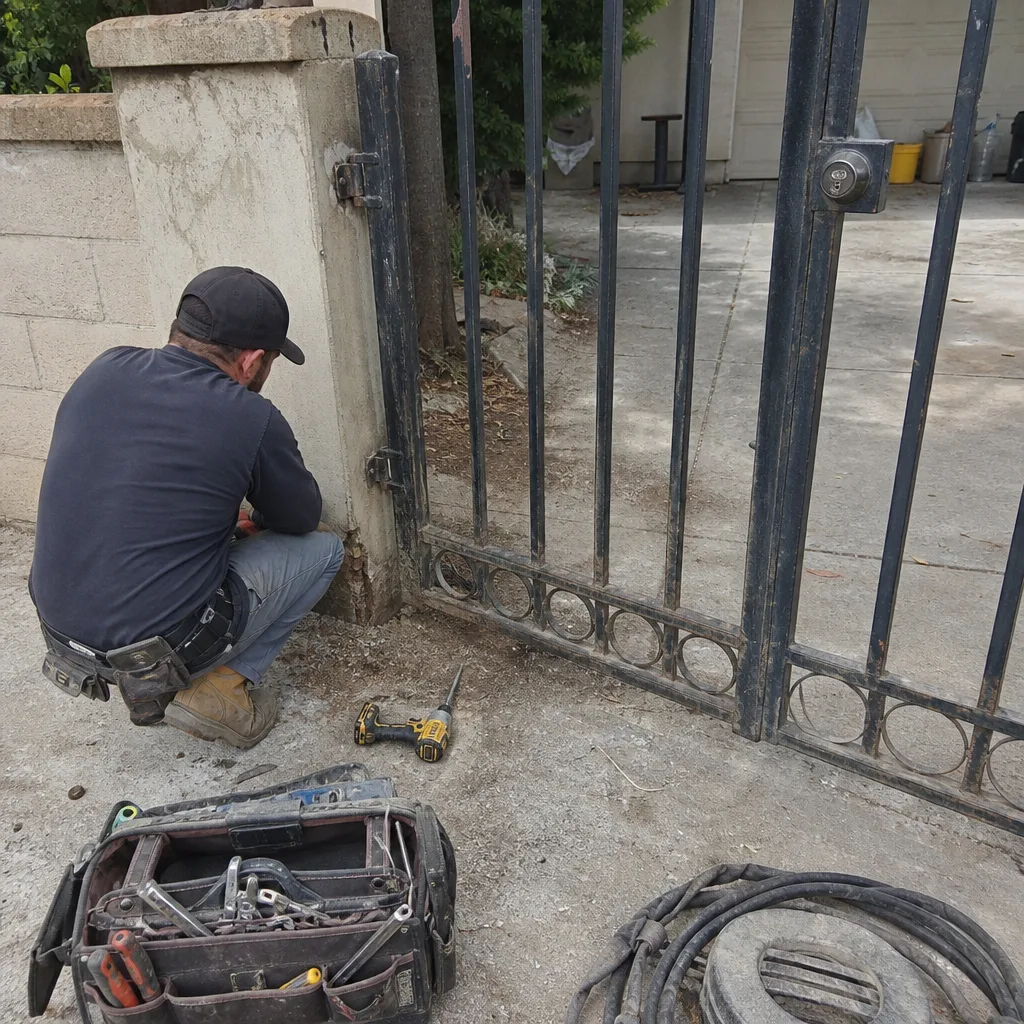 Before
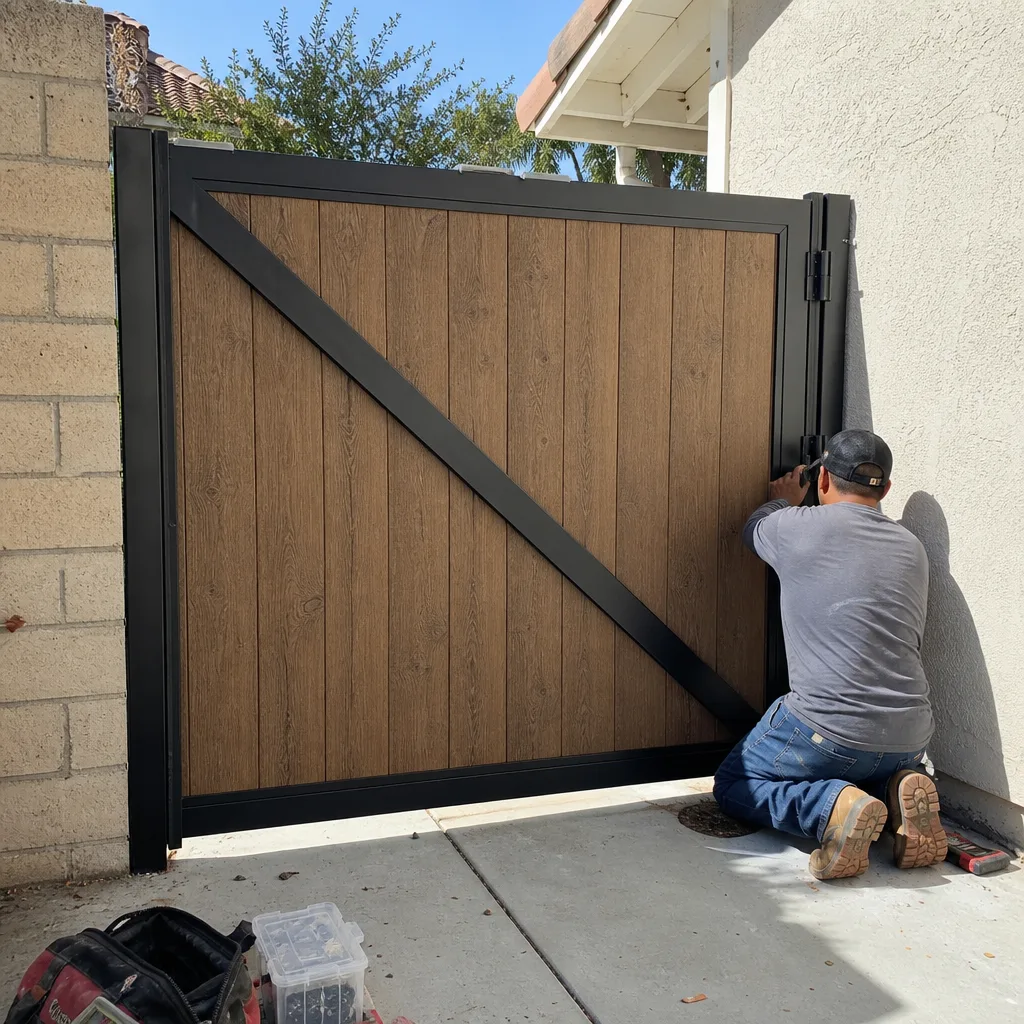 After
After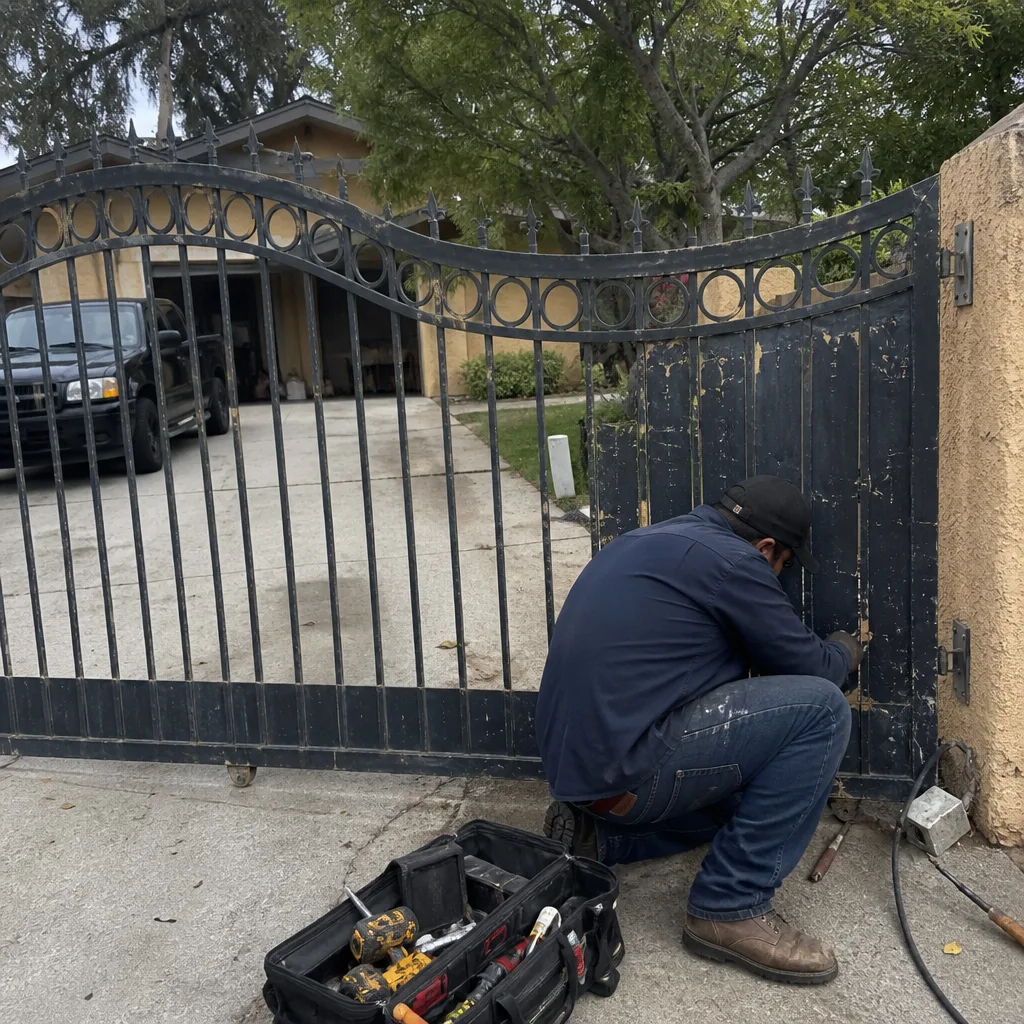 Before
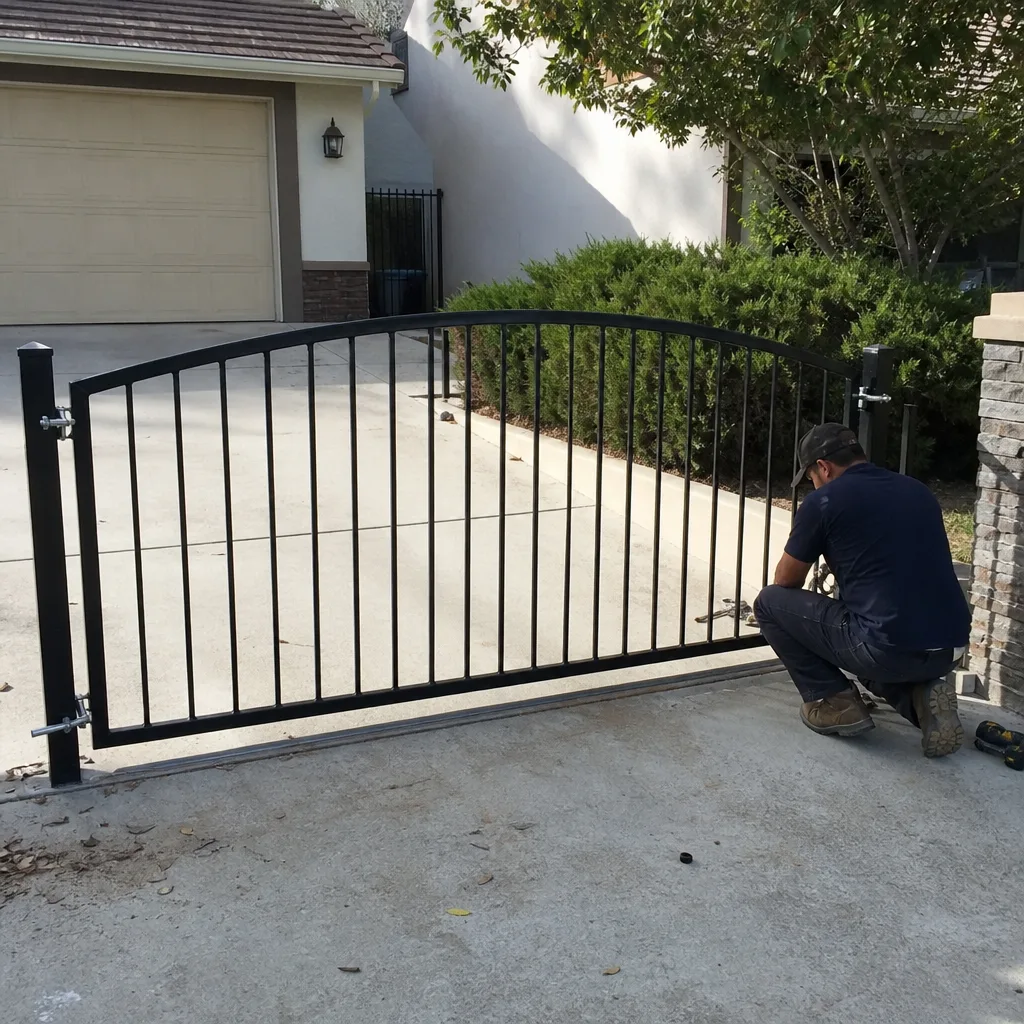 After
AfterGate Repair Permits, Codes & Inspections in CA: What You Need to Know
Most gate contractors in California answer the permit question with some version of “we handle all that.” It sounds reassuring. It’s also where a lot of homeowners in Santa Clarita get into trouble. Here’s the number that should make you ask more questions: when an automated gate injures someone in California, the plaintiff’s attorney will request the permit history, the inspection record, and the UL 325 compliance documentation before anything else. If those papers don’t exist, your homeowner’s insurance carrier has grounds to deny the claim. This guide walks through exactly which gate repair and installation scenarios trigger a permit in Los Angeles County, which don’t, what a UL 325 violation actually looks like, and what an inspector will check when they show up at your property. For related reading, see our Gate Repair Warning Signs: A Santa Clarita Homeowner’s Reference Guide.
Quick Answer
In Los Angeles County, true gate repair and maintenance work, like replacing a limit switch, a photo-eye, a hinge, or a worn wheel, generally requires no permit. Replacing a gate motor with the same brand and model typically falls under repair, but installing a different motor, replacing fence posts, pouring new concrete footings, or installing a new automated gate system shifts the job into alteration or new construction, which does require a permit and inspection. Automated gate operators in California must also meet UL 325 safety standards, which mandate photo-eye sensors, contact edges, and proper force settings regardless of whether a permit was pulled.
Table of Contents
- The Permit Threshold: Maintenance vs. Alteration in LA County
- UL 325 Compliance: What It Is and Why Your Insurance Depends on It
- HOA vs. City Permit Jurisdiction in Santa Clarita Communities
- What an LA County Gate Permit Inspection Actually Checks
- Contractor Licensing Requirements for Automated Gate Work
- Specific Repair Scenarios: Permit or No Permit?
- Documentation That Protects You as a Homeowner
- Common Mistakes to Avoid
- When to Call a Professional
- Frequently Asked Questions
- The Bottom Line
BeforeAfterThe Permit Threshold: Maintenance vs. Alteration in LA County
The line between repair and alteration is not a gray area. Los Angeles County building code draws it in concrete, literally and figuratively. Maintenance means restoring an existing component to its original condition without changing its size, position, or function. Alteration means changing the component’s dimensions, capacity, location, or the system’s overall configuration. A new installation is self-explanatory: it did not exist before, and now it does.
Here is what that looks like in practice for gates:
- Motor swap, same brand and model: No permit. You’re replacing a failed FAAC 391 with another FAAC 391. The mounting points, electrical load, and safety system configuration remain identical. This is repair.
- Motor upgrade or brand change: Permit generally required. Swapping a FAAC for a BFT means new mounting, different electrical characteristics, and often a different safety sensor configuration. The county views this as an alteration.
- Post repair: No permit. A cracked weld or a loose anchor bolt that gets repaired in place is maintenance.
- Post replacement: Permit required. Digging out an old post, pouring a new footing, and setting a new post changes the structural component. Inspectors want to see the rebar and the concrete depth.
- Replacing a gate leaf: No permit if the new leaf matches the original dimensions and weight. If the new leaf is heavier, wider, or made of a different material, the county may classify it as an alteration because it changes the load on the operator and hinges.
- New gate, new operator, new posts, new footings: Permit required. This is new construction, full stop.
In Santa Clarita, the city follows LA County building code with some local amendments, and the city’s building division is the enforcement body for most residential gate work. The practical takeaway for a homeowner: if the job involves a shovel, a concrete truck, or a change in the motor’s electrical draw, assume you need a permit until someone shows you the code section that says you don’t. We have seen homeowners in Valencia pay twice for the same gate post because a handyman set it without a permit, the city flagged it during a subsequent fence inspection, and the whole job had to be redone. The concrete had to come back out.
Gate repair in Santa Clarita work that stays within the original component footprint rarely triggers paperwork. The problems start when a “repair” quietly becomes an upgrade mid-job. The contractor says, “While we’re in there, we might as well go with a bigger motor.” That’s the moment the job changed classification, and if you didn’t know that, you’re the one holding the liability.
UL 325 Compliance: What It Is and Why Your Insurance Depends on It
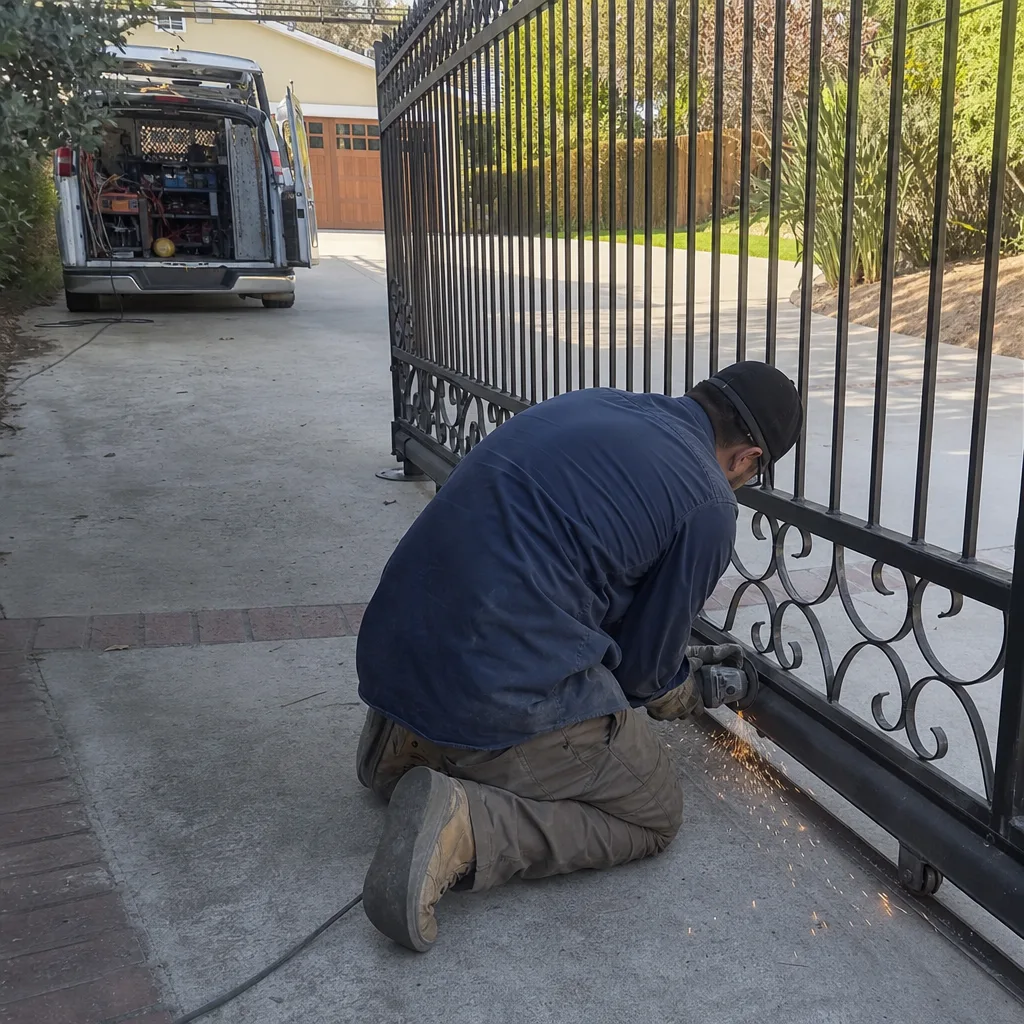
UL 325 is the national safety standard governing automated gate operators, draft stops, and similar entrapment-protection devices. It has been law in California since 2001 and applies to every automated gate installed or modified after that date. The standard exists because automatic gates have killed people, and the failures are predictable when the safety systems are bypassed, misaligned, or never installed.
What UL 325 requires for a residential vehicular swing or slide gate:
- Primary entrapment protection: A monitored photo-eye sensor (the infrared beam that stops and reverses the gate if anything crosses its path) and/or an inherent entrapment sensor built into the motor that detects resistance and reverses.
- Secondary entrapment protection: Contact edges or pressure-sensitive strips on the gate’s leading edge, trailing edge, and any pinch points where the gate meets the post or fence.
- Force limit settings: The motor must reverse or stop when it encounters a specific force threshold. The exact value is set during installation and documented.
- Warning signage: Two warning signs are required on every automated gate: one on the outside, one on the inside, with specific wording and placement.
- Manual disconnect: Every automated gate must have a way to disconnect the motor and operate the gate by hand in a power outage or emergency.
A non-compliant install looks like this: a photo-eye mounted to the same post as the operator so it vibrates out of alignment, a motor with the force dial cranked to maximum because the gate was installed on a slope without a proper track, a missing contact edge because “the beam is enough,” or a gate that was built for a manual latch and never retrofitted with an operator plate. We’ve been called to properties where the gate worked fine for years and the only reason the homeowner discovered the UL 325 violation was an insurance adjuster asking for the installation paperwork after a neighbor’s dog got hit.
The liability exposure is not theoretical. If a non-compliant gate injures someone, the homeowner is the defendant. The insurance carrier will look for any basis to deny coverage, and an uninspected, undocumented gate modification is a gift to their claims department. UL 325 compliance is not a recommendation. It is a legal requirement that transfers directly into personal financial exposure when it’s ignored.
Here is the practical problem we see in Santa Clarita homes built between 1990 and 2010: the original gate operator was compliant when installed, but the photo-eyes were trimmed out of the system during a landscaping project, or the contact edge dry-rotted and was removed, or a previous contractor bypassed a sensor because it kept false-triggering when a sprinkler head sprayed it. None of that work required a permit, so none of it was inspected. The gate still opens and closes. It just doesn’t stop when it should.
HOA vs. City Permit Jurisdiction in Santa Clarita Communities
Santa Clarita is not one jurisdiction. The city governs most of the residential land within its limits, but many of the master-planned communities carry a second layer of approval that has nothing to do with LA County code. Homeowners Associations in Stevenson Ranch, Westridge, Bridgeport, and parts of Valencia and Saugus maintain CC&Rs that impose their own gate standards on top of municipal code.
What this means: a city permit may not be required for a particular gate repair, but the HOA’s architectural review committee may still need to approve the work. And vice versa. A homeowner can get HOA approval for a new wrought-iron driveway gate, and the city will still deny the permit application if the setback, height, or operation conflicts with zoning rules.
The two layers operate on different timelines and different logic:
- City of Santa Clarita Building & Safety: Concerned with structural safety, electrical code, UL 325 compliance for operators, and zoning. Issues the actual permit. Inspects the work. This is law.
- HOA architectural committee: Concerned with aesthetics, material consistency, gate height, color, and whether the design matches the community’s established character. Issues written approval (or denial). This is contract law, not building code.
- Timeline reality: The city typically processes simple gate permits in a few days to two weeks. An HOA review can take 30 to 60 days, depending on the community’s meeting schedule. We tell Stevenson Ranch clients to start the HOA paperwork first because the city will wait; the HOA will not be rushed.
- Enforcement reality: The city enforces with inspectors and citations. The HOA enforces with fines, liens, and letters from attorneys. Both are unpleasant. Neither is optional if you want to live in the community you bought into.
The practical order of operations is: check the CC&Rs first, get the architectural review moving, submit the city application in parallel, and do not schedule installation until both are in writing. We have seen a Westridge homeowner install a new automated gate after only getting city approval, and the HOA made them repaint it, modify the picket spacing, and replace the operator cover to match the approved spec. That was a $4,700 lesson in reading the CC&Rs.
What an LA County Gate Permit Inspection Actually Checks
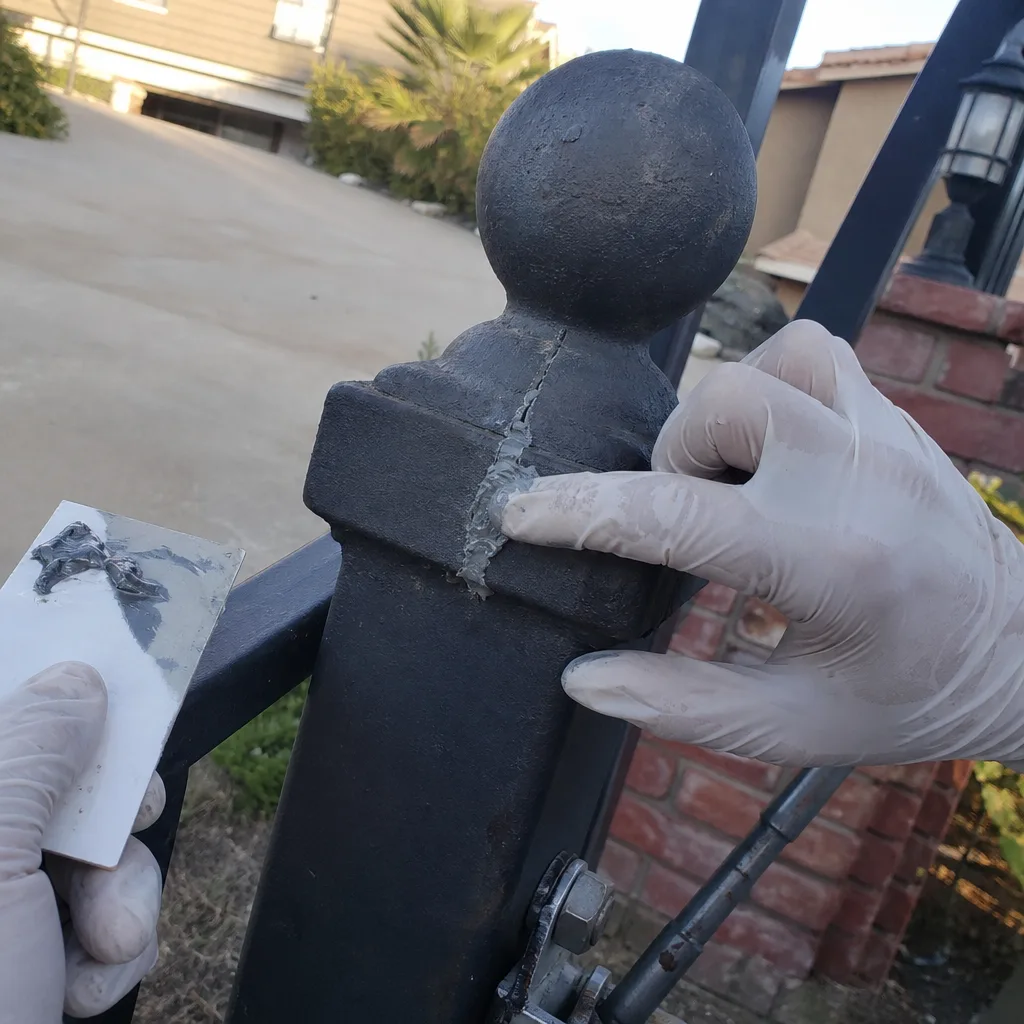
When you pull a permit for gate work in Los Angeles County, the inspection is not a rubber stamp. The inspector arrives with a checklist, and they know exactly what they’re looking at. Here is what they check, in the order they check it:
- Footing depth and concrete documentation: For any new post or column, the inspector verifies footing depth (typically 30 to 42 inches depending on the gate weight and soil conditions in the Santa Clarita area), rebar placement, and that the concrete was poured in one lift. If the post was set without an inspection, you may need to expose the footing or start over.
- Gate dimensions and weight versus operator rating: The operator must be rated for the gate’s actual weight and duty cycle. A motor rated for a 300-pound gate on a 600-pound solid steel gate fails inspection. No exceptions.
- UL 325 entrapment protection devices: The inspector tests each photo-eye by blocking the beam while the gate is closing. They test the contact edges. They verify the force settings with a test gauge, not by feel. If anything is bypassed or misaligned, you fail.
- Electrical connections and conduit: All wiring must run through rated conduit at the appropriate depth, connections must be in weatherproof junction boxes, and the operator must be on a GFCI-protected circuit. Exposed Romex is a common fail point.
- Warning signage: Two UL 325-compliant warning signs, one on each side of the gate, mounted at the specified height. A surprising number of inspections fail on signage alone.
- Manual disconnect access: The inspector verifies the gate can be disconnected from the motor and moved by hand without tools or with the provided key.
- Final operation test: The gate runs through several full cycles while the inspector watches for binding, excessive vibration, uneven travel, and sensor reliability.
The documentation you should have ready before the inspector arrives: the operator’s installation manual with the UL 325 compliance section flagged, the written force-setting record showing the measured values at installation, photos of the footings before concrete, and the electrical permit if a new circuit was pulled. An inspector who sees a prepared homeowner with a documented installation moves faster than one who has to ask questions and wait for answers.
In Santa Clarita, inspections are scheduled through the city’s online portal, and most gate inspections are same-day or next-day from the scheduling date. The inspector will not call ahead. They will not knock twice. If you miss the window, you reschedule, and the project sits.
Contractor Licensing Requirements for Automated Gate Work
California is unusually specific about who can legally perform automated gate work. This matters more than most homeowners realize because a claim against an unlicensed operator often ends with the homeowner holding the full financial loss. See our How to Hire a Gate Repair Contractor in Santa Clarita: A Step-by-Step Guide for details on verifying credentials.
Automated gate installation and repair falls under two state contractor license classifications:
- B - General Building Contractor: A B license allows the holder to take a project involving two or more unrelated trades. Most full-service gate companies carry a B license because a gate job often involves concrete, low-voltage electrical, welding, and metal fabrication.
- C-61 / D-28 - Door, Gate, and Activating Devices: This specialty classification covers gates, door operators, and similar installations. A contractor holding only this license may work on gates and operators but may need to subcontract any significant concrete or structural work.
The critical distinction: a handyman with no license, or a “gate guy” working under someone else’s number without being listed as a responsible managing employee, is operating illegally. If that person installs a gate that later injures someone, the homeowner’s insurance carrier will likely deny the claim and point to the fact that the work was performed by an unlicensed contractor in violation of California law. The homeowner can also be liable for the contractor’s workers’ compensation costs if an injury occurs on the property.
We have been called to repair gates installed by unlicensed operators in Canyon Country and Saugus. The work looked acceptable on the day it was completed. Six months later, the welds showed cracks, the operator arm was binding, and the photo-eyes were wired in series so the gate would close whenever one beam was broken. The homeowner had no contract, no license number, and no recourse. The Vance Gate Repair Santa Clarita home service area sees this pattern regularly enough that we can predict it: the cheapest quote on an automated gate job is often the most expensive gate in the long run.
Always verify the license number on the California State License Board website before hiring. Check that the classification covers gate work. Check that the name on the license matches the name on the contract. It takes five minutes and it’s the single best fraud prevention available to a homeowner.
Specific Repair Scenarios: Permit or No Permit?
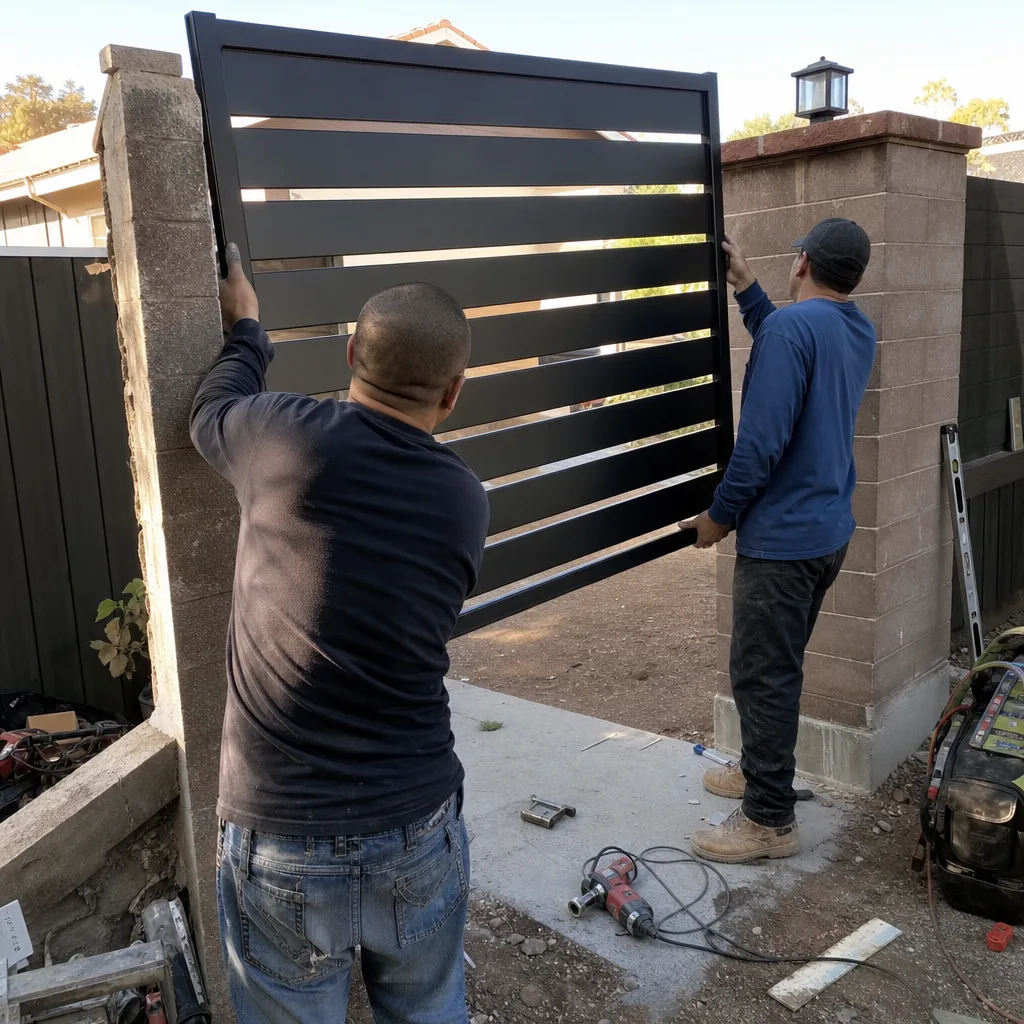
Here is a scenario table based on what we actually see on service calls in Santa Clarita. These are the real-world cases, not the textbook definitions.
- Replacing a broken hinge on a manual driveway gate: No permit. If the hinge is welded or bolted to the existing post and the gate’s weight doesn’t change, this is maintenance.
- Replacing a gate motor with the same make and model: No permit. A LiftMaster LA400 swapped for another LiftMaster LA400 is repair. A LiftMaster swapped for a Viking or a BFT is an alteration, which generally triggers a permit.
- Adding an automated operator to a previously manual gate: Permit required. This is an alteration of the gate’s function, and UL 325 safety systems must be added and inspected.
- Repairing a cracked weld on a gate frame: No permit. The gate is being restored to its original condition. The weld should be performed by a structural welder, but the city does not inspect the repair.
- Replacing a damaged post that holds a gate operator: Permit required. The post is structural, and the operator’s performance depends on the post’s stability. The city wants to see the footing.
- Converting a slide gate track from below-ground to cantilever: Permit required. This changes the gate’s structural support system and often the grade of the driveway.
- Replacing a photo-eye sensor or contact edge strip: No permit. This is component-level repair and, frankly, should be done more often than it is.
- Installing a new pedestrian gate next to a vehicle gate: Permit required if the pedestrian gate has an automatic operator or if new posts and footings are being set. A simple manual pedestrian gate added to an existing fence line may not require one, but the HOA may still want to see it.
The pattern is consistent: if the work changes what the gate is, how it’s mounted, or what it weighs, the permit question is real. If the work replaces a failed component with the same component, you’re in repair territory. Santa Clarita’s building division is reasonable about this, and a direct phone call to clarify a borderline case takes less time than undoing a non-permitted installation.
Documentation That Protects You as a Homeowner
This is where most gate projects go wrong, and it’s the single easiest thing for a homeowner to fix. The difference between a gate project that holds up in an insurance claim and one that doesn’t comes down to the paper trail. Not the gate. The paper trail.
Here is what you should receive and keep from any gate contractor, and what we document on every job we touch:
- A written scope of work with the price on it: Before any tool is picked up. If a contractor won’t put the price in writing and hand it to you, walk away. The Haven Standard exists because verbal estimates vanish the moment a dispute starts.
- A written record of what was found during the job: The specific failure, the specific measurements, the component that failed and why. “Your gate stopped working” is not documentation. “The limit switch was set 12 degrees past travel; we reset it to spec and photographed the new position” is documentation.
- A photo log of every adjustment and replacement: Before, during, and after. If a future technician needs to see what the wiring looked like in the junction box before the new operator went in, the photos should show it. This is what gate installation in Santa Clarita documentation looks like when it’s done properly, and it’s what protects you in a claim.
- The UL 325 compliance record: Force readings, sensor test results, and the specific safety devices installed. If an incident ever occurs, this is the document an attorney will subpoena.
- Part numbers for every replaced component: Not “a new circuit board.” The actual part number. If you ever need warranty service or a replacement, the part number is the difference between a two-minute phone call and a diagnostic visit.
- Permit records and inspection approvals: Keep the permit number, the inspection date, and the final sign-off. File them with your homeowner’s insurance policy documents.
Most gate companies in this market hand you an invoice and leave. An invoice is not documentation. It proves you paid someone. It does not prove the work was done to code, that the safety systems were tested, or that the operator was installed to manufacturer specification. If you’re in a Santa Clarita community with a strict HOA, the photo record alone can save you from a costly redo when the architectural committee asks what was actually installed.
Common Mistakes to Avoid
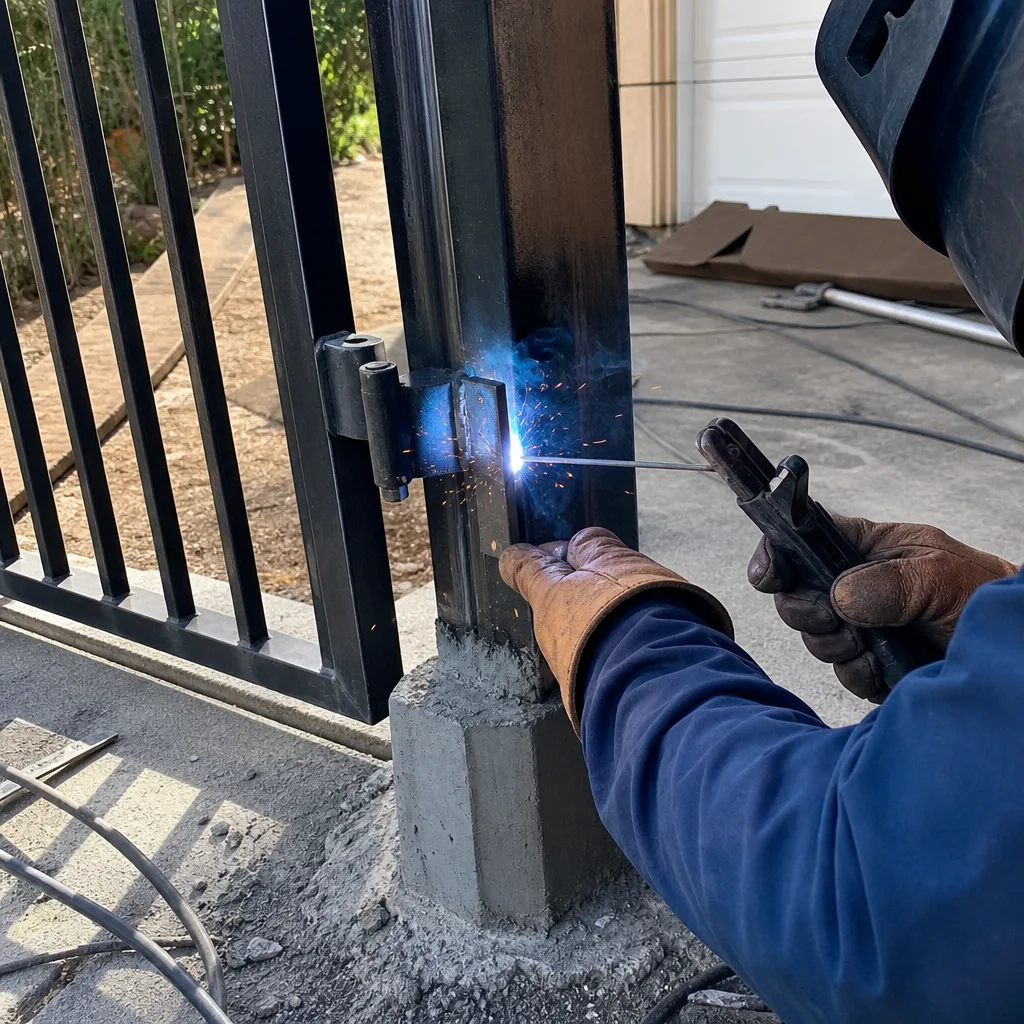
- Believing “we handle all that” without seeing a permit number. A contractor who says they’ll pull the permit and then doesn’t has left you with an unpermitted installation and zero recourse. Ask for the permit number after the application is submitted. If they can’t produce one, the work hasn’t started legally.
- Swapping a motor without checking UL 325 compliance. A new operator on an old gate with no photo-eyes and no contact edges is a lawsuit waiting for a child on a bicycle. The motor being new doesn’t matter. The safety system being absent does.
- Skipping the HOA review in a Santa Clarita master-planned community. Stevenson Ranch, Westridge, and Bridgeport all enforce CC&R gate standards. City approval does not override architectural committee approval. Get both, in writing, before the concrete goes in.
- Letting an unlicensed handyman touch an automated gate. In California, unlicensed gate work over $500 in labor and materials is a violation of contractor law. If an injury occurs, your insurance will use the unlicensed work as grounds for denial.
- Replacing a post without a permit because “it’s just one post.” A gate post is structural. An inspector who discovers a non-permitted post during a later inspection can require removal. This happens in Santa Clarita more often than homeowners think, particularly when a fence permit is pulled later and the city sees the new gate.
- Accepting a verbal quote and a handshake. The price agreed on the phone is not the price on the invoice. Written quotes protect both parties. If a contractor won’t write it down, they’re not planning to honor it.
- Bypassing a nuisance-tripping photo-eye instead of fixing it. A sensor that false-triggers because a hedge branch waves across the beam is annoying. Bypassing it is a UL 325 violation. Trim the hedge, adjust the beam, re-aim the sensor. Do not disconnect the safety device.
When to Call a Professional
Any gate work involving a permit, an inspection, an automated operator, or a structural component should be handled by a licensed contractor who has done this exact work before. The specific scenarios where you should not attempt a DIY fix or hire a handyman: any motor replacement on an automated gate motor or opener in Santa Clarita, any repair that involves the gate’s electrical feed or safety sensors, any post excavation or concrete work, and any situation where the gate has injured someone or failed to reverse. These are not learning opportunities. They are liability exposures.
Vance Gate Repair Santa Clarita offers free estimates in Santa Clarita. Call (747) 294-2900 and you’ll get a live person, a written price before any work starts, and a documented photo record of everything we found and everything we did. That’s the standard we’ve held on every job since 2014, and it’s the standard that protects you when the paperwork matters.
Frequently Asked Questions
Most repairs don’t require a permit in Los Angeles County. Replacing a failed component with the same brand and model, fixing a hinge, resetting a limit switch, or replacing a photo-eye sensor is generally considered maintenance. A permit typically becomes necessary when the gate’s structure, motor, or electrical draw changes, like upgrading a motor to a different brand or replacing a structural gate post. When in doubt, call the Santa Clarita building division and describe the exact work. For a precise answer on a specific gate, call (747) 294-2900 and we’ll tell you what we’ve seen on similar jobs, or explore our Gate Repair services.
UL 325 is the national safety standard for automated gate operators, requiring entrapment protection like photo-eye sensors, contact edges, proper force settings, warning signs, and a manual disconnect. Every automated gate in California must comply, whether it was installed by a contractor or a homeowner. A non-compliant gate creates personal liability exposure because an injury claim can trigger an insurance investigation into whether the gate met legal safety standards at the time of the incident.
It depends on the community and the scope of work. In Santa Clarita neighborhoods like Stevenson Ranch, Westridge, and Bridgeport, the CC&Rs often require architectural committee approval for gate changes even when the city does not require a permit. The HOA process typically takes longer than the city permit process, so start the HOA paperwork first and run the city application in parallel. Both approvals should be in writing before installation begins.
An unpermitted gate installation can be cited by the city building division, and the correction may require exposing footings, upgrading safety devices, and scheduling inspections. It can also complicate a home sale, because the unpermitted work becomes a disclosure item. The insurance implications are more serious: if the gate injures someone, the lack of a permit and inspection record can give a claims adjuster grounds to deny coverage. The safest path is to have the installation brought into compliance now, before it becomes an issue.
No. In California, automated gate work requires a contractor license, either a B General Building contractor or a C-61/D-28 Door, Gate, and Activating Devices specialty license. A handyman working without the proper classification is performing illegal contracting, and the homeowner can be held liable for injuries that occur on the job site. The homeowner’s insurance may also refuse to cover damage caused by the unlicensed work.
Santa Clarita gate and fence permit fees generally run in the $150 to $500 range depending on the project’s valuation, but the exact fee is calculated based on your specific job. The cost of skipping the permit is almost always higher than the fee itself, especially if the city requires the work to be redone or an insurance claim gets complicated by the missing paperwork. For a full permit and installation estimate on your specific gate project, call (747) 294-2900 and we’ll walk you through it in writing.
The Bottom Line
California permits for gate work are narrower in scope than most homeowners fear. A motor swap with the same brand and model, a hinge replacement, a sensor reset: no permit needed. A post replacement, a motor upgrade to a different brand, a new automated system: permit and inspection required. But the part that actually protects you has less to do with city permits and more to do with documentation. A written scope, a written price, a UL 325 compliance record, and a photo log of the work performed are the evidence that protects you when something goes wrong decades after the gate was installed. Most gate companies don’t provide that evidence. The ones that do are the only ones worth hiring. For more guides & resources on protecting your property, visit our blog.
Written by Adrian Vance, Owner at Vance Gate Repair Santa Clarita, serving Santa Clarita since 2014.