
Last updated September 20, 2026
Free on-site gate assessment - hinges, posts, and your LiftMaster or Nice gate operator checked before anything is quoted
The assessment is free and the quote is the invoice.

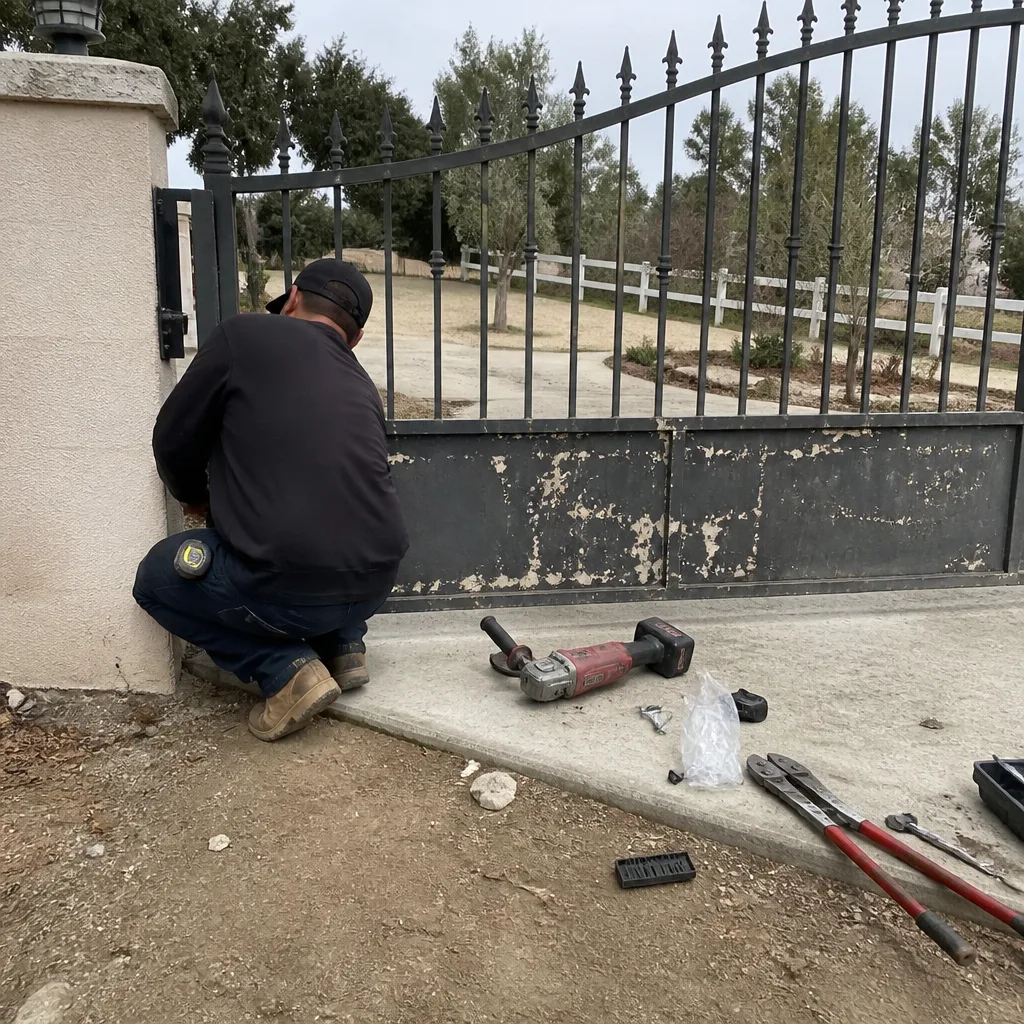 Before
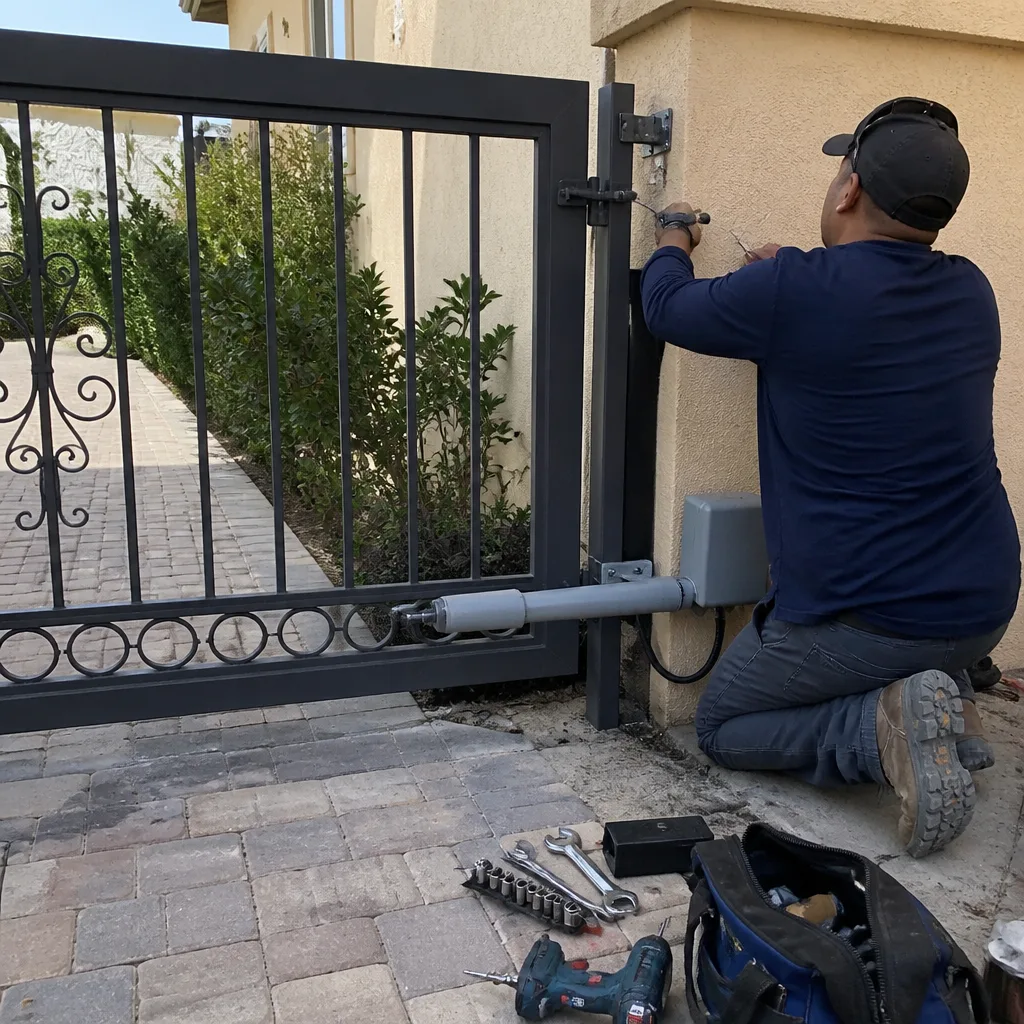 After
After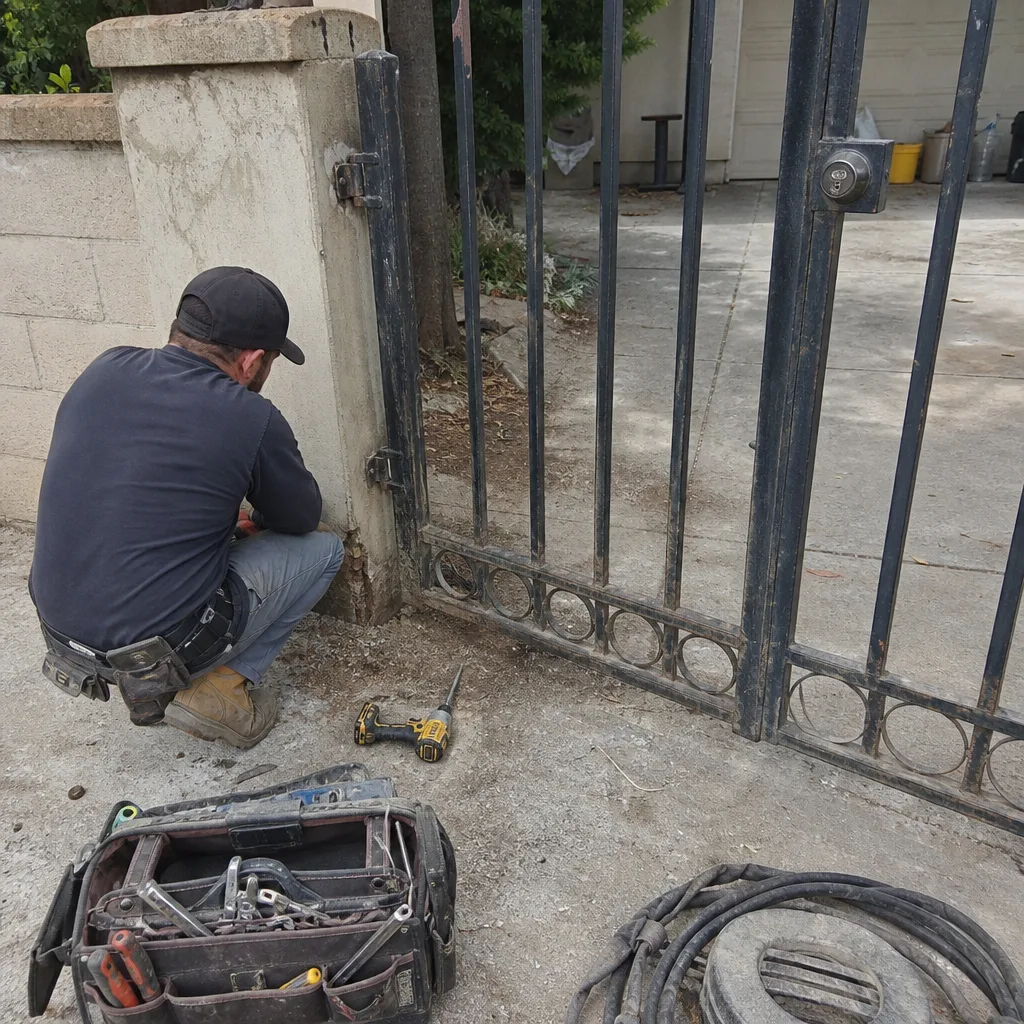 Before
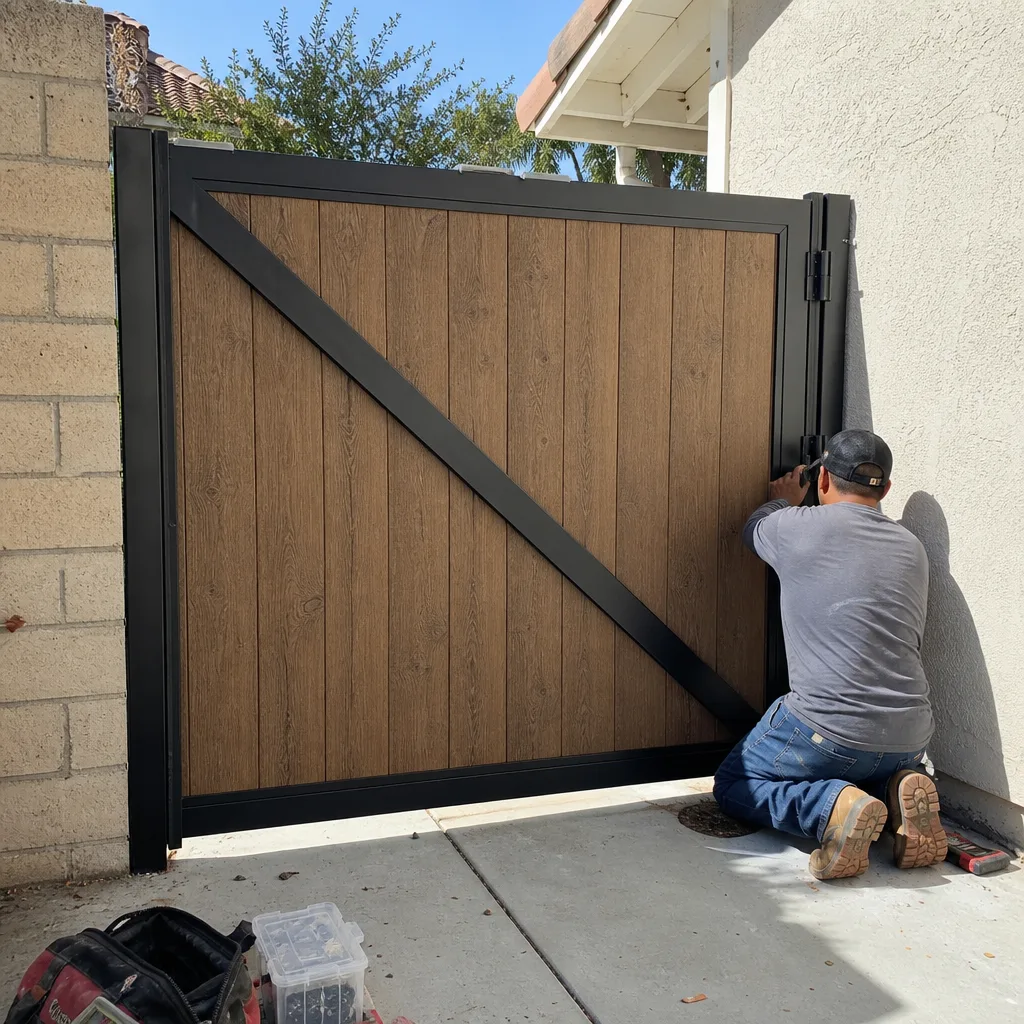 After
After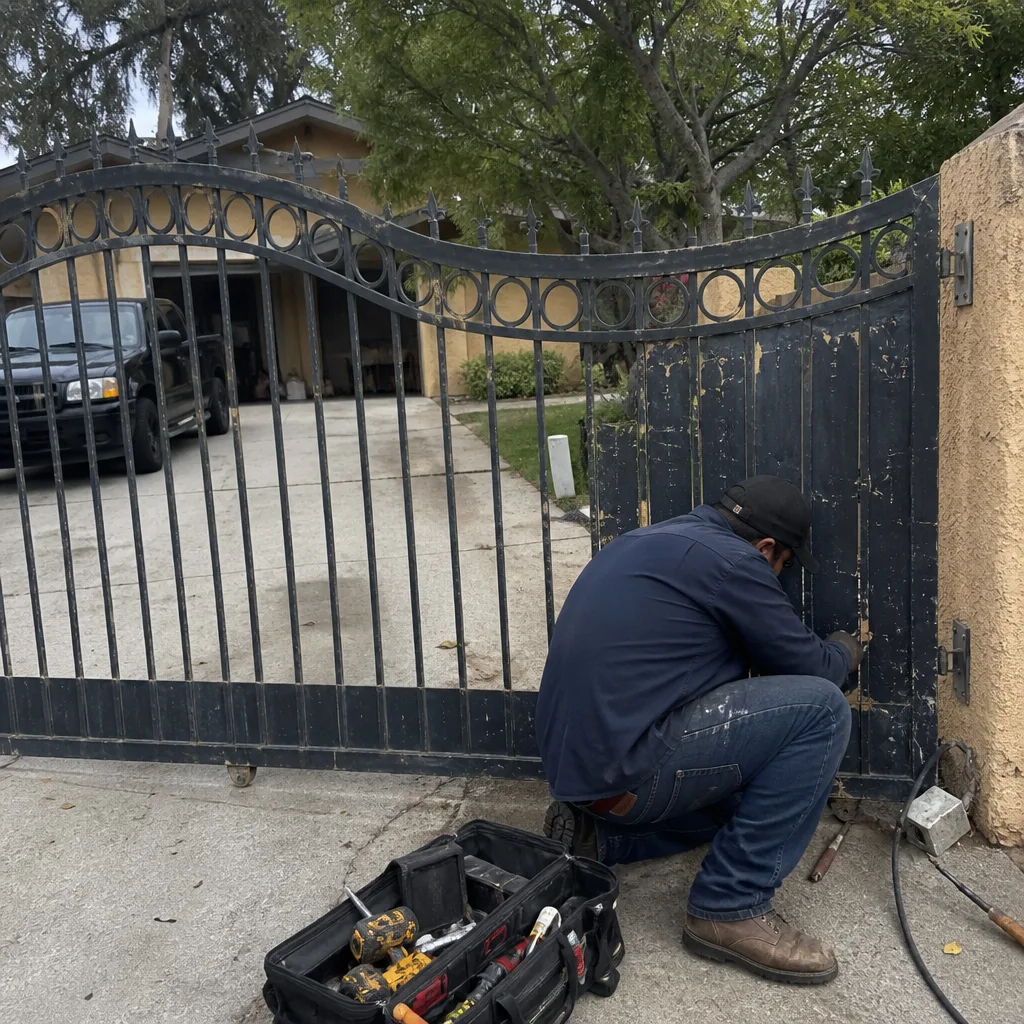 Before
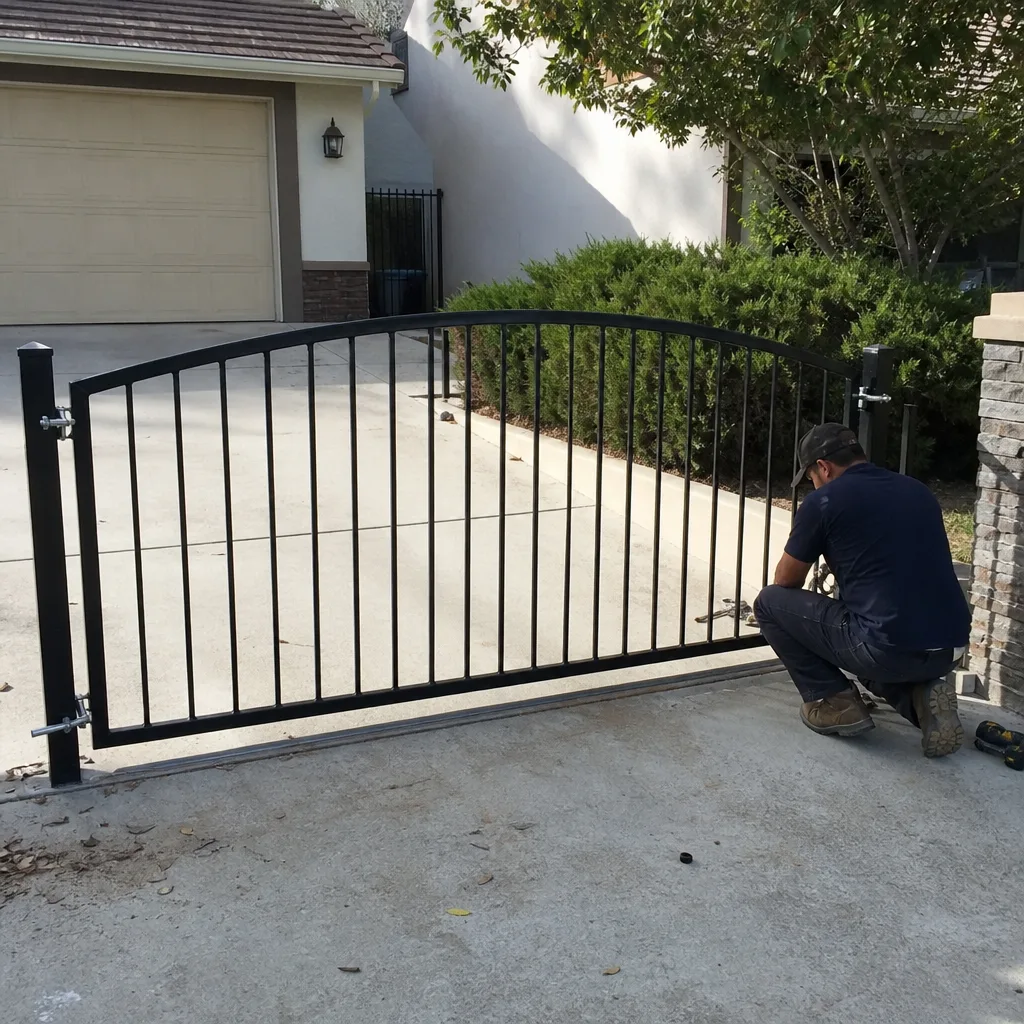 After
AfterGate Repair Warning Signs: A Santa Clarita Homeowner’s Reference Guide
A gate that opens slowly is doing one of four things: running low on lubrication, drawing too many amps through a worn motor, fighting a dragging hinge, or losing limit switch calibration. Each cause carries a completely different repair cost and timetable. In Santa Clarita, where summer temperatures routinely push past 100 degrees and fine dust from the surrounding hills settles into every hinge and gear, these four failure modes appear on a predictable seasonal cycle. This guide assigns each warning sign a probable cause, a realistic failure timeline, and a priority tier so you can triage the problem before it strands your car in the driveway or leaves your property unsecured overnight. You’ll learn what sounds mean, what to film for a remote diagnosis, and which symptoms demand an immediate call versus which ones can wait a week.
Quick Answer
The most common gate repair warning signs in Santa Clarita are: slow or jerky operation, grinding or clicking noises, the gate reversing or stopping mid-cycle, sagging or dragging across the ground, and the motor running without moving the gate. These symptoms fall into three priority tiers: Stop-Using-It (immediate safety or security risk), Schedule-Within-a-Week (active wear that will worsen), and Watch-and-Log (early indicators you can document before they escalate). Most warning signs are repairable, but acting on the audio and visual evidence early typically cuts the final repair cost by 40 to 60 percent compared to running the gate until it fails outright.
Table of Contents
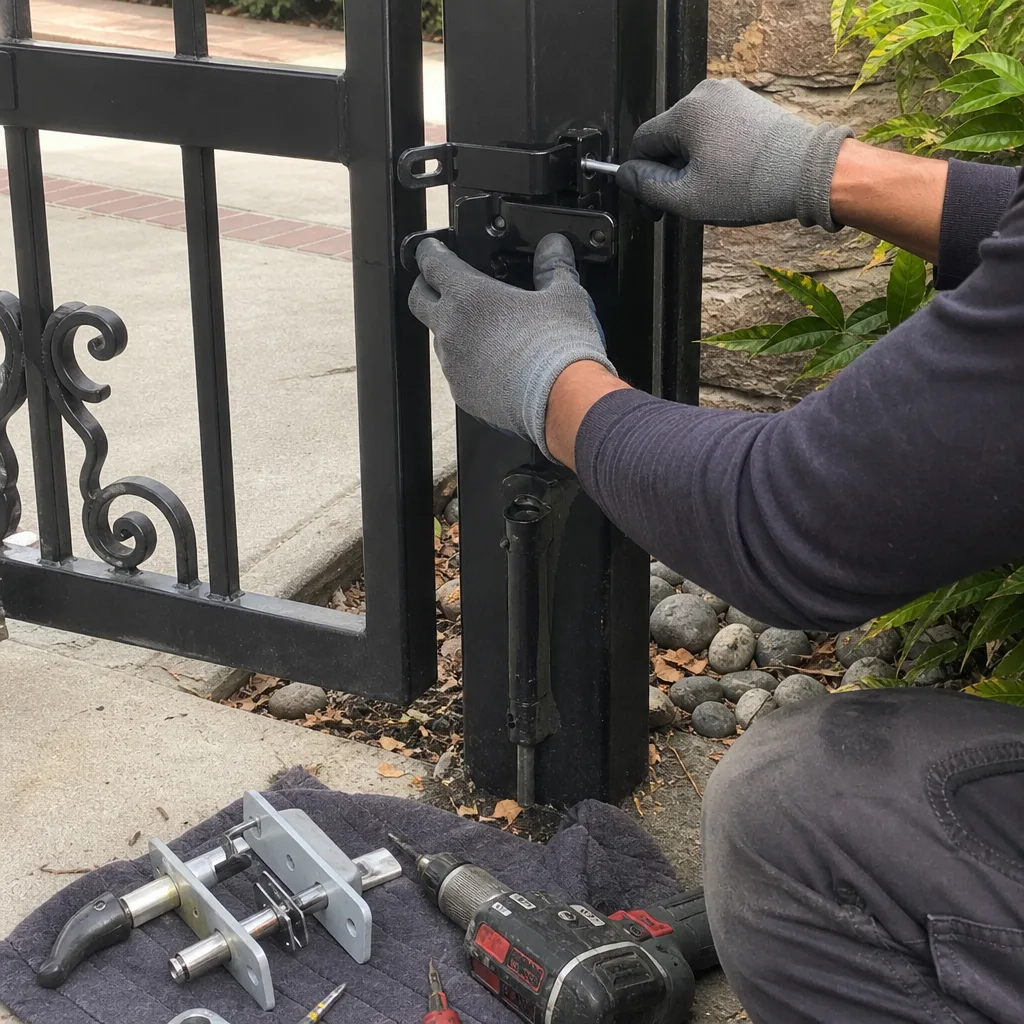
- The Three-Tier Warning System: Stop, Schedule, or Watch
- Audio Signs: What That Noise Actually Means
- Visual Signs: Sag, Drag, Misalignment, and Heat Warping
- Motion Signs: Slow Operation, Reversal, and Limit Switch Drift
- Single Swing Gate Warning Signs
- Slide Gate Warning Signs
- What to Document Before You Call: The 5-Minute Evidence Protocol
- Common Mistakes to Avoid
- When to Call a Professional
- Frequently Asked Questions
BeforeAfterThe Three-Tier Warning System: Stop, Schedule, or Watch
Most gate failure guides list symptoms without telling you which ones matter today and which ones matter next quarter. That’s the gap this section closes. We classify every gate symptom into one of three tiers based on what typically comes next if the symptom is ignored. This triage system applies to every gate type found in Santa Clarita, from the swing gates common in Valencia and Newhall to the slide gates you see on larger lots in Stevenson Ranch and Sand Canyon.
Tier 1: Stop-Using-It (Immediate Safety or Security Risk)
These symptoms mean the gate could fail catastrophically, injure someone, or leave your property unsecured without warning. Disable the gate in manual mode and call a technician the same day.
- Gate reverses violently at the end of travel - usually a failed limit switch or a broken internal stop, not a photo-eye problem (more on this misdiagnosis below).
- Motor runs but gate does not move - often a sheared drive gear or a decoupled chain. The gate may be balanced one moment and free-swinging the next.
- Sustained grinding with no gate movement - metal-on-metal contact inside the operator or along the track. Each second of operation is removing material from the gear or rail.
- The gate jumps the track or comes off its rollers - a slide gate that leaves its rail can fall on a person or vehicle.
- Visible sparking or burning smell from the operator box - immediate electrical hazard. Cut power at the breaker.
Tier 2: Schedule-Within-a-Week (Active Mechanical Degradation)
These symptoms are not yet dangerous, but the underlying wear is progressing. Schedule a repair within five to seven days to avoid escalation into Tier 1.
- Gate slows noticeably over a two- to four-week period - friction is increasing or motor output is dropping. Left untreated, this becomes a full stall.
- Clicking sound followed by reset - the operator’s thermal overload is tripping. Something is increasing the amp draw: a dragging hinge, low oil, or a failing capacitor.
- Gate stops mid-cycle and requires a remote press to finish - usually an obstruction sensor being intermittently triggered or early limit switch drift.
- Visible sag of two or more inches at the latch end of a swing gate - hinge wear is transferring weight to the operator, which will burn out the motor if the load is not redistributed.
Tier 3: Watch-and-Log (Early Warning, Not Yet Urgent)
These symptoms are worth documenting but do not yet indicate active failure. Film them, log them, and revisit in two weeks.
- Very slight hesitation at one point in the travel - could be a dry bearing or a dirty roller. Video it now so you have a baseline.
- Single click when the gate starts moving - often a relay engaging, which is normal in many operators. The problem is sustained or repeated clicking.
- Gate travels an inch further or less after each cycle - limit switch drift. This is normal over years, but the rate of drift tells you whether calibration is stable.
- Surface rust on hinges or track without binding - clean and lubricate, then log. If the rust returns within a month, moisture is getting in somewhere.
Our shop runs on this tier system. When a Santa Clarita homeowner calls our gate repair service describing a symptom, we ask which tier it falls into and route the call accordingly. It saves everyone time and often saves the customer the cost of a full operator replacement when a part-level repair would have been enough.
Audio Signs: What That Noise Actually Means
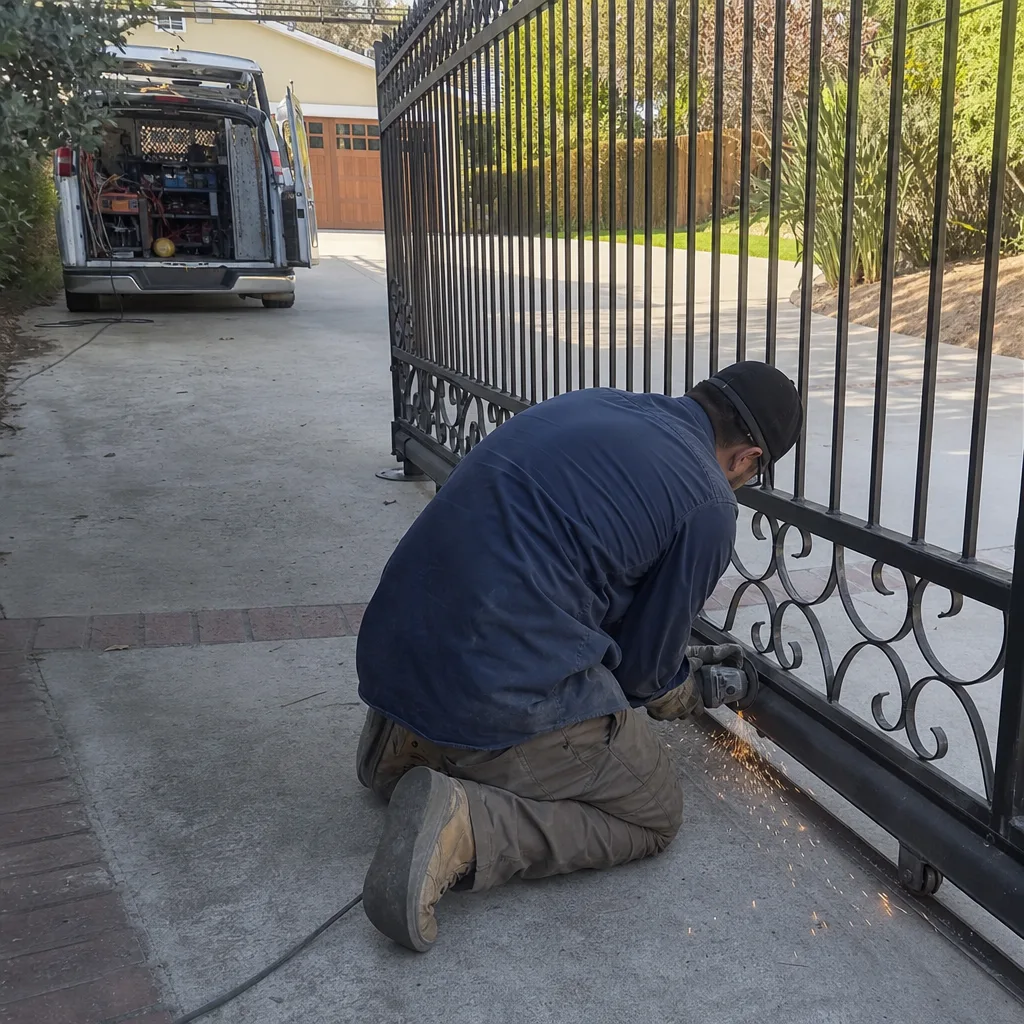
The sound a gate makes is the clearest diagnostic signal you’ll get without opening the operator box. Each sound originates from a specific component, and learning to separate them will make you a better-informed customer and a harder target for unnecessary upselling. Here is what we hear most often on service calls across Santa Clarita.
Single-Cycle Click: Normal Relay Engagement
A single click when the remote is pressed, followed by normal movement, is the relay inside the operator closing the circuit. This is normal operation in most brands, including Viking and Elite operators. The click should be quiet and singular. If the click becomes louder over time, the relay contacts may be pitting or arcing. When we hear a relay that’s louder than the motor hum, we photograph the relay and log the observation. A pitted relay is a $60 to $120 part replacement. A burned control board is $400 to $900. The click tells you which direction the problem is heading.
Relay Chatter: Rapid-Fire Clicking
A rapid clicking sound (three or more clicks per second) that occurs when the gate tries to start, or worse, while the gate is moving, is relay chatter. This means the control board is receiving inconsistent voltage or the relay itself is failing to hold. In Ghost Controls and Mighty Mule systems, we have traced relay chatter to three causes: a failing capacitor, a loose battery connection in solar installations, and a transformer output that has drifted below spec. The fix varies. A loose connection takes ten minutes. A failed capacitor is a part swap. A transformer issue may require replacement of the power supply. The sound is the same, but the repair cost spans a wide range, which is exactly why we document what we find and leave the evidence with the homeowner.
Sustained Grinding: Metal-on-Metal Contact
Grinding is never normal. It means two metal surfaces are touching without sufficient lubrication or with excessive load. The most common sources:
- Drive gear wear in the operator - the teeth are thinning and the motor’s output gear is slipping. Common in operators more than eight years old, regardless of brand.
- Track or roller wear on a slide gate - the V-wheels or nylon rollers have worn flat, and the gate is riding on the rail’s metal shoulder.
- Hinge pin galling on a swing gate - the pin and knuckle have scored each other. This happens when a hinge is run dry through one summer in Santa Clarita. The heat accelerates oxidation and the dust works into the clearance gap.
The repair for grinding depends on which of these three sources is the cause. A technician should identify the origin before replacing anything. In our experience, about half of “grinding operator” complaints we see in Santa Clarita are actually track or hinge wear being transmitted through the gate structure, not the operator at all. Replacing the operator in that scenario wastes a $600 to $900 part and leaves the real problem in place.
High-Pitched Whine Under Load
A whine that rises in pitch as the gate moves and drops off when the gate stops is a capacitor or transformer struggling under load. In DoorKing and Linear operators, the start capacitor provides the initial kick to move the gate from rest. When it weakens, the motor draws more current to compensate, and the transformer protest comes out as a whine. We hear this most often in July and August in Santa Clarita, when ambient heat raises the internal resistance of every electrical component inside the operator box. A capacitor replacement often solves the whine and extends the life of the motor by years.
Visual Signs: Sag, Drag, Misalignment, and Heat Warping
You can hear a lot before you see anything. But certain failure modes in Santa Clarita are glaringly visual, and two of them are commonly misread by homeowners and technicians alike.
Sag at the Latch End
A swing gate that sits visibly lower at the latch end than at the hinge end, typically by two inches or more, is transferring its weight onto the operator. Every cycle the gate runs in this condition, the motor labors against leverage that was never designed into the installation. The cause is usually worn hinge bushings or a hinge post that has shifted in the soil. The repair is hinge replacement or post re-seating, not operator replacement. But if the sag goes unaddressed for six to twelve months, the operator becomes the victim. We have pulled motors off sagging gates in Valencia and Saugus that had burned out bearings with the hinge repair still unrepaired. The hinge was a $200 job. The operator replacement was $700.
Drag Marks on a Slide Gate
If you see fresh scrape marks along the ground where the slide gate travels, or if the gate has begun chewing up a spot of lawn or scraping a low section of driveway, the gate is out of level. Causes include:
- Shifted concrete pad - common in Santa Clarita where the soil expands and contracts with the wet-dry seasonal cycle.
- Worn rollers - the gate dropped a quarter inch and is now contacting the ground at one point.
- Bent guide wheels due to wind load - the Santa Ana winds in fall can exert enough lateral force on a long slide gate to bend a guide bracket.
Drag is a Tier 2 symptom. Fix it within a week, because the friction load goes up exponentially once the gate starts dragging. Each additional day wears the rollers, the track, and the motor simultaneously.
Heat-Warped Limit Switch: A Santa Clarita Misdiagnosis
Here is the misdiagnosis we referenced in the introduction. A homeowner in Stevenson Ranch calls and says the gate opens halfway and stops, or opens too far and strains against the stop. The first assumption is motor failure or a limit switch that has simply “gone bad.” But in Santa Clarita’s summer, we have repeatedly found limit switches that are functioning fine but whose internal cam has warped from heat expansion inside the operator housing. The switch reads the same voltage as always, but the cam surface that triggers the stop has shifted by fractions of a degree. The result: the gate stops early or late, and the problem only appears in temperatures above 95 degrees. The fix is often a limit switch adjustment or replacement with a heat-rated component, not a motor replacement. If a gate only misbehaves in the heat, that’s a clue worth mentioning to any technician.
Motion Signs: Slow Operation, Reversal, and Limit Switch Drift
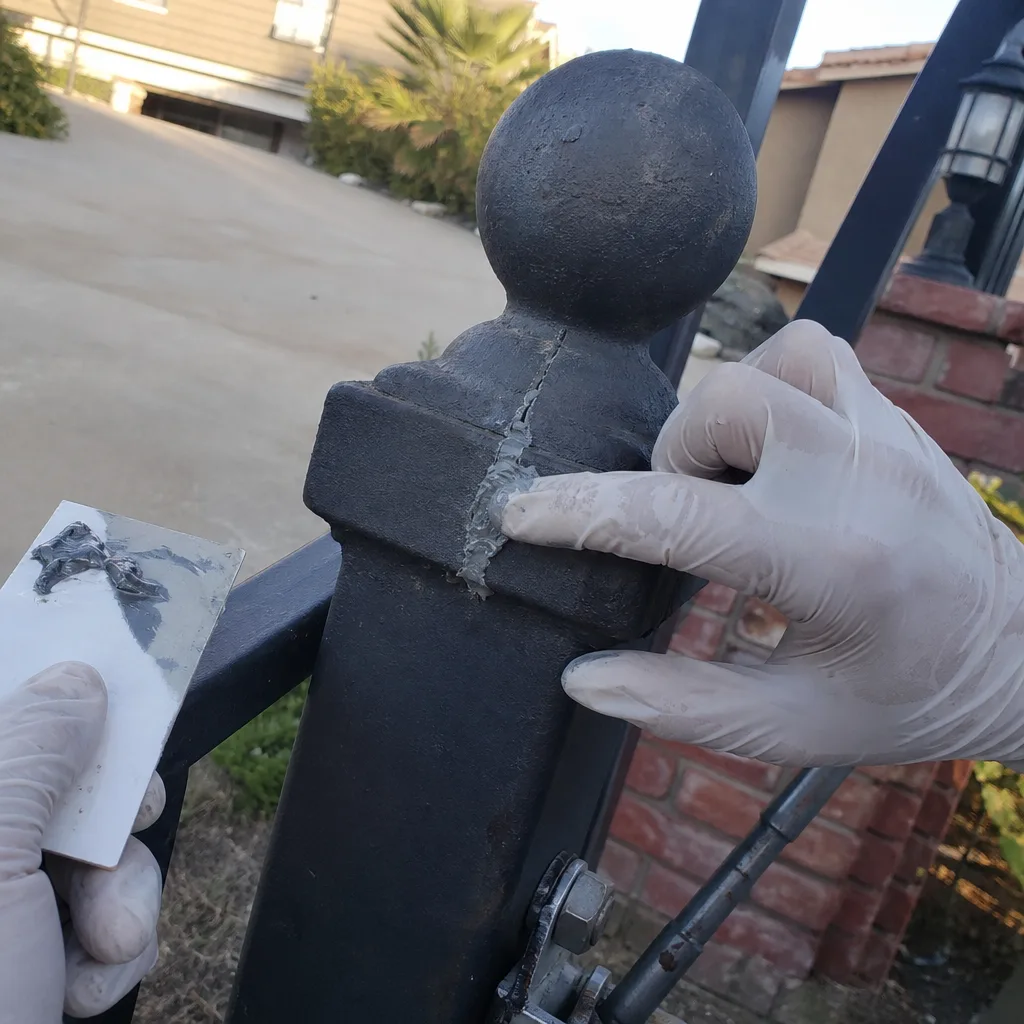
Motion is the most common category of gate complaints we receive from Santa Clarita homeowners. It’s also the category most often misattributed to the motor, when the actual cause is elsewhere in the mechanical system.
Slow Operation: The Four Causes
As stated at the top of this guide, a gate that opens slowly is doing one of four things.
- Running low on lubrication - hinges, bearings, and drive gears dry out. The fix is a clean and relubrication, typically under $100, sometimes part of a broader maintenance visit.
- Drawing too many amps through a worn motor - the motor works harder to produce the same output. This is the most expensive of the four causes, but it’s worth confirming with an amp-draw reading before committing to the replacement.
- Fighting a dragging hinge - misalignment adds friction, and the gate slows as the motor strains. Hinge repair is a few hundred dollars and prevents motor replacement.
- Losing limit switch calibration - the gate thinks it has reached its stop early, so the motor eases off before the full travel is complete. Recalibration is a quick fix.
The reliable way to distinguish between these is to measure: count the seconds from fully closed to fully open for a week, note the temperature each day, and bring that log to the phone call. A technician who asks for this data is doing diagnostic work. A technician who skips the question and jumps to replacement is guessing.
Gate Reversal: The Photo-Eye Misdiagnosis
Here is the second common misdiagnosis. A homeowner in Newhall reports the gate starts to close, then reverses and reopens. The first assumption is almost always the photo-eye or safety edge. But on many gates, especially older DoorKing and Elite swing operators, the cause is a worn clutch. The clutch is the mechanical slip-point that lets the motor spin without destroying itself if the gate hits an obstruction. As the clutch wears, it slips earlier and earlier, eventually releasing under normal load. The gate interprets this as an obstruction and reverses. A technician who skips the clutch and replaces the photo eye, then the control board, is chasing a symptom instead of the cause. The clutch is a replaceable component. The diagnostic step is simple: manually trip the photo eye and see if the reversal behaves identically. If it does not, the clutch is suspect.
Limit Switch Drift: What It Looks Like on Video
Limit switch drift is the creep over weeks or months of the gate’s stop positions. The gate over-travels past the closed position and strains against the post, or it stops an inch short of closed and leaves a gap. You can document this by filming the gate at its stop points once a week from the same angle. A gate that drifts a consistent fraction of an inch per week is in stable wear. A gate that drifts unpredictably, different distances on different cycles, has a loose mechanical link or a failing limit component. The former can wait a few weeks. The latter needs attention sooner. Both are repairable without replacing the operator in most cases. In our experience working on gate motors and openers across Santa Clarita, the limit switch itself fails completely in perhaps a quarter of cases. The rest are calibration or heat-warping issues that adjustment resolves.
Single Swing Gate Warning Signs
Single swing gates, the most common gate type on Santa Clarita properties from Canyon Country to Valencia, fail differently than slide gates or double swing gates. The single leaf arm design concentrates all wear into one hinge line, one operator arm, and one limit set. Here are the warning signs specific to this configuration.
- The operator arm fork bracket is loose or cracked - visible when the gate is mid-travel. The arm connects the operator to the gate through a fork or clevis at the end. This bracket takes the full stopping force every cycle. Hairline cracks appear before full failure. Replace the bracket, not the operator.
- The gate “bounces” at the open or closed stop - the momentum of the leaf is not being absorbed properly. This can be a missing or hardened stopper pad, or a limit setting that lets the gate travel too far before the operator stops. Repeated bouncing works the hinge pins loose.
- The operator is set below grade or at the low point of the driveway - in Santa Clarita, many swing gate operators sit in a below-ground box. If that box is not draining properly, the operator runs in wet, alkaline soil. Corrosion appears on the arm pivot and the lower limit terminals first. Surface rust on the operator arm is the earliest visible warning.
Single swing gate repair is the most straightforward gate repair we do, and the Vance Gate Repair Santa Clarita team has repaired thousands of them since 2014. But the straightforward nature also means the warning signs get ignored because the gate “still works.” A sagging single gate works right up until the day the hinge post tilts and the gate jams against the ground. If you see more than an inch of droop at the latch end, don’t log it. Schedule it.
Slide Gate Warning Signs
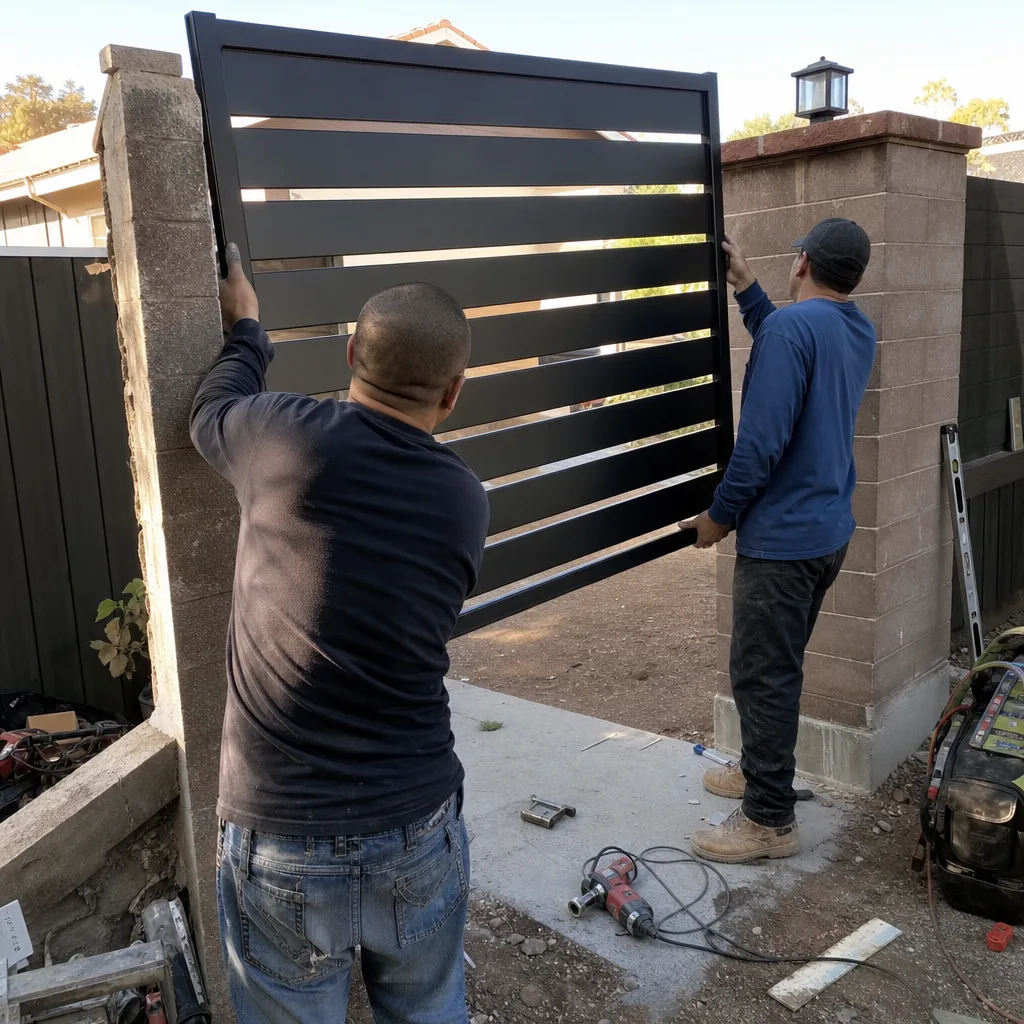
Slide gates are common on larger Santa Clarita properties, especially in gated communities and homes with long setbacks. The slide gate rides on a track with steel V-wheels or nylon rollers, powered by a chain, belt, or rack-and-pinion drive. More moving parts means more points of failure, and the signs are often easier to spot because the gate is at ground level.
- Washboard wear on the track - run your hand along the top of the rail and feel for ridges. This is metal being worn away by hardened rollers. A gate that rumbles or vibrates is running over these ridges. The track can sometimes be flipped if it’s double-sided, but a worn track typically means roller replacement at the same time.
- Chain slack or skipping - a chain-drive slide gate should not have more than a half inch of vertical play in the chain. If you hear a chattering sound while the gate is in motion, the chain is riding up over worn sprocket teeth. Continued operation will round the sprocket and require both chain and sprocket replacement.
- Guide rollers eating into the gate frame - the guide wheels at the top of the gate keep it aligned. When their bearings go dry, they stop rolling and start scraping. Look for gray dust accumulating on the top edge of the gate frame. This is powdered metal from the guide channel, and it means the guide rollers are flat-spotted and carving the frame.
- Drift-back after stop - if the gate stops and then rolls back an inch or two, the brake or torque limiter setting is off, or the gearbox has slack. This is often mistaken for a limit problem. It is not the limit. It’s the holding mechanism, and it gets worse as the gearbox wears.
Slide gates benefit the most from the documentation protocol in the next section, because the failure progression is usually visible on video if you film from a fixed position each time.
What to Document Before You Call: The 5-Minute Evidence Protocol
Every homeowner can gather five minutes of evidence that saves a technician a full diagnostic visit. This is the same protocol we run on our own service calls, written down so you can do it before the truck rolls.
- Film a full open-and-close cycle from a fixed position - stand where the entire gate and operator are visible. Hold the phone horizontally. Let the gate run the full travel. Do this once in the morning and once in the afternoon, because temperature changes reveal heat-related issues.
- Count the seconds from fully closed to fully open - write down the time. Do this three times and average it. Baseline timing is the single most useful data point for diagnosing slow operation.
- Film the sound with the phone near the operator, not near the gate - put the phone three feet from the operator box and record the full cycle. The audio distinguishes relay click from gear grind in ways a phone call description cannot.
- Note the time of day and the temperature - Santa Clarita’s temperature swings routinely exceed 30 degrees between morning and afternoon in summer. Symptoms that appear only in heat are a diagnostic clue by themselves.
- Photograph the hinge points, the bracket connections, and the track - close-up, from three angles if you can. Wear shows up differently from different angles, and a technician can often read a bracket crack from a photo.
This protocol takes five minutes and produces a record that any competent technician can use to narrow the diagnosis before they arrive. We encourage it because it’s the same discipline we apply on every call through the Haven Standard: document what was found, document what was set, and leave the evidence with the homeowner. The customer who walks into the first phone call with this log gets a faster diagnosis and a more accurate written price.
Common Mistakes to Avoid
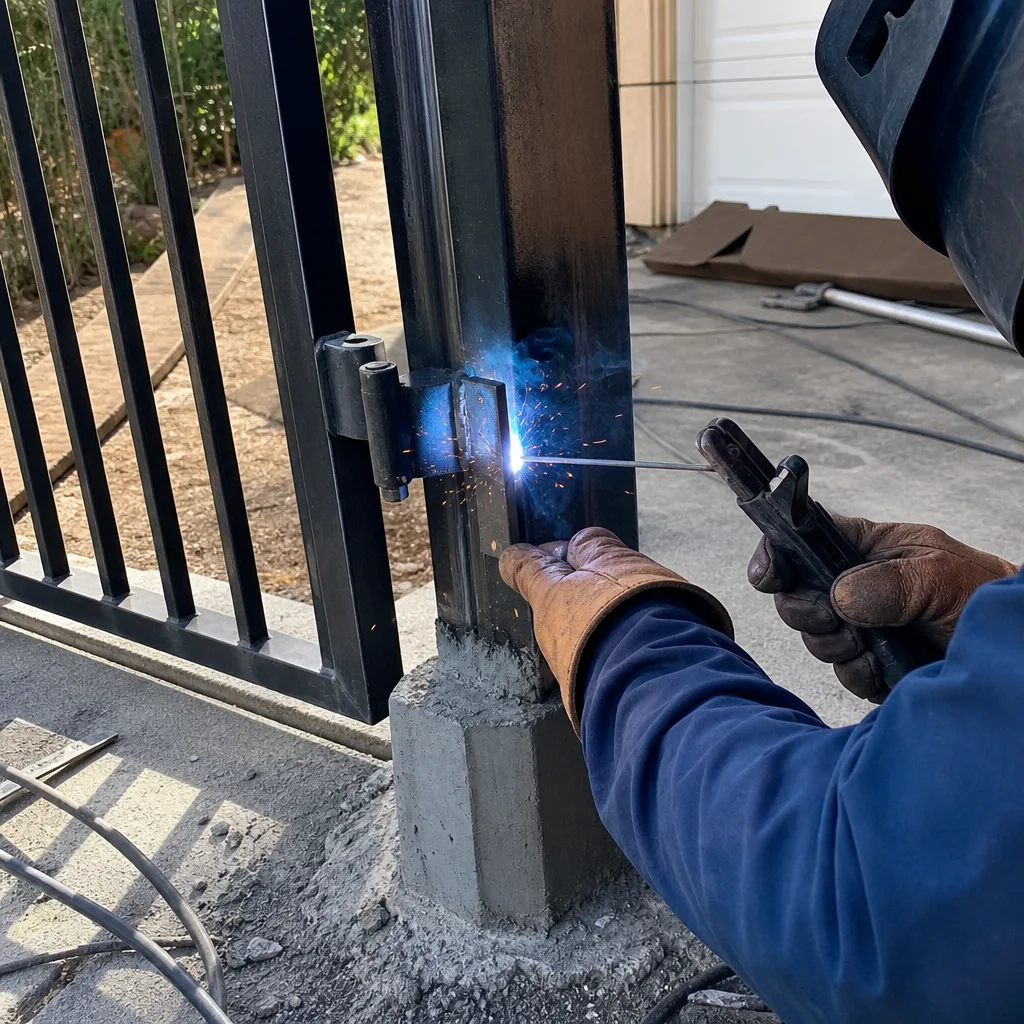
- Lubricating to fix a noise, instead of identifying the source first - adding grease quiets a grinding hinge for a day or two, but the underlying wear is still progressing. Worse, the fresh grease traps grit and accelerates the scoring. Identify the sound, then address it.
- Adjusting the limits to fix slow operation - if the gate is slow because the motor is drawing too many amps, adjusting the limit buys nothing and may overheat the motor faster. Slow is not the same as misaligned.
- Replacing the photo eye before checking the clutch - as discussed, this is the single most expensive misdiagnosis we see on reversing gates in Santa Clarita. The photo eye is the easy part to swap, which is exactly why it gets swapped first and the problem remains.
- Ignoring a sagging gate because it still opens - a sagging gate is a lever working against the operator on every cycle. The operator loses that fight eventually, and the replacement cost dwarfs the hinge repair.
- Running a slide gate with a dragging section “until it fails completely” - drag damage compounds. Every week of dragging wears the rollers, the track, and the gearbox simultaneously. A $250 roller replacement becomes a $900 gearbox replacement within months.
- Waiting until the gate stops moving entirely to call - by the time a gate is immobile, the failure is often a burned motor or a sheared gear. A technician could have caught it at the sagging or slow stage for a fraction of the cost. If you’re seeing any of the warning signs on this page and you’re in Santa Clarita, Vance Gate Repair Santa Clarita has the diagnostic process to tell you what’s actually wrong.
When to Call a Professional
Call a professional the same day if any Tier 1 symptom is present: the gate is sparking, the motor is running without moving the gate, the gate reverses violently, or a slide gate has left its track. These are safety risks and security holes. Call within the week for Tier 2 symptoms: progressive slowing, intermittent stopping, visible sag, or gate drag. A professional diagnostic visit at this stage costs far less than the repair that follows a full failure. We also recommend a professional when the symptom is inconsistent or heat-dependent, because those two patterns typically require instrumentation (amp draw, limit switch voltage, clutch slip torque) that a homeowner cannot measure. Vance Gate Repair Santa Clarita offers free written estimates throughout Santa Clarita and has a documented photo record policy on every visit. If you’re seeing any symptom described in this guide, call (747) 294-2900 and describe it using the tier system above. If you’re considering a full replacement instead, read our gate installation guide to see whether repair is the better call.
Frequently Asked Questions
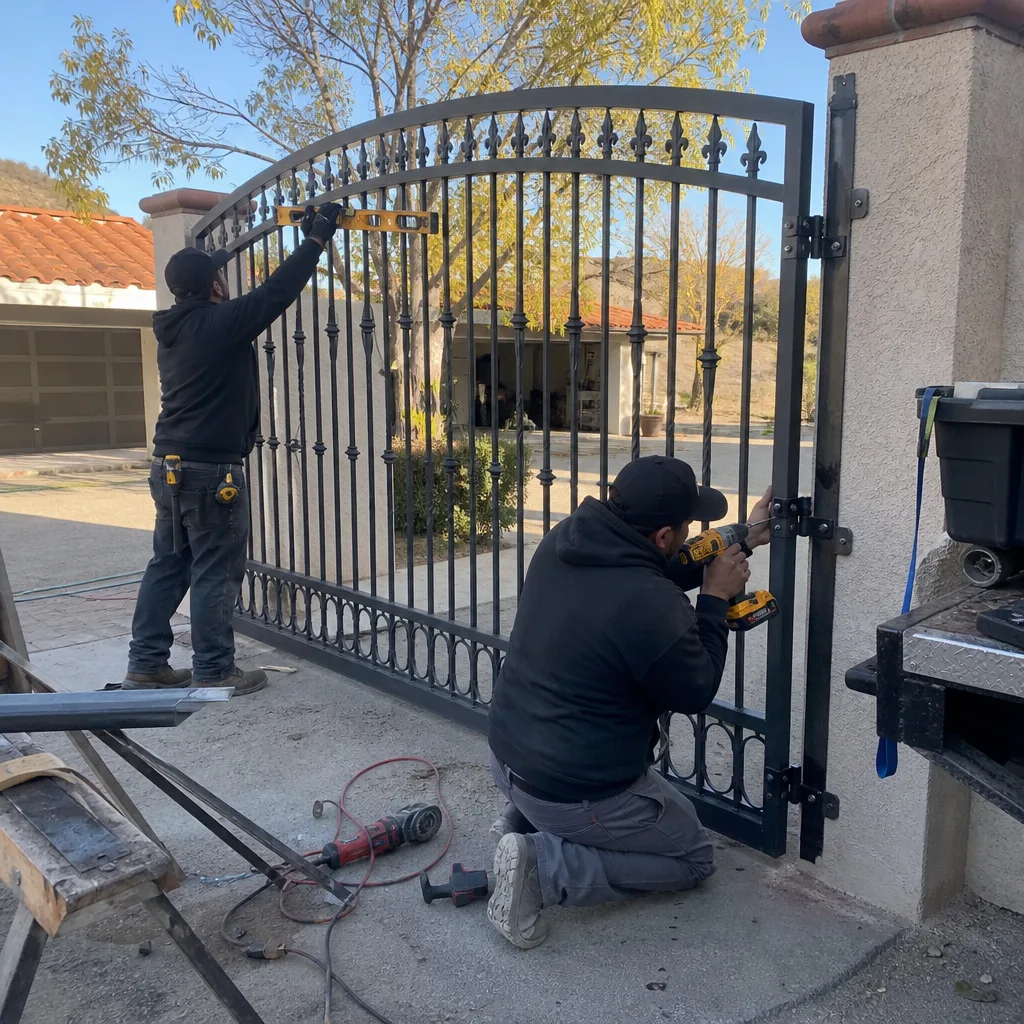
Most gate repairs in Santa Clarita run between $180 and $650 depending on the component: hinge replacement typically $180 to $400, limit switch replacement $120 to $250, clutch replacement $150 to $350, capacitor replacement $100 to $220, and full operator replacement $600 to $1,400. The written price is quoted and agreed before any work starts. Call (747) 294-2900 for an exact quote based on your gate’s brand and symptoms, with a free written estimate.
Yes. Tier 1 safety failures (sparking, motor running without gate movement, violent reversal, slide gate off track) are dispatched same-day in Santa Clarita. Tier 2 and Tier 3 symptoms are scheduled based on the severity and the evidence you provide. A live person answers 24/7 so you can describe the symptom and we’ll tell you which tier you’re in.
A full diagnostic includes amp draw reading on the motor, limit switch voltage check, clutch slip torque check, hinge and bracket inspection, and photo-eye alignment verification. Under the Haven Standard, everything found, adjusted, and set is photographed and left with the homeowner. Call (747) 294-2900 to schedule a diagnostic.
Yes. We service nine major gate-automation brands including Viking, Ghost Controls, DoorKing, and Elite, so the motor already on your property gets repaired rather than replaced when replacement isn’t necessary. Our gate motor and opener service covers the full range with the same written-price and photo-record policy.
Heat-related gate symptoms in Santa Clarita are most often caused by thermal expansion in limit switch components, failing capacitors, or transformer output drift above 95 degrees. The symptom is real and repairable, but it requires a technician who will test under load, not swap parts based on a phone description. Mention the heat pattern when you call and we’ll prioritize accordingly.
No. As detailed in this guide, a slow gate has four likely causes: low lubrication, high amp draw from a worn motor, dragging hinges, or limit switch miscalibration. Only one of those is the motor. A five-minute timing log and a photo of the hinge bracket will narrow the diagnosis before a technician arrives. Call (747) 294-2900 for a free second opinion on any written estimate from another company.
The Bottom Line
Gate warning signs are recognizable, classifiable, and repairable before they become expensive. The key is assigning each symptom to the right tier: Stop-Using-It for safety risks, Schedule-Within-a-Week for active wear, and Watch-and-Log for early indicators. The two most common misdiagnoses in Santa Clarita, heat-warped limit switches and worn clutches blamed on photo eyes, are both avoidable if the right questions get asked and the right evidence gets collected. Document your gate’s behavior for five minutes before you call, then describe the symptom in the language of the tier system. The technician who listens and asks follow-up questions is the one worth hiring. The rest is repair, and repair is almost always cheaper than the failure it prevents.
Written by Adrian Vance, Owner at Vance Gate Repair Santa Clarita, serving Santa Clarita since 2014.