
Free on-site gate assessment - hinges, posts, and your LiftMaster or Nice gate operator checked before anything is quoted
The assessment is free and the quote is the invoice.
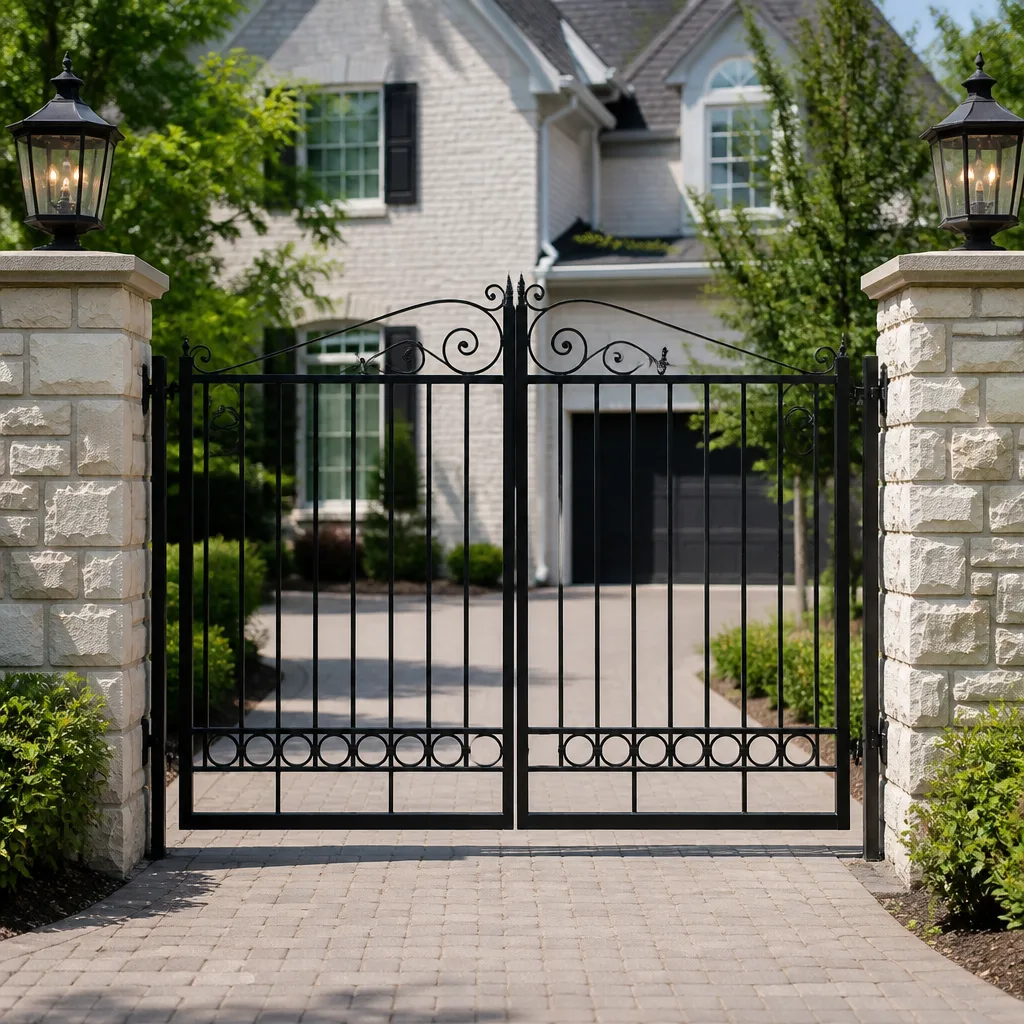
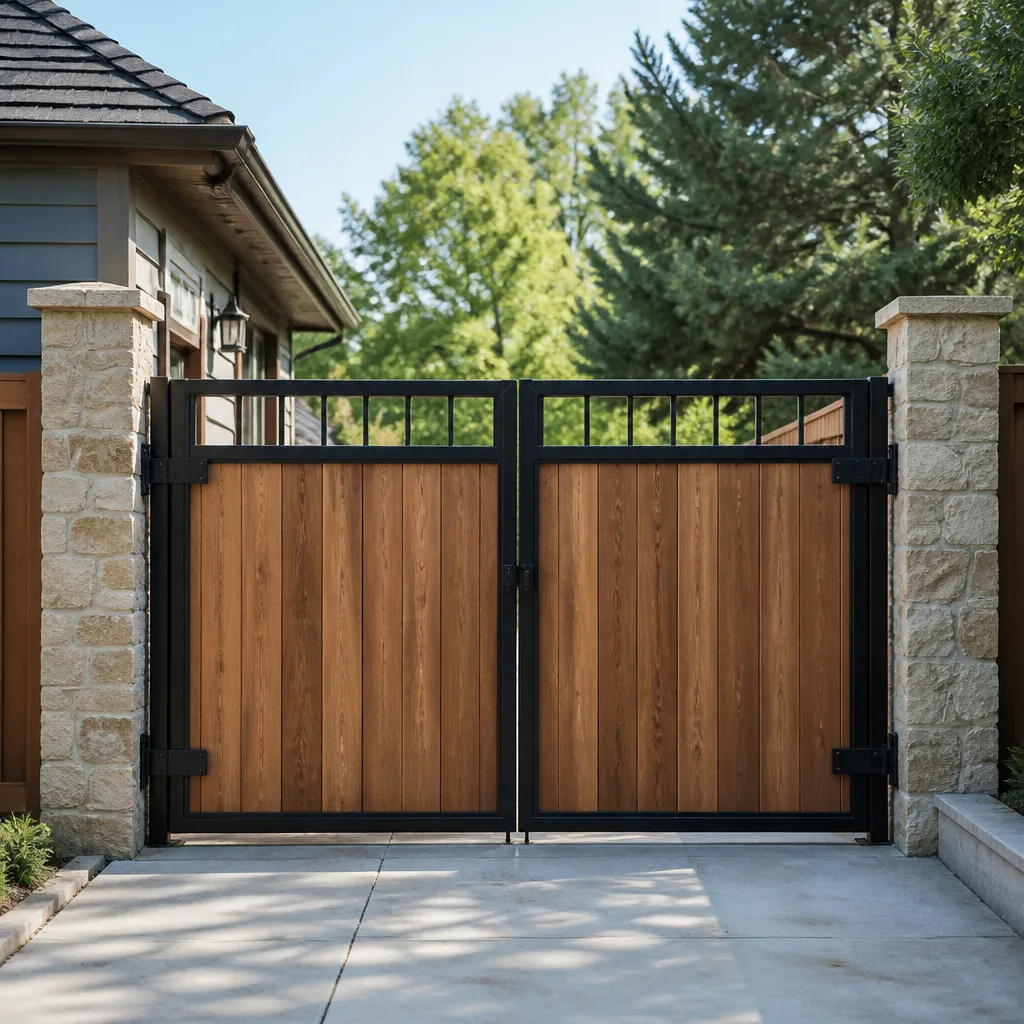
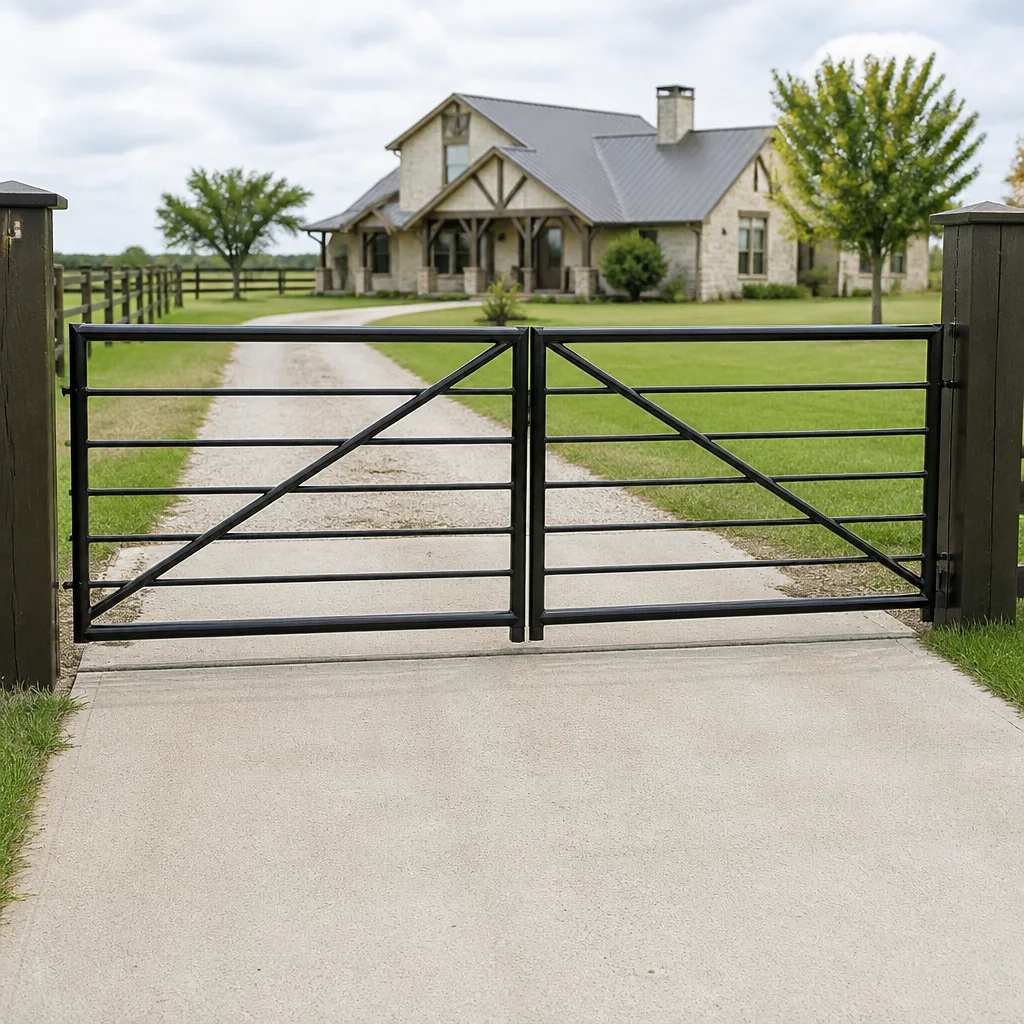
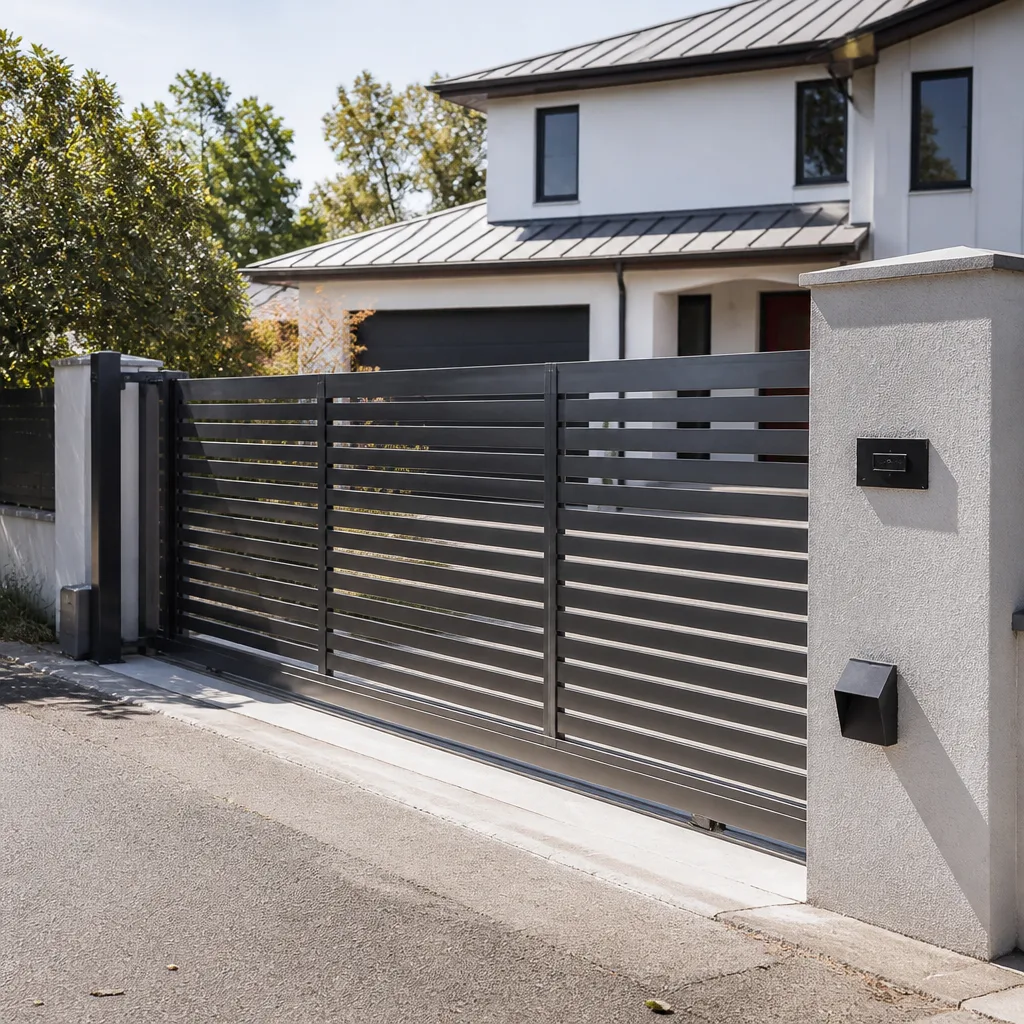
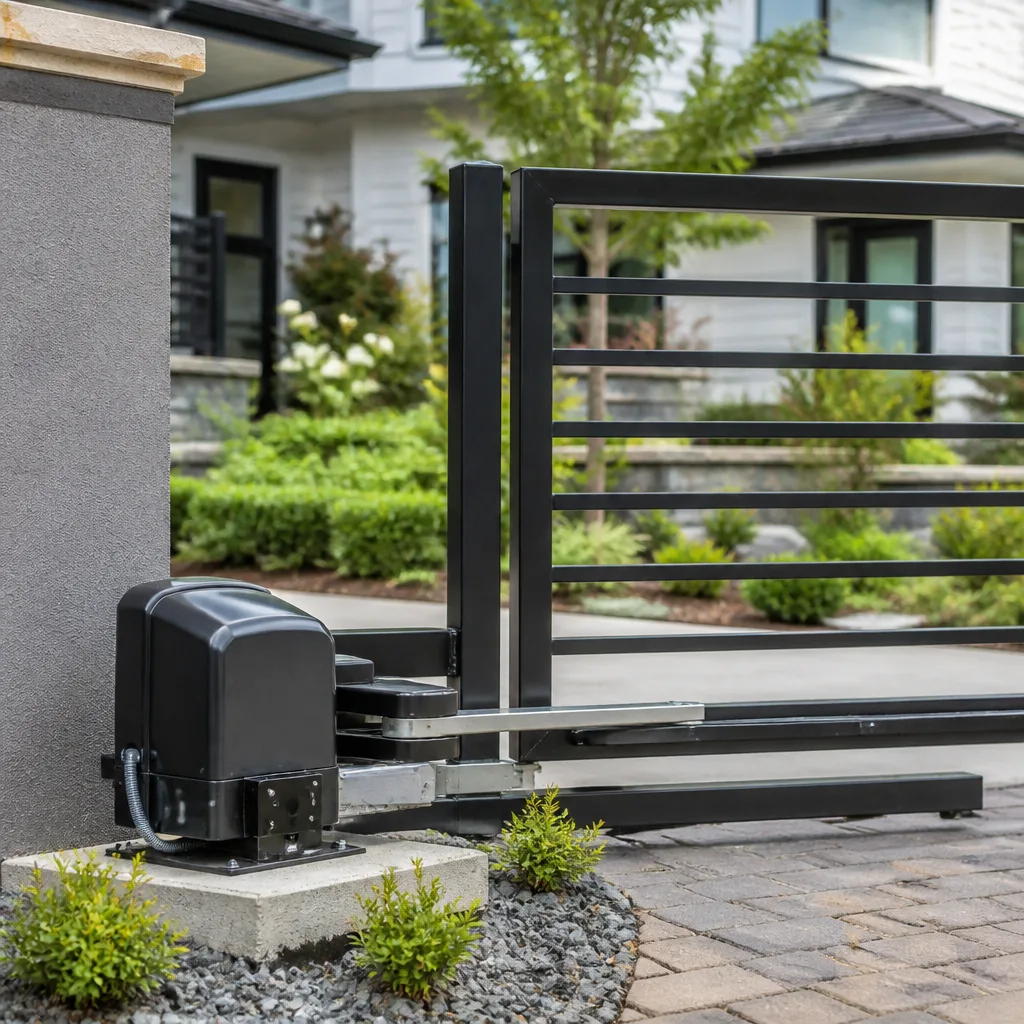
 Before
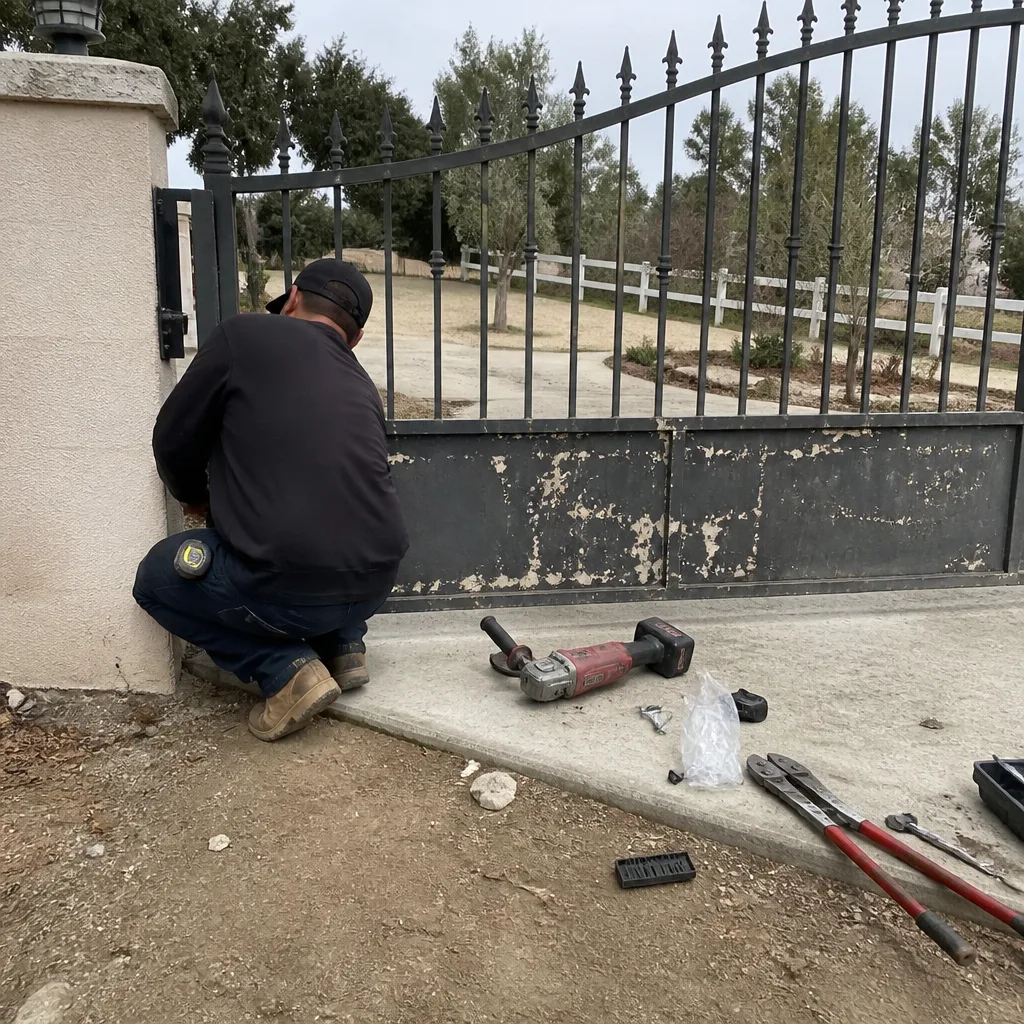
 After
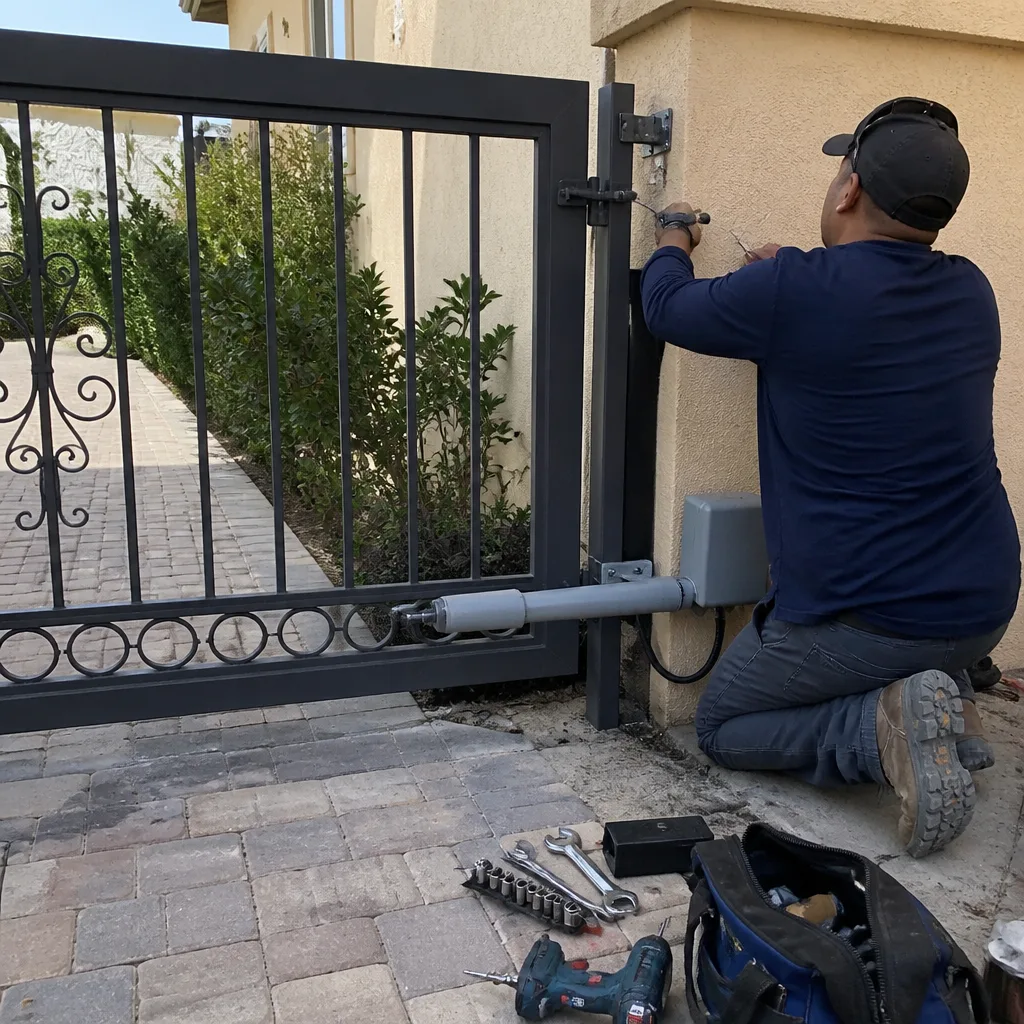
After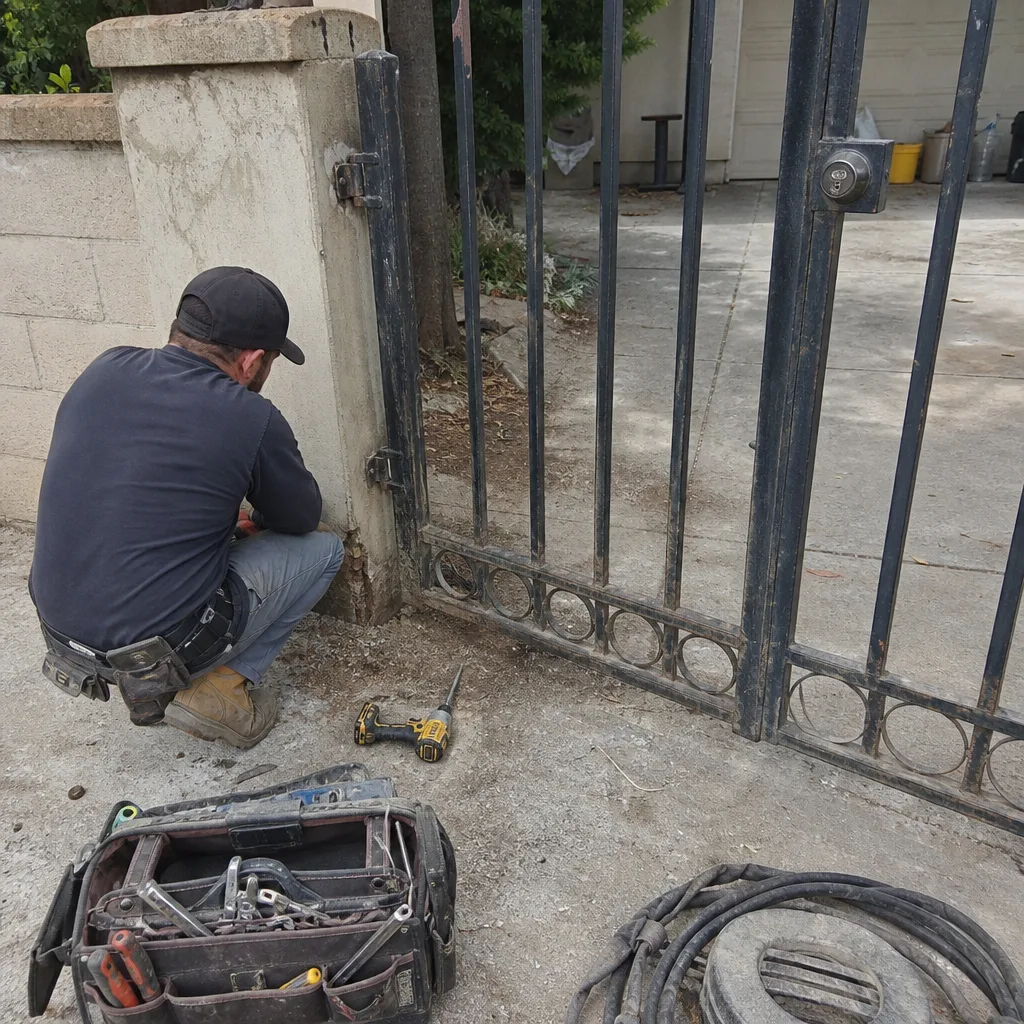 Before
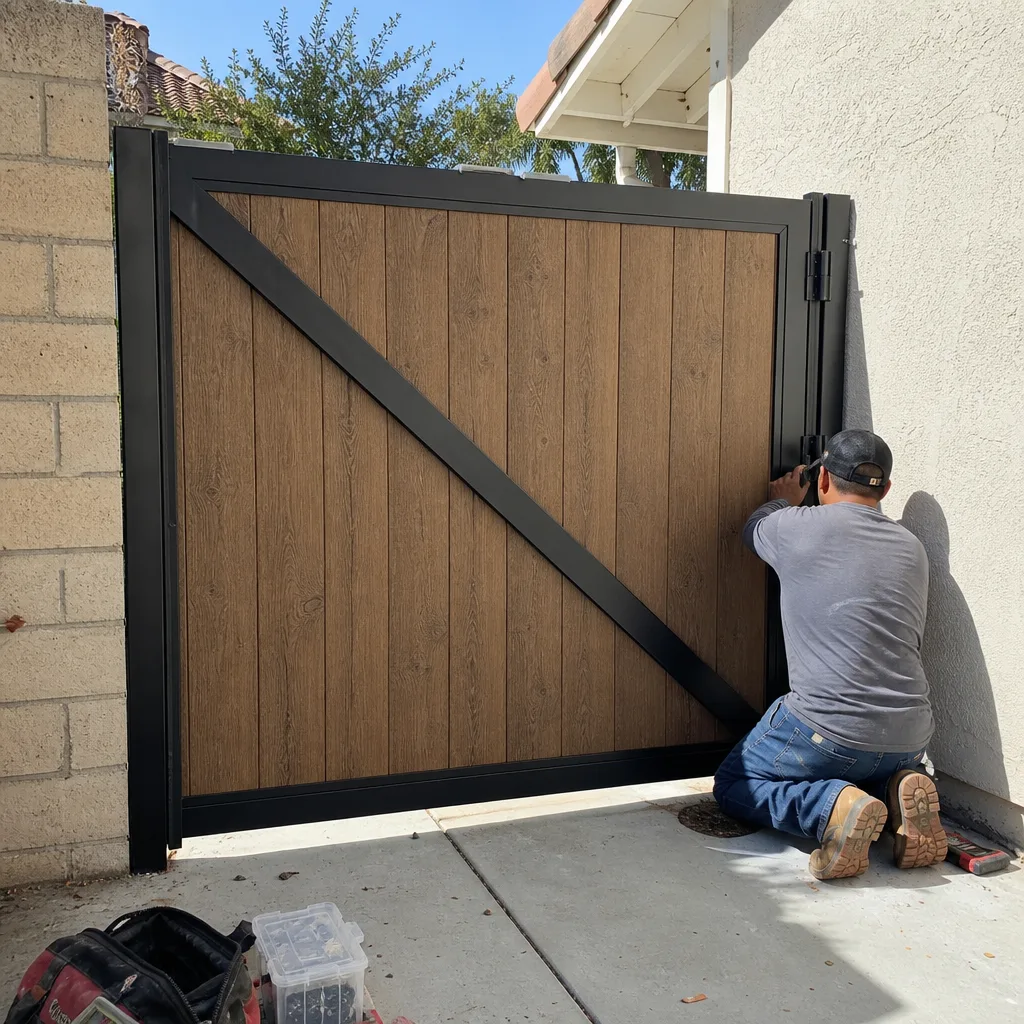 After
After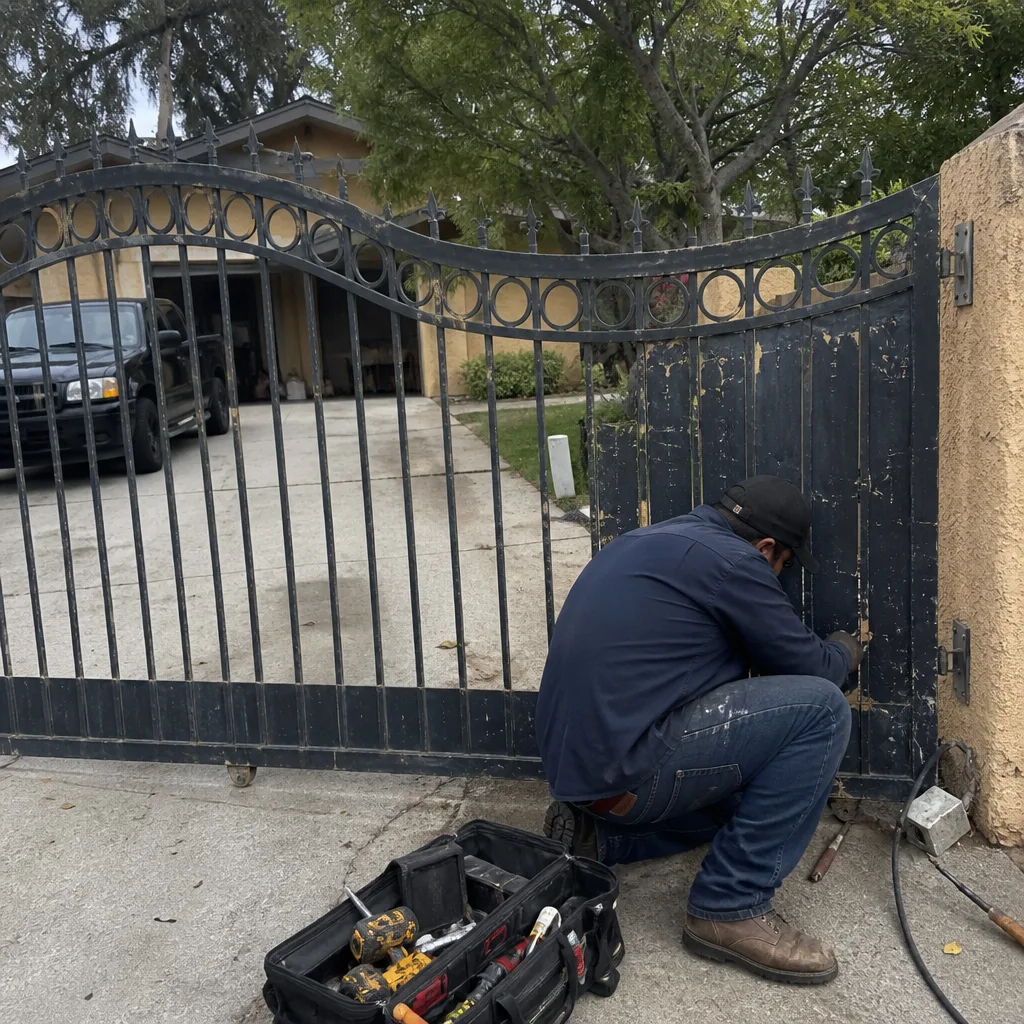 Before
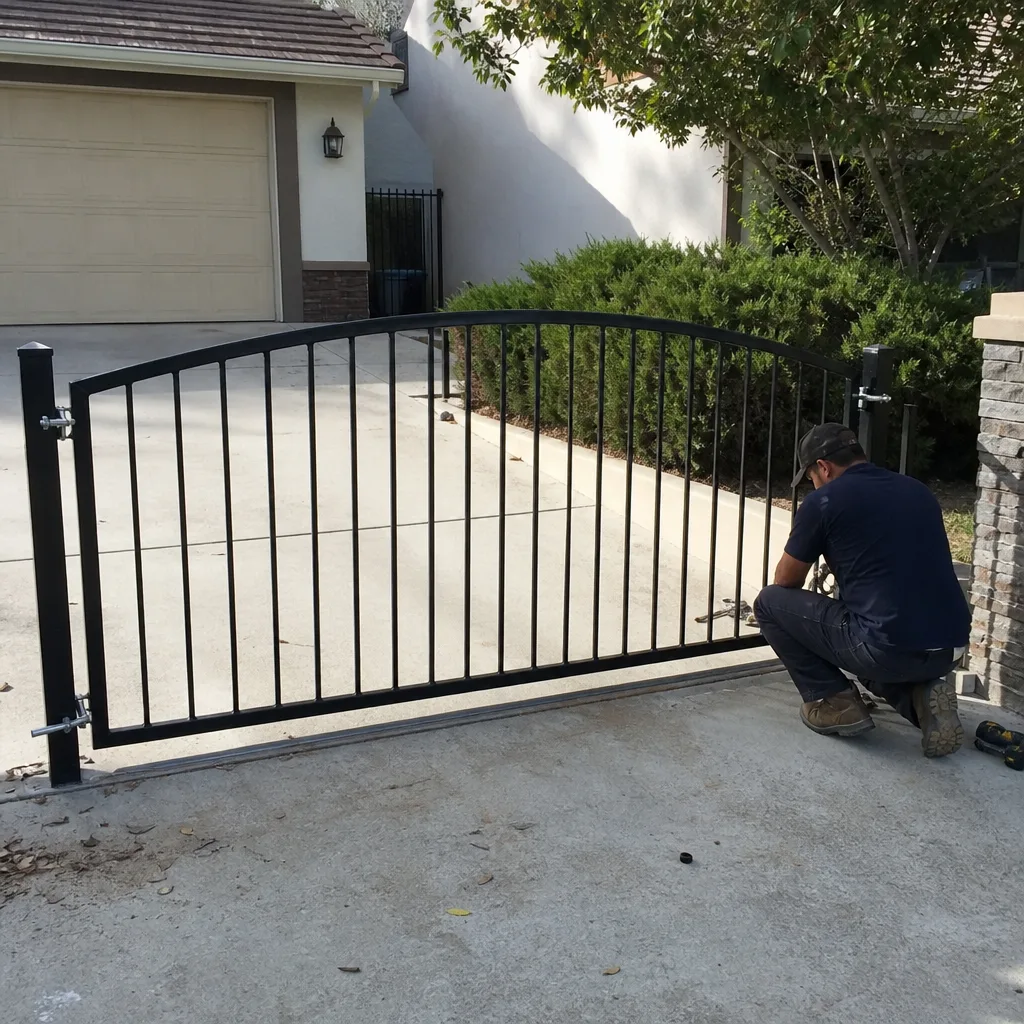 After
AfterLiftMaster Welding & Fabrication: The Santa Clarita Owner’s Guide
If the welded steel bracket, hinge mount, or gate frame section attached to your LiftMaster operator has cracked, torn, or pulled loose, we stock the steel and the know-how to repair or refabricate it correctly. Most LiftMaster-related welding and fabrication work in Santa Clarita runs between $350 and $1,200 installed, depending on whether we’re rebuilding an existing bracket or cutting and welding new plate steel. We carry raw stock, common LiftMaster hinge and bracket patterns, and a mobile welding rig on the truck, so the majority of these repairs are finished in a single visit.
How owners usually find the problem: the gate starts dragging, the operator strains, a hinge tears loose from the post, or the opener’s mounting plate flexes enough that the limit switches fall out of adjustment. By the time the gate fails to open or close, the metal has usually been fatiguing for months. In Santa Clarita’s heat-and-dust cycle, powder coat fails at the weld seams first, then moisture gets in, then the steel lets go. We see it most often on the bracket ears where the LiftMaster arm bolts to the gate leaf, and on the post-side hinge plates that carry the gate’s full weight.
Key takeaways:
- We fabricate and weld LiftMaster mounting brackets, hinge plates, gate frame repairs, and operator pedestals in Santa Clarita.
- Typical installed cost runs $350-$1,200; the written price is set before we strike an arc.
- Most single-bracket and gate-frame repairs are completed same-visit.
- Every weld job includes a photographed record of the work and a 365-Day Done Right Promise.
Which LiftMaster Models This Applies To
LiftMaster operators that drive residential swing gates and slide gates all share a common mechanical thread: something made of steel carries the load between the operator and the gate. On swing gates, that’s the articulated arm bracket bolting the operator’s crank arm to the gate leaf, plus the two or three hinge plates holding the gate to the post. On slide gates, it’s the chain brackets, the receiver plate at the gate’s end, and the anchor studs holding the operator to its concrete pad. We weld and fabricate for LiftMaster LA400, LA412, LA500, SL3000, and SL585 operator lines, along with the older HCT and RSW swing arms still running on plenty of Santa Clarita driveway gates.
The critical identification step is not the operator model alone. We need the bracket’s mounting pattern and the thickness of the gate frame steel it attaches to. LiftMaster ships different bracket plates for tubular steel gates versus solid bar gates, and a bracket meant for a 2-inch round tube will not sit flat on a 2×4 rect tube frame. If your bracket is twisted or torn, we match the replacement to the measurements we take on site, not just to the operator model number. For the fabrication itself, we weld with 6011 or 7018 rod depending on whether the gate is powder-coated or galvanized, and we grind and prep every joint before the pass. That detail matters in Santa Clarita, where summer surface temps on a dark gate can hit 140 degrees and a poorly prepped weld will crystallize within a season.
OEM versus aftermarket: for hinge plates and raw structural steel, we fabricate from stock whenever the gate’s design allows it. A custom-cut hinge plate from 1/4-inch plate steel routinely outlasts the original pressed-steel LiftMaster part. For the operator-side arm brackets, we prefer OEM LiftMaster components because the bolt hole geometry is exact and the zinc plating is matched to the arm’s tolerances. We’re an independent service provider, not affiliated with LiftMaster, so our recommendation is based on what holds up on the gate in front of us, not on a parts-catalog loyalty.
Signs Your LiftMaster Welding & Fabrication Is Failing
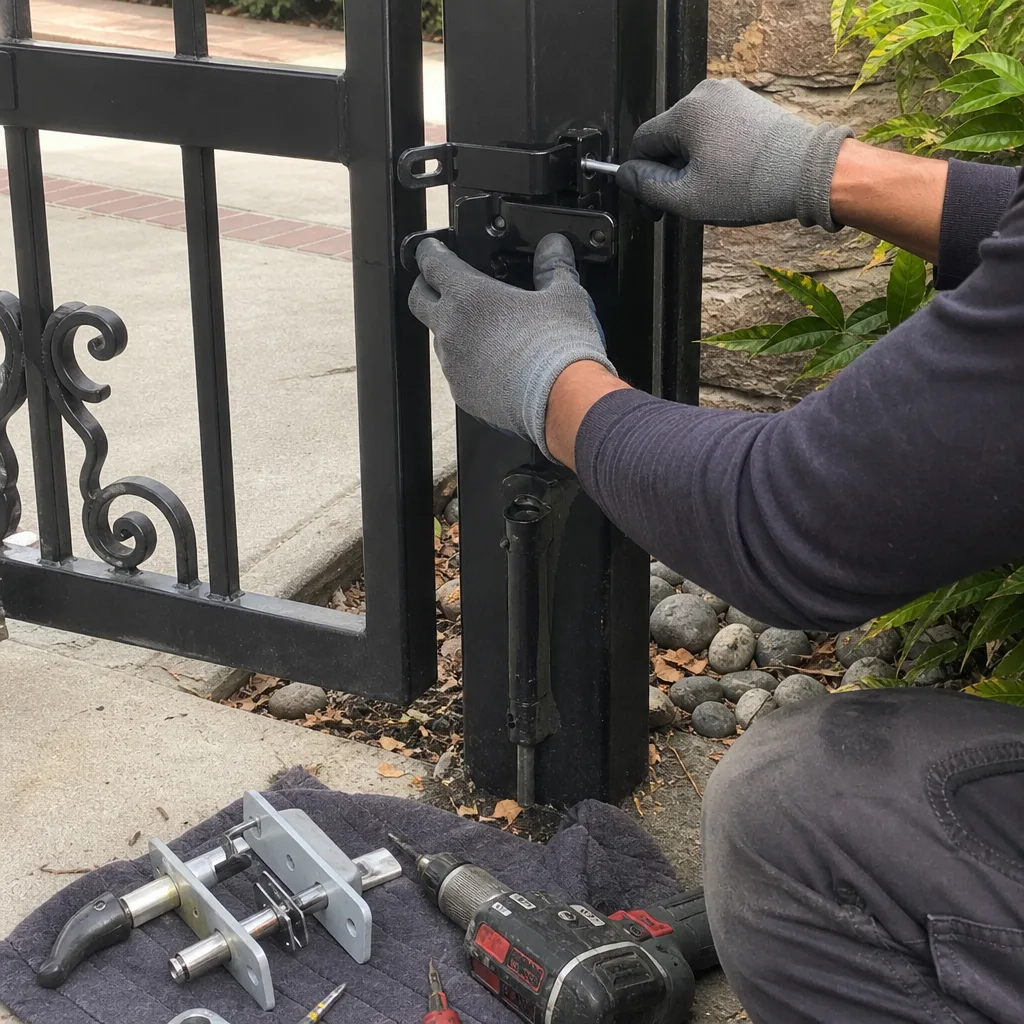
- The gate sags toward the latch side when it’s open. This points to a hinge plate that has either cracked at the weld or elongated its bolt holes. The gate’s weight is now hanging on fewer attachment points than it was built for, and the remaining hinges are taking twice their designed load.
- You can see a visible crack at the base of a hinge or where the operator arm bracket meets the gate frame. Steel fatigue cracks start as hairline lines in the paint, always at the weld’s toe or at a drilled hole. Once you can see it without bending down, the crack has already propagated through most of the part’s thickness.
- The operator arm jerks or stutters mid-travel while the gate itself moves smoothly by hand. The bracket or its pivot bolt is flexing under load, which throws the arm’s geometry off by fractions of an inch. The Limit switches then misread travel position, and the operator starts stopping short or slamming.
- You hear a metallic creak or pop when the gate first starts moving. That’s the sound of a cracked weld or a loose bracket shifting as torque comes on. Steel usually warns us several hundred cycles before it separates completely.
- The gate was hit by a vehicle, even a low-speed bump. Car-to-gate contact almost always bends or fractures the bracket ears or hinge plates, even when the gate looks straight afterward. The visible dent is cosmetic; the crack in the plate is structural.
BeforeAfterReplacement Cost & What’s Included
In Santa Clarita, a simple single hinge plate replacement with weld-in and repaint typically runs $350 to $550. A full operator bracket replacement, including fabricating adapter plates and realigning the arm geometry, lands between $550 and $900. Full gate frame section repairs, where we cut out a rusted or buckled section of tube steel and weld in fresh stock, run $700 to $1,200 depending on how much of the frame is compromised.
The price you get from us is written down before we start. That written quote includes materials, labor, disposal of the failed steel, and a photo log of every weld and measurement we made, left with you when we leave. No surprises at the end. The work is covered by our 365-Day Done Right Promise: if the weld or the bracket fails within a year, we come back and make it right at no additional charge. If another company quoted you for the same repair, bring us that written estimate and we’ll review it at no cost and tell you honestly whether our scope matches theirs.
DIY or Call Us?
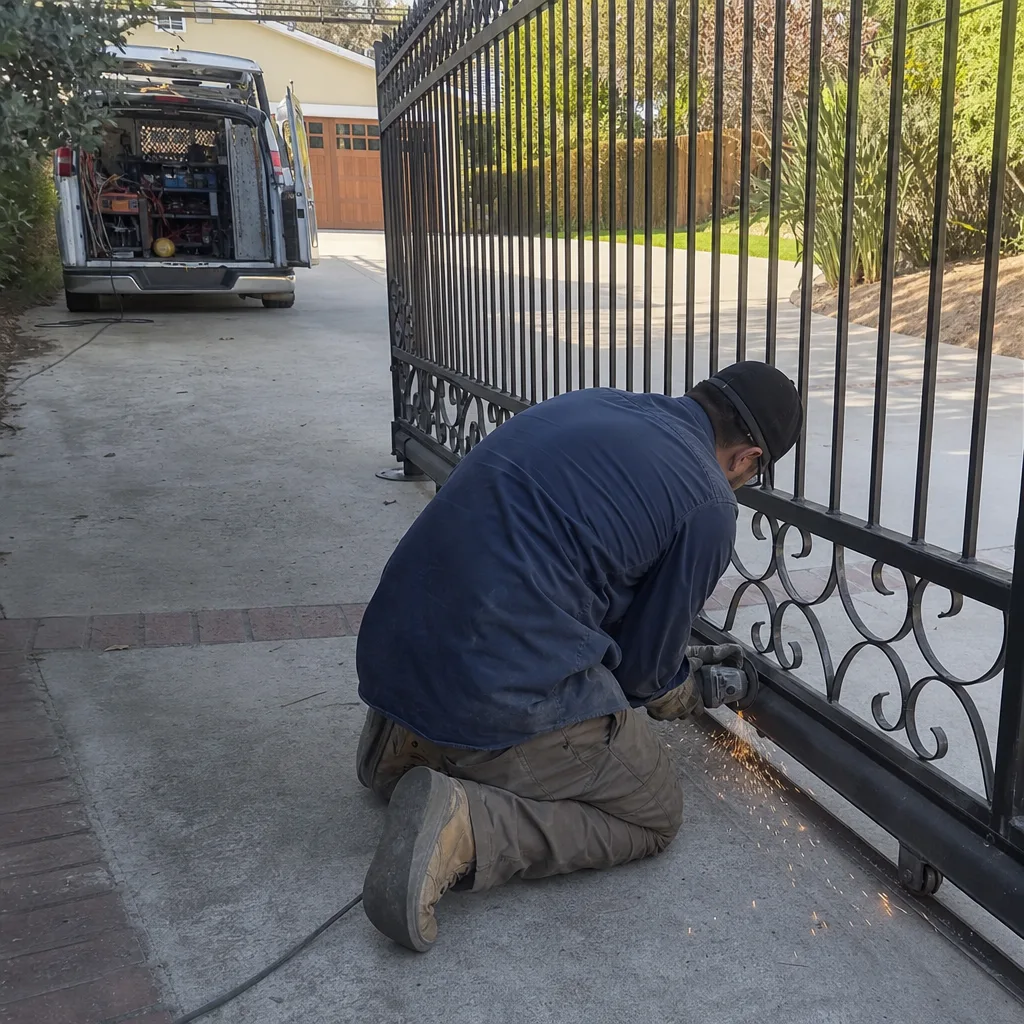
What you can safely check yourself: photograph the bracket and hinge plates, measure the gate leaf’s height and the tube steel’s outer dimensions, and note the LiftMaster model number from the sticker on the operator. That gives us a solid head start when you send photos before we dispatch. What we do not recommend: attempting to weld a gate bracket or hinge plate with a hardware-store flux-core machine if you are not a practiced welder. The gate weighs hundreds of pounds, the operator arm carries significant torque, and a weld that looks solid but lacks penetration will fail catastrophically and without warning, usually while the gate is mid-swing with a vehicle or a child in its path.
The other common DIY failure we see: bolting a cracked bracket instead of welding it. Bolting shifts the load, but the crack keeps propagating under the new hardware. Within months the bracket splits past the bolt holes, and now you have two failure planes instead of one. If you’re at the checking-and-documenting stage, call us at (747) 294-2900 and we’ll talk you through what photos and measurements to send. If you’re past that stage and the gate is down, call anyway. A live person answers.
FAQs
A properly prepped and painted weld on a LiftMaster gate bracket should last 10 to 15 years in Santa Clarita’s climate, which is genuinely harder on steel than the coastal communities because of the heat cycling and the fine dust that works into every seam. The original part typically failed because the factory powder coat was ground off at the weld and never resealed. We strip, weld, prime, and paint every repaired section, then photograph the finished surface so you have a record of what was done and when.
It depends on where the crack is and how far it has run. A crack at a non-load-bearing corner of a hinge plate can often be ground out, rewelded, and reinforced with a gusset. A crack through a bolt hole or across the bracket’s main face means replacement, because the remaining steel no longer has enough cross-section to hold the operator’s torque. We’ll make that call on site, show you the crack with our scope camera, and give you the written price for whichever repair the part actually needs before we touch it.
Most single-bracket and hinge repairs are finished in two to four hours, including grinding, welding, cooling, priming, and painting. Full gate frame section replacements run longer, usually four to six hours, because we have to support the gate’s weight during the repair and realign the operator arm afterward. We bring the steel stock, the welder, the generator, and the paint to your site, so there’s no running back to a shop. You’ll have the finished record before we leave.
We stock common LiftMaster arm bracket patterns, hinge plate blanks in 1/4-inch and 3/8-inch steel, tubular steel stock in the common gate frame sizes, and the hardware to match. We also carry parts for Mighty Mule, Ghost Controls, and DoorKing operators when a mixed-brand property needs multiple repairs on one visit. If the OEM LiftMaster bracket your operator requires is not on the truck, we source it from our parts suppliers the same day and schedule the install as soon as it lands. Call (747) 294-2900 and tell us what you’re seeing; we’ll tell you what we carry.
Written by Adrian Vance, Owner, Vance Gate Repair Santa Clarita at Vance Gate Repair Santa Clarita, serving Santa Clarita and nearby areas.