
Last updated September 20, 2026
Free on-site gate assessment - hinges, posts, and your LiftMaster or Nice gate operator checked before anything is quoted
The assessment is free and the quote is the invoice.


 Before
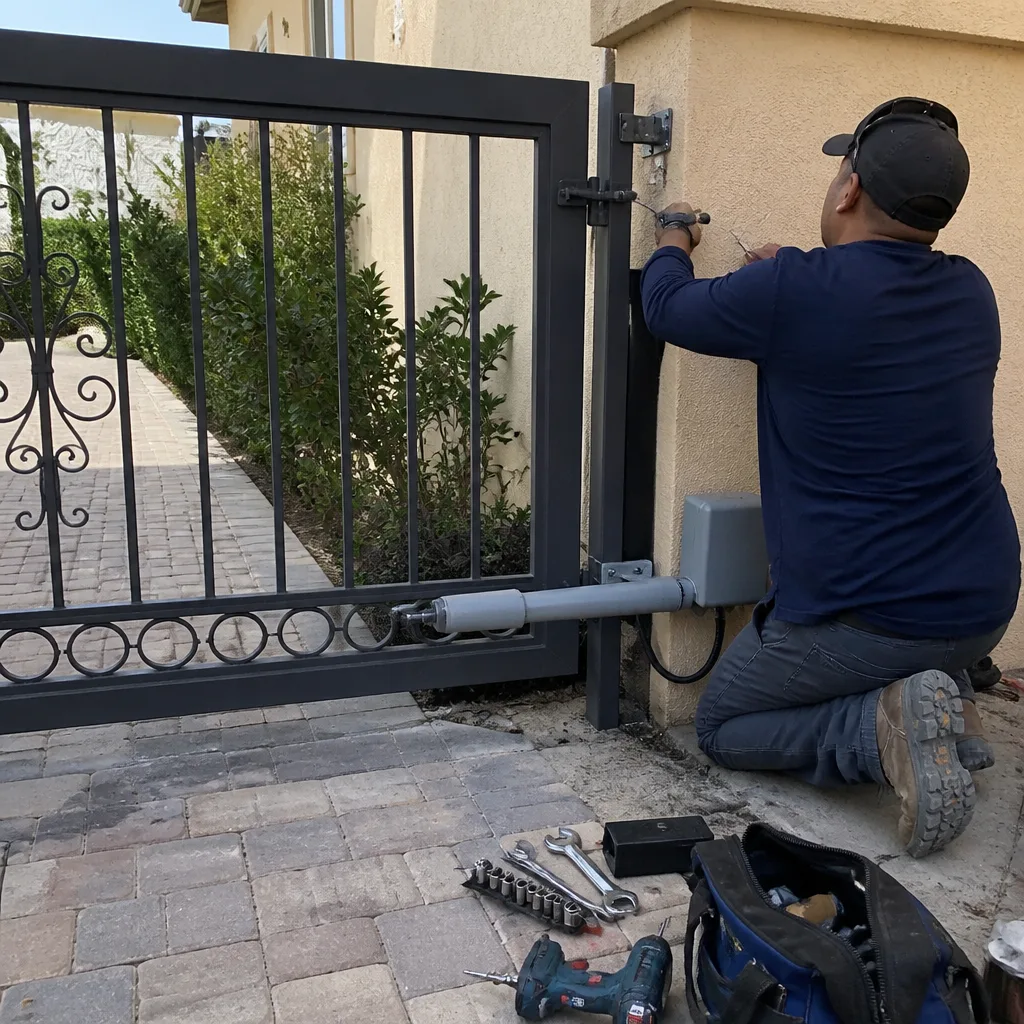 After
After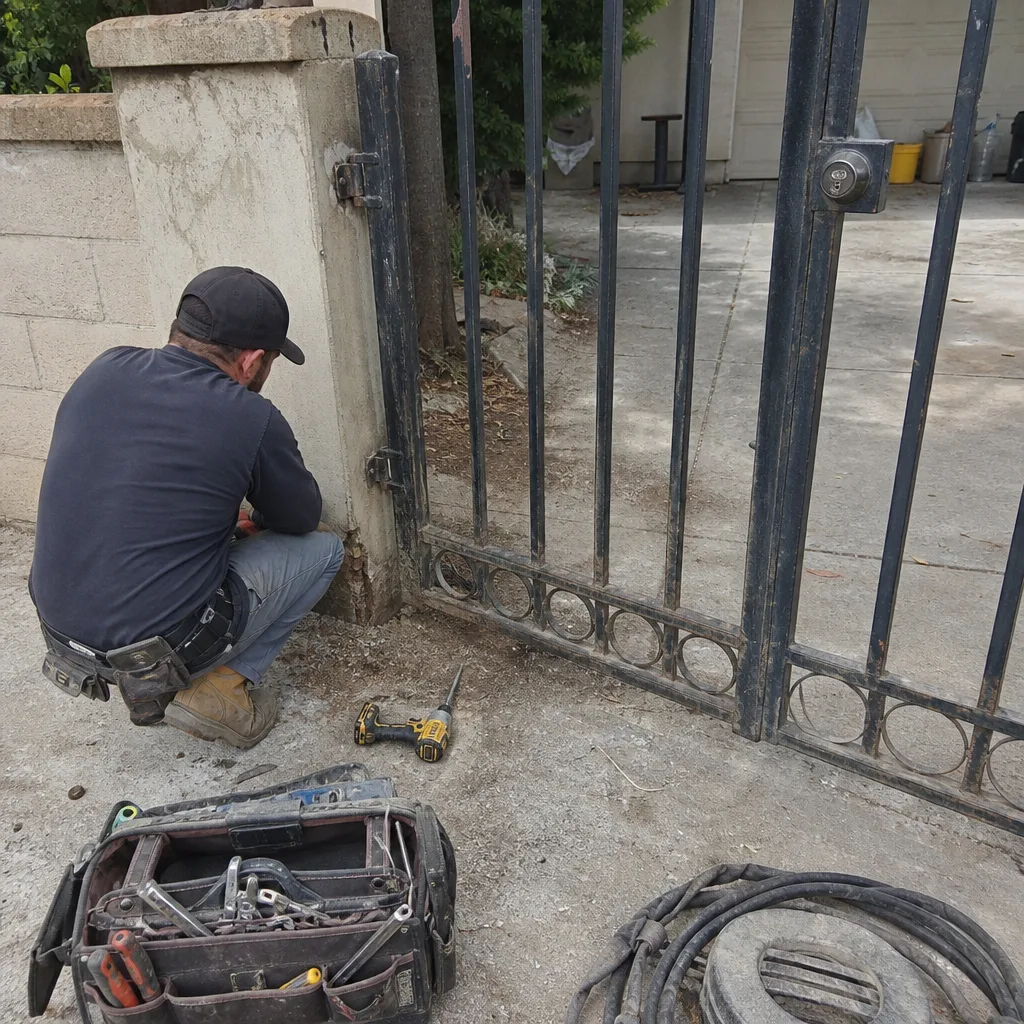 Before
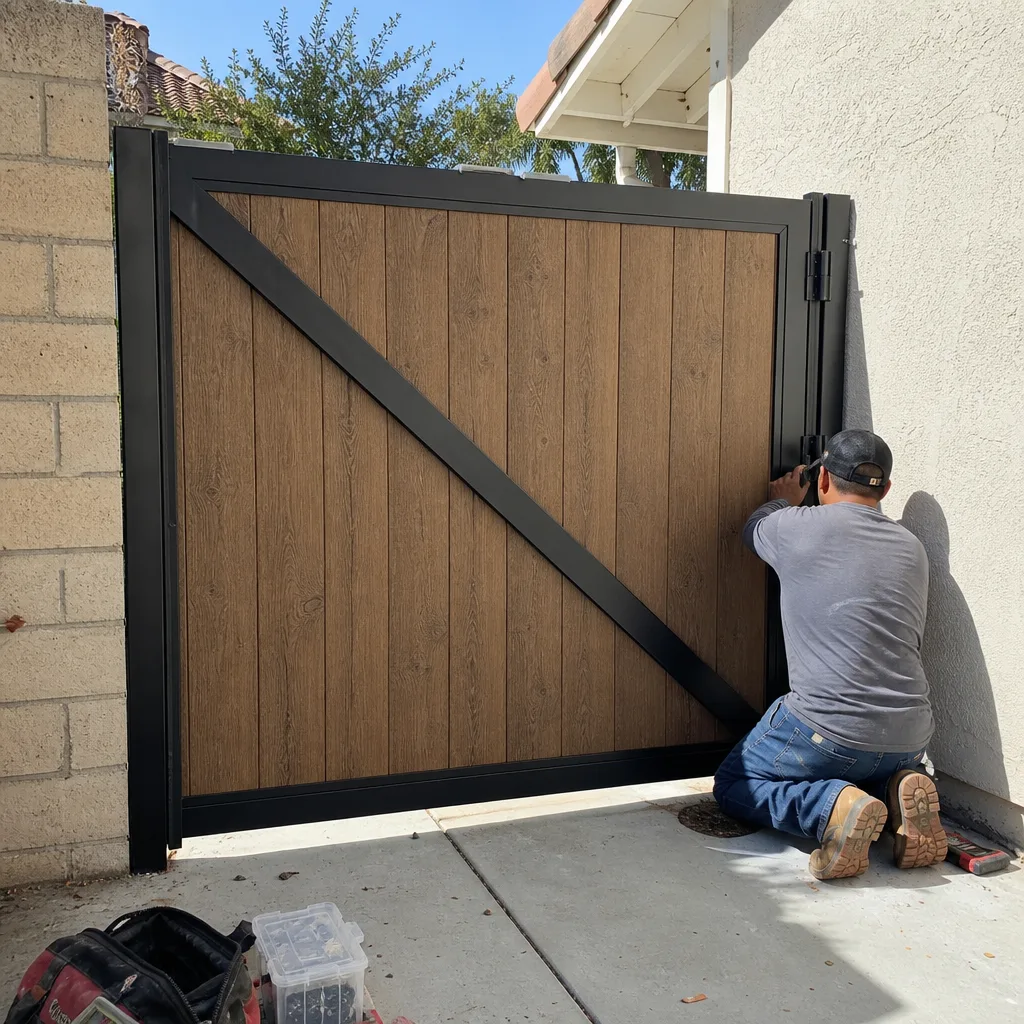 After
After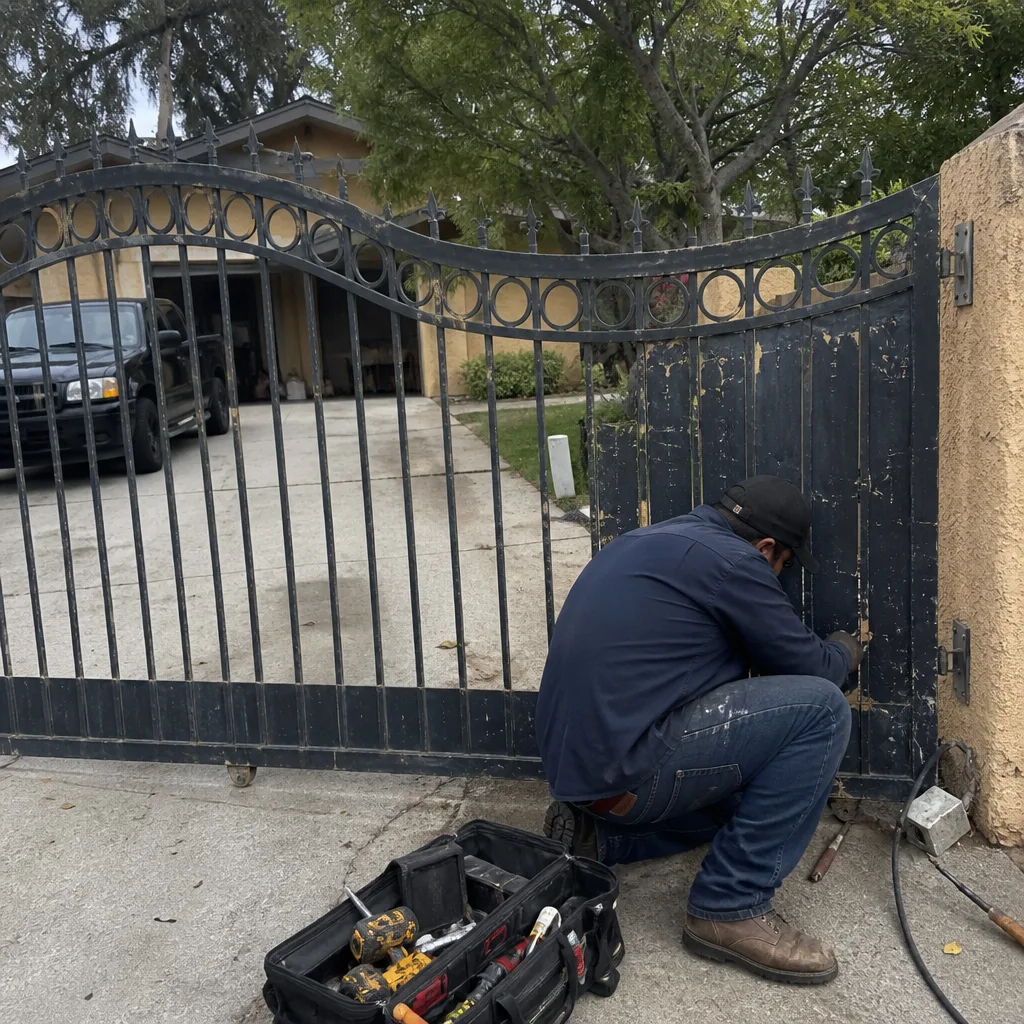 Before
 After
AfterSeasonal Gate Repair Care for Santa Clarita: Year-Round Homeowner’s Guide
A gate maintained on a generic “spring and fall tune-up” schedule in Santa Clarita will miss the two conditions that actually kill gates here: August heat soak and October Santa Ana wind-blown debris. Neither falls conveniently between seasons. This guide-along with our Complete Guide to Gate Repair in Santa Clarita-rebuilds the maintenance calendar around what the Santa Clarita Valley actually does to gate hardware, and what to check before each stress event arrives.
Quick Answer
Seasonal gate care in Santa Clarita works best when you inspect around six climate events rather than four calendar seasons: pre-heat preparation in May, a peak-heat check in August, Santa Ana prep in late September, post-wind inspection in November, rain-season drainage checks in December and January, and a post-freeze look in February. Each event stresses different components: heat kills control boards and rubber drive parts, wind packs debris into photo-eye lenses and gear channels, and rain exposes drainage and grounding problems. A pre-heat inspection each May prevents most August breakdown calls we see.
Table of Contents
- Why Six Climate Events, Not Four Seasons
- Pre-Heat Season: The May Inspection That Prevents August Failures
- Peak Heat: What August Does to Your Gate Operator
- Santa Ana Prep: Late September, Before the Wind Arrives
- Post-Wind Inspection: November, After the Debris Settles
- Rain-Season Drainage Check: December and January
- Post-Freeze Inspection: February
- Seismic Maintenance: After a 4.0+ Earthquake
- The Photo Log Protocol: Your Best Handoff to Any Technician
- Common Mistakes to Avoid
- When to Call a Professional
- Frequently Asked Questions
BeforeAfterWhy Six Climate Events, Not Four Seasons
The Santa Clarita Valley does not have four seasons that line up with the maintenance calendar most gate guides assume. We have a long hot stretch from June through September, a wind season that spikes in October and November, a rain season that arrives in bursts, and a brief freeze window in January or February. Each of these climate events stresses different components of your gate system, and the fix for each is different.
A calendar-based schedule assumes that a spring inspection and a fall inspection will catch everything. Here is what that approach misses in Santa Clarita. A spring inspection in March happens before the heat arrives, so any heat-related vulnerability is invisible. A fall inspection in September may happen before or after the first Santa Ana wind event; if it happens before, the wind damage is unseen; if after, the debris is already packed into the photo eyes and gear channels. The practical calendar for Santa Clarita gates looks like this:
- May: Pre-heat inspection, before sustained 100°F days begin.
- August: Peak-heat check, during the hottest stretch.
- Late September: Santa Ana prep, before the wind season peaks.
- November: Post-wind inspection, after the first serious Santa Ana events.
- December and January: Rain-season drainage checks.
- February: Post-freeze inspection, after the coldest nights.
Our Gate Repair services have covered more than 22,000 gates since 2014, and the breakdown patterns in Santa Clarita follow these six events more closely than any spring/fall calendar. If you maintain on this schedule, you will rarely be surprised. If you maintain on a generic schedule, August is the month that will find you.
Pre-Heat Season: The May Inspection That Prevents August Failures
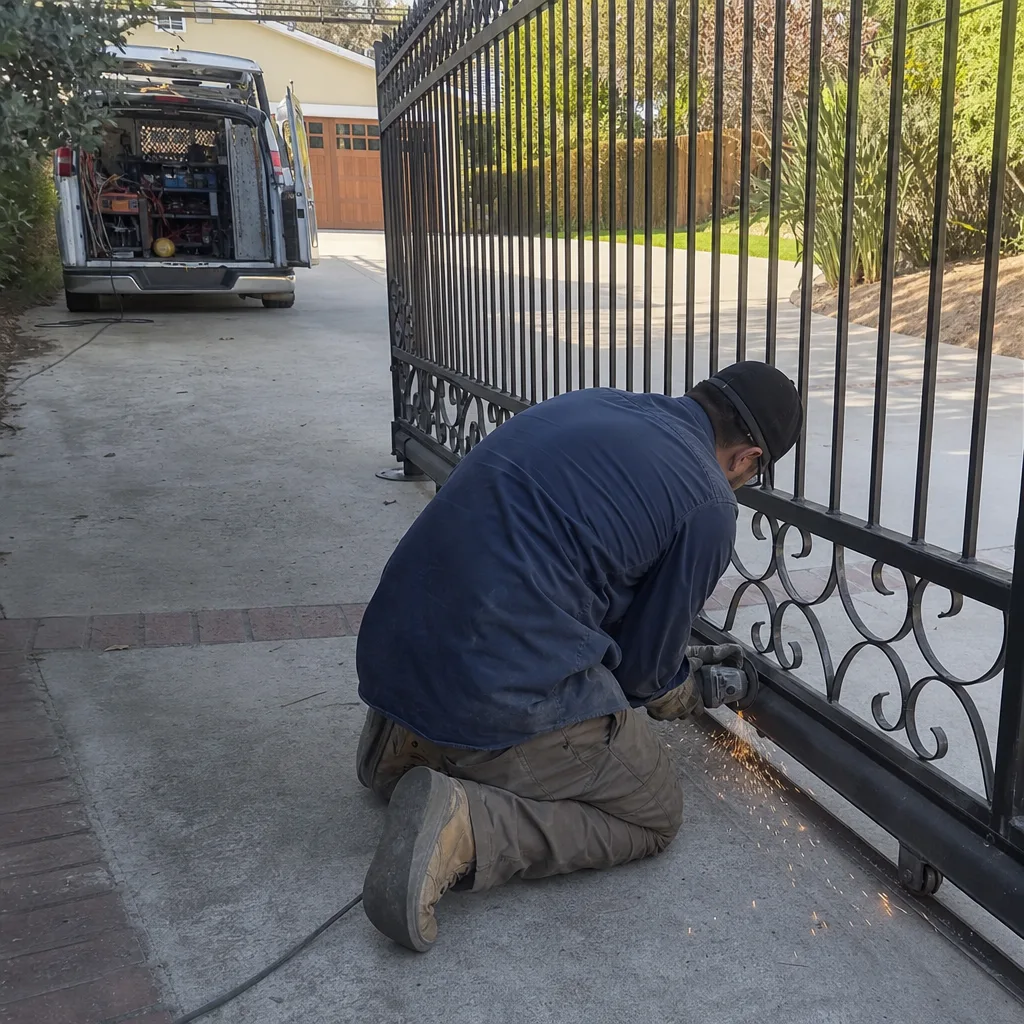
The single most common August failure call we receive in Santa Clarita is a gate operator that worked fine in the morning and stopped responding by mid-afternoon. The cause is usually heat soak: the control board inside the operator housing reaches a temperature that pushes a marginal electronic component past its operating threshold. The component cools down overnight, the gate works again in the morning, and the homeowner assumes the problem was transient. Then the next heat wave arrives and the same failure recurs.
The pre-heat inspection in May is designed to catch the conditions that turn into August failures. Here is the step-by-step protocol we recommend:
- Open the operator housing and look at the control board. You are checking for visible signs of heat stress: discoloration around the transformer, bulging capacitors, a fine layer of dust that acts as insulation and traps heat. Blow out the dust with compressed air, or have a technician do it.
- Inspect the rubber drive components. The drive belt or rubber coupling on many gate motors degrades faster in sustained heat. Look for cracks, glazing, or thinning. If the belt shows wear in May, replace it before the August heat cycle stresses it further.
- Check the gate’s physical travel path. Heat expands metal, and a gate that swings freely in May may bind slightly when the temperature crosses 100°F and the steel expands. Run the gate through a full cycle and listen for hesitation or labor.
- Inspect the battery backup if your operator has one. Batteries fail faster in heat. A battery that reads 12 volts in May may drop to 8 volts in August. If the battery is more than three years old and located in an unshaded operator box, consider replacing it preemptively.
- Verify the limit switches stop the gate at the correct points, not a few degrees past travel. A limit switch that over-travels by even 10 or 12 degrees adds strain to the motor and the gear assembly, and that strain compounds in the heat.
This is the one pre-summer check that prevents the most common August failure call we receive in Santa Clarita. The May inspection is not expensive; the August control-board replacement after a heat-soak failure usually is. We write the price before any work starts, so you know exactly what the May visit costs before the technician picks up a tool.
Peak Heat: What August Does to Your Gate Operator
Santa Clarita regularly sees stretches of 100°F or higher in August, and those temperatures do two distinct things to gate systems. First, the control board inside the operator housing heats up. Most residential gate operators are rated for an ambient operating temperature that assumes the board itself stays below about 140°F. On a direct-sun afternoon with an unshaded operator box, the internal temperature can exceed that threshold. The board does not fail permanently the first time; it fails intermittently, which is harder to diagnose and easier to mistake for a switch problem or a remote problem.
Second, rubber drive components lose elasticity in sustained heat and become more vulnerable to cracking under load. This is especially true for gate operators with rubber drive belts or rubber coupling sleeves between the motor and the gearbox. The rubber absorbs heat from the surrounding air and from the friction of the motor itself, and after enough heat cycles, the material hardens and cracks.
The August peak-heat check is a short one, but it matters:
- Run the gate through a full open-close cycle at the hottest part of the day, not in the morning. The afternoon is when heat-related failures appear.
- Listen for change in motor pitch. A motor that struggles under heat-swelled steel sounds different from one running smoothly. The change is subtle, but noticeable if you listen.
- Feel the operator housing. If it is too hot to hold your hand on for more than a couple of seconds, the control board inside is likely running near its temperature limit. A shade cover over the operator, or relocating the board into a ventilated enclosure, can extend its life significantly.
- Check that the photo-eye lenses are clean. Heat haze and dust kicked up during summer months coat the lenses, and a dirty photo eye can cause the gate to reverse unexpectedly or fail to close at all.
If the gate misbehaves in August, the eight most common causes we see in Santa Clarita are, in rough order: heat-stressed control board, degraded rubber drive belt, misaligned photo eyes from dust and heat expansion, worn limit switch, failing battery backup, debris in the gear channel, binding from heat-expanded steel, and remote control frequency drift from heat. Most of these are repairable. We service LiftMaster, DoorKing, FAAC, BFT, Linear, Viking, Ghost Controls, Elite, and Mighty Mule, so whatever motor is on the property, Gate Motor & Opener in Santa Clarita is a repair conversation, not a replacement conversation.
Santa Ana Prep: Late September, Before the Wind Arrives
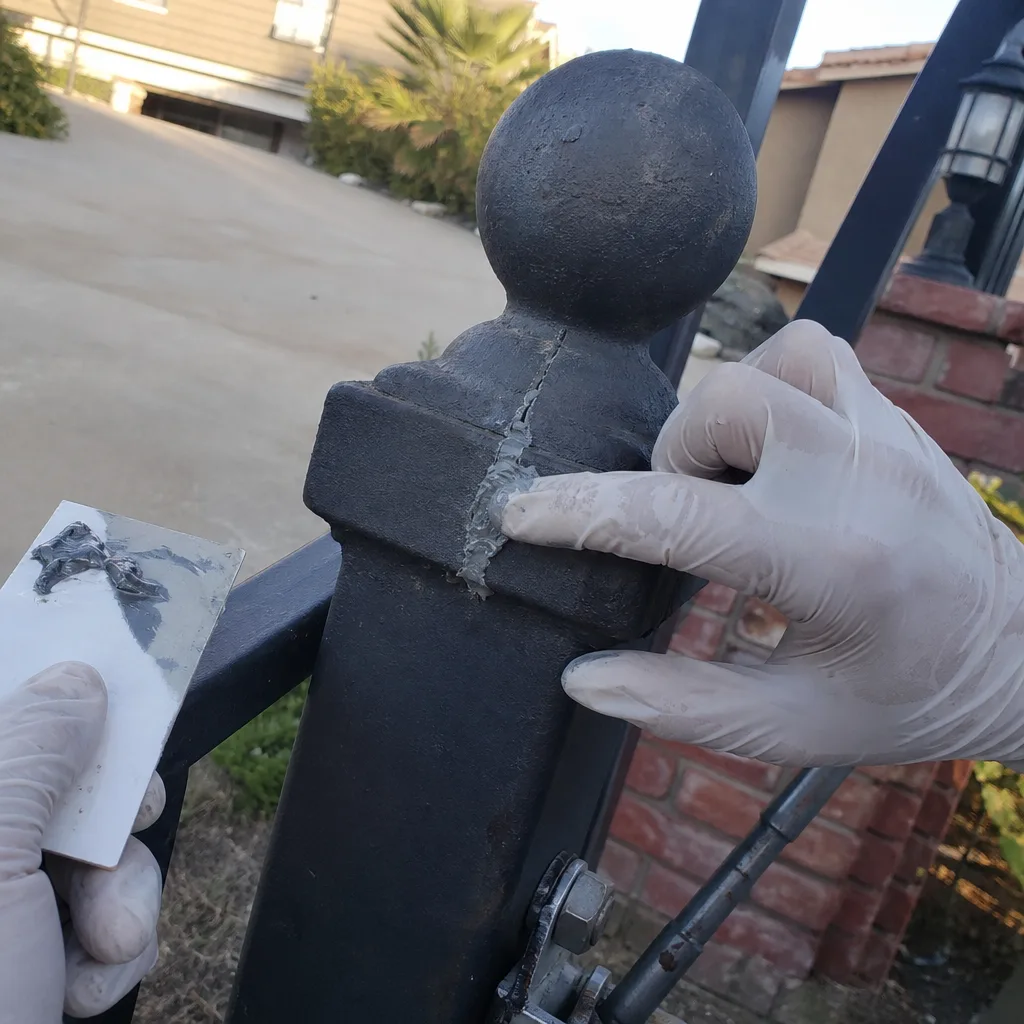
Santa Ana wind events in the Santa Clarita Valley carry a specific debris profile: fine dust, sand, dried vegetation, and small fragments of whatever was loose in the surrounding area. This debris does not spread evenly. It concentrates at the points where wind channels through the property, and it settles into the parts of the gate system that have small gaps, lenses, and channels.
The components affected first are, in order:
- Photo-eye lenses. The infrared beam that stops the gate if something crosses the path. When dust coats the lens, the gate may refuse to close because the beam is scattered. The fix is a clean lens and a verified alignment, and it takes about five minutes.
- Limit switch contacts. Dust and sand work their way into the switch housing and foul the electrical contacts. A limit switch with dirty contacts sends erratic signals, and the gate stops at the wrong point.
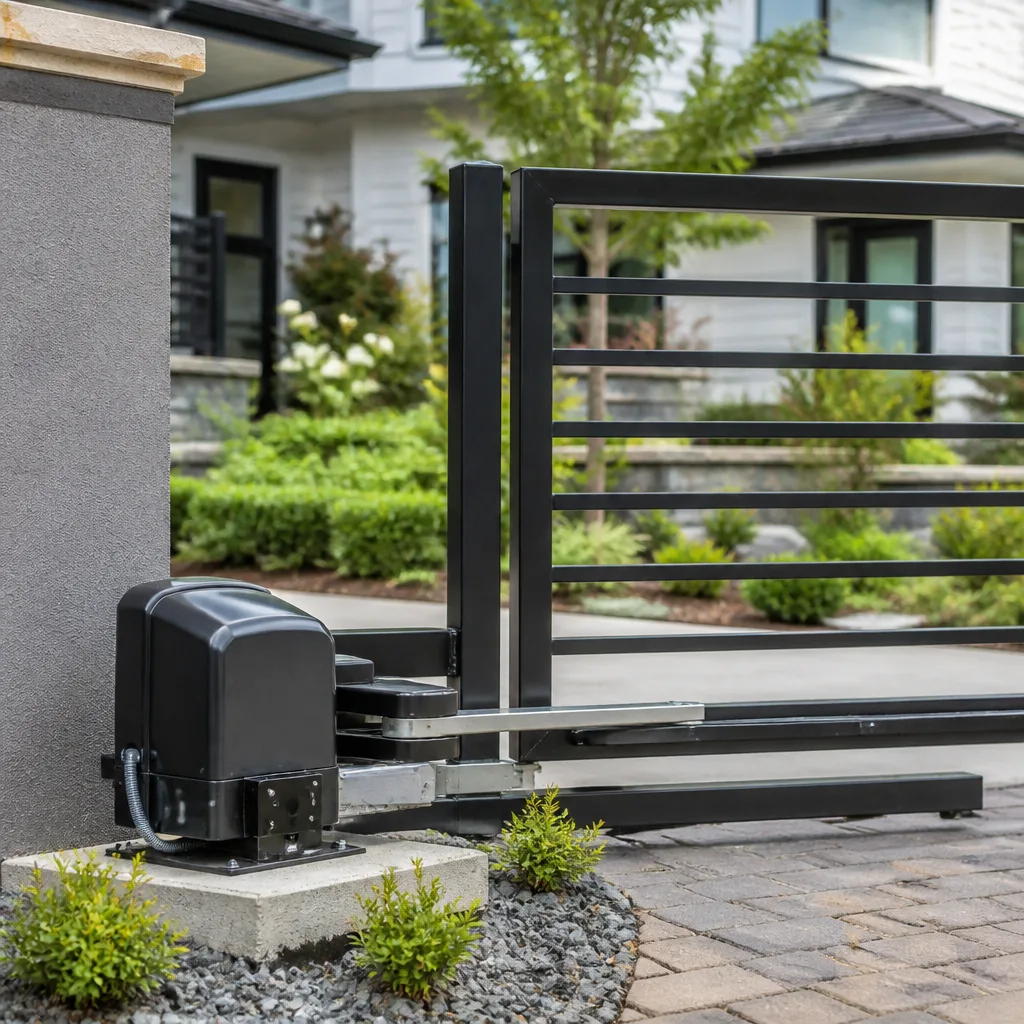
- Rack gear channels. On sliding gates, the rack gear that runs along the gate track collects wind-blown debris in the teeth. Enough packed debris and the gear starts to skip, which sounds like a grinding noise and wears the gear teeth prematurely.
- Hinge and wheel bearings. Wind-driven dust acts as a fine abrasive. Bearings that are not sealed or lubricated will grind themselves down over the course of a single wind season.
The late-September prep is simple: clean what you can reach, and check what will suffer most. The photo-eye lenses are the top priority because a dirty lens will stop the gate from closing entirely, which leaves the property unsecured during the wind event itself. If you have a slide gate, run your hand along the rack gear channel and remove any packed material with a stiff brush. Check the receiver antenna on the gate operator; wind can bend it slightly, and a bent antenna reduces remote range enough that you find yourself sitting in the driveway pressing the button repeatedly.
This is also the time to check the gate’s physical latching mechanism, if it has one. A wind event will repeatedly slam an unlatched swing gate against the end stop. The repair is usually a new latch or an adjusted end stop, but the damage is preventable in late September.
Post-Wind Inspection: November, After the Debris Settles
Once the first serious Santa Ana events have passed, usually by November, the gate needs a post-wind inspection focused on damage rather than prevention. What was packed into photo eyes and gear channels is now revealed, and any structural movement from wind pressure is visible.
The post-wind checklist:
- Re-clean the photo-eye lenses. Even if you cleaned them in September, the wind event itself will have re-coated them. A visibly dirty lens is a future gate failure waiting to happen.
- Run the gate manually and count the seconds. If it takes noticeably longer to open or close than it did before the wind season, something has changed: a bearing is grinding, a hinge is damaged, or the gate frame has flexed.
- Check the gate’s rest position. A swing gate that no longer closes fully against the end stop may have shifted on its hinges under wind load. A slide gate that no longer sits parallel to the track may have a damaged wheel or a bent guide.
- Inspect the rack gear on slide gates. Wind-blown sand is abrasive. If the gear teeth look polished or worn in a specific spot, the gear is beginning to degrade and will eventually skip.
- Test the safety reversal. The photo-eye system and the physical resistance sensor should both stop a closing gate immediately when tested. Wind events sometimes knock photo eyes out of alignment even when the lenses are clean.
- Check the operator’s mounting height and drainage path. If the operator sits low and water pools around it, the control board and transformer are at risk. The fix is usually a raised mounting bracket or a drainage channel cut to divert water around the operator.
- Inspect the conduit and wiring entry points. Water that enters the conduit can follow the wiring down into the operator housing. Look for gaps, cracked seals, or conduit that has shifted out of position.
- Test the ground fault circuit. Any moisture in the system will trip a GFCI outlet upstream. If the gate operator is on a GFCI circuit, test it after the first real rain. A gate that trips its breaker every time it rains has a grounding issue, not a motor issue.
- Look at the concrete pad or mounting plate. Saturated soil that expands and contracts can shift a poorly-bedded gate post or operator mount. A gate that was aligned in October may be out of alignment by January, and the difference is often only an inch or two of post movement.
- Check the gate’s physical alignment. Cold contracts metal just as heat expands it. A gate that was aligned in October may have shifted slightly during the cold cycle, and the fix is usually a limit-switch adjustment, not a structural repair.
- Inspect for condensation inside the operator housing. A cold night followed by a warm day creates condensation inside an enclosed housing with poor ventilation. Moisture on the control board corrodes solder joints over time. If you see condensation, the fix is better ventilation, not a new board (unless the corrosion has already progressed).
- Test the battery backup under load. Cold reduces battery capacity. If the backup battery was marginal in summer, it will be worse now. A battery that fails a load test in February will not survive the first August heat wave.
- Check the gate’s movement after rain and cold together. Wet soil that then freezes expands with surprising force. A post that has lifted even a quarter inch changes the gate’s swing path, and the operator works harder to compensate.
- Run the gate through a full cycle and watch for hesitation or labor. An earthquake-shifted gate may bind at a specific point in its travel, which is the operator working against a misaligned post.
- Check the gate’s clearance at the hinge and latch points. A shift of even a quarter inch at the post translates to a much larger movement at the gate’s free end. If the latch no longer lines up, the post has moved.
- Inspect the concrete footing around the gate post for hairline cracks. Fresh cracks in the concrete, or a visible gap between the post and the footing, indicate movement that should be assessed by a professional.
- Test the safety sensors. Earthquake movement can knock photo eyes out of alignment even if the gate itself appears unchanged.
- Check the operator’s mounting bolts for tightness. Ground movement works bolts loose, and a loose operator vibrates and wears its own components faster.
- At each of the six annual checks: photograph the control board, the photo-eye lenses, the rack gear channel if you have a slide gate, the hinge or wheel condition, and the operator housing.
- When the gate misbehaves: take a short video of the gate in the act of failing. A ten-second clip of the gate reversing unexpectedly or stalling mid-travel is worth more than a verbal description.
- After each weather event: photograph anything that looks different from the previous photo. The value is in the comparison, not the individual photo.
- Keep the photos in one place (a phone album or a folder) and label them by date and event, not by content. “Nov 14 post-wind” is more useful than “IMG_2047.”
- Following a spring/fall maintenance schedule. A March inspection misses heat vulnerabilities, and a September inspection misses Santa Ana debris. Adjust to the six-event calendar instead.
- Ignoring intermittent gate failures. A gate that fails on a hot August afternoon and works the next morning has a real problem; it is called heat soak, and it will recur. Document it and have it checked.
- Skipping the photo-eye lens cleaning. A dirty lens causes the gate to refuse to close, which leaves the property unsecured during exactly the weather event that makes the lens dirty in the first place. This is the single simplest preventable failure we see in Santa Clarita.
- Assuming an earthquake was too small to matter. A 4.0 within 30 miles can move a gate post by enough to change the gate’s travel path. The post-shift check takes ten minutes.
- Testing the gate only in the morning. Heat-related failures appear in the afternoon. An afternoon test during a warm week tells you more than a morning test any week of the year.
- Replacing a gate operator because the old one is “old.” Old is not a failure mode. Most failing operators have a specific, diagnosable issue, and we service nine brands: LiftMaster, DoorKing, FAAC, BFT, Linear, Viking, Ghost Controls, Elite, and Mighty Mule. A repair conversation, not a replacement conversation, is usually the right place to start.
- Not knowing the gate’s model and brand before calling a technician. The brand plate is usually on the operator housing or inside the cover. A photo of it saves the technician a diagnostic step, and it means the written price reflects the actual motor, not a guess.
If anything in this inspection looks off, document it with a photo and a note. That brings us to one thing we recommend every Santa Clarita homeowner do: maintain a photo log across the year. The next section covers why.
Rain-Season Drainage Check: December and January
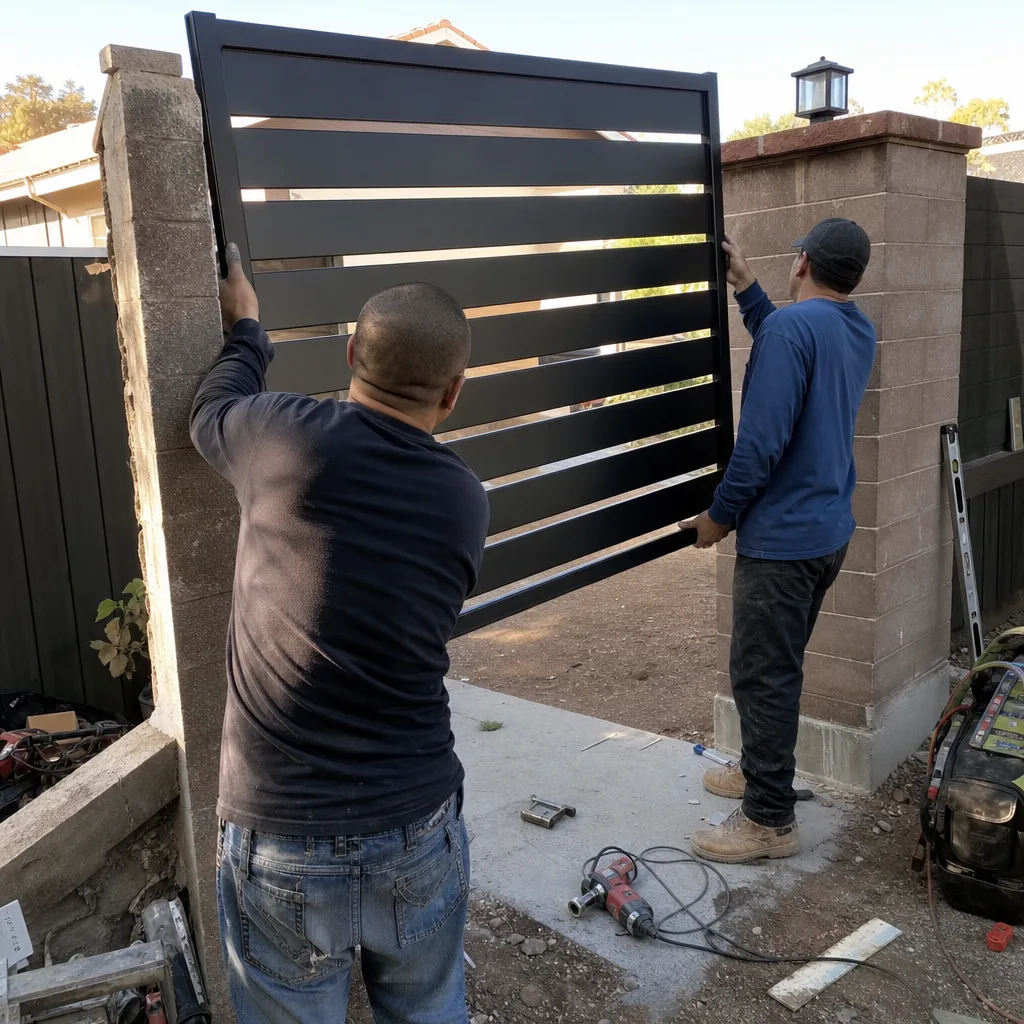
Santa Clarita rain arrives in bursts, not in days-long soaks, which means the drainage around your gate system matters more than the rain itself. A gate operator mounted at ground level, or a slide-gate track that sits in a low spot, will see water pooling around it during any significant downpour.
The December and January checklist is less about the gate itself and more about what surrounds it:
Rain is also the season when we see a rise in lightning-damaged control boards in the Santa Clarita area. A surge protector on the gate operator circuit is a small investment compared to a board replacement, and if your property is on higher ground in a storm-prone area, it is worth the cost.
Post-Freeze Inspection: February
Santa Clarita does not freeze hard, but the valley sees a handful of nights below 32°F most winters, usually in January or early February. The post-freeze inspection is short: look for what the cold cycle exposed, and confirm nothing has shifted.
February is also a sensible time to schedule the annual pre-season inspection if you skipped it in May, or to review the photo log from the past year and decide-using our DIY vs Professional Gate Repair guide-whether anything needs professional attention before the heat cycle begins again.
Seismic Maintenance: After a 4.0+ Earthquake
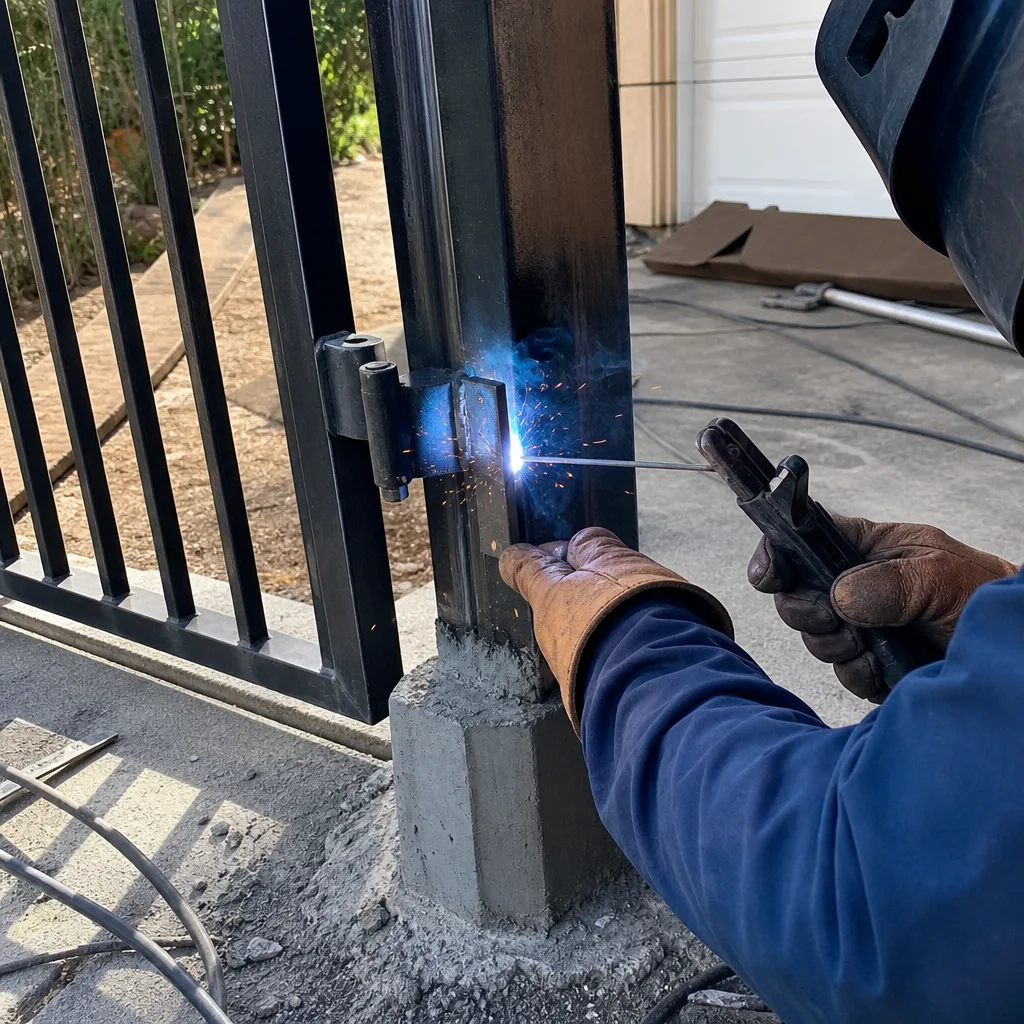
Santa Clarita sits near active fault lines, and small earthquakes are a periodic reality. Most gate maintenance guides skip seismic inspection entirely, which leaves a real gap. A magnitude 4.0+ earthquake within 30 miles can shift gate posts and concrete footings by a fraction of an inch, and that fraction matters to a gate that must travel a precise path.
Here is the post-earthquake inspection protocol we recommend:
If the gate post has shifted measurably after an earthquake, the repair is typically a re-set and re-anchor, not a full replacement. We have handled enough of these in Santa Clarita to know that a post inspection takes ten minutes, and catching a shifted post early prevents a cascade of operator damage later. Our Gate Repair in Santa Clarita service includes a written price before any work starts, so you know exactly what a re-set will cost before you commit to it.
The Photo Log Protocol: Your Best Handoff to Any Technician
The single most useful thing a homeowner can hand to any future gate technician is a photo log of what the gate looked like and how it behaved at each point in the year. This matters because most gate failures are intermittent: the gate misbehaves, then behaves, then misbehaves again. A technician who arrives on a good day sees a gate that works fine and has no way to know what was wrong on the bad day. A homeowner with a photo log shows the technician exactly what was seen.
Here is the protocol, tied to the six climate events:
This is the same protocol we follow on every professional visit. Under the Haven Standard, every job includes a documented photo record of what was found, what was adjusted, and what was replaced, left with the homeowner and filed in the job record. When you hand a future technician a year of before-and-after photos, you save yourself the cost of rediscovering a problem that was already diagnosed. And if you ever bring us a written estimate from another company, we will review it at no cost to you.
Common Mistakes to Avoid
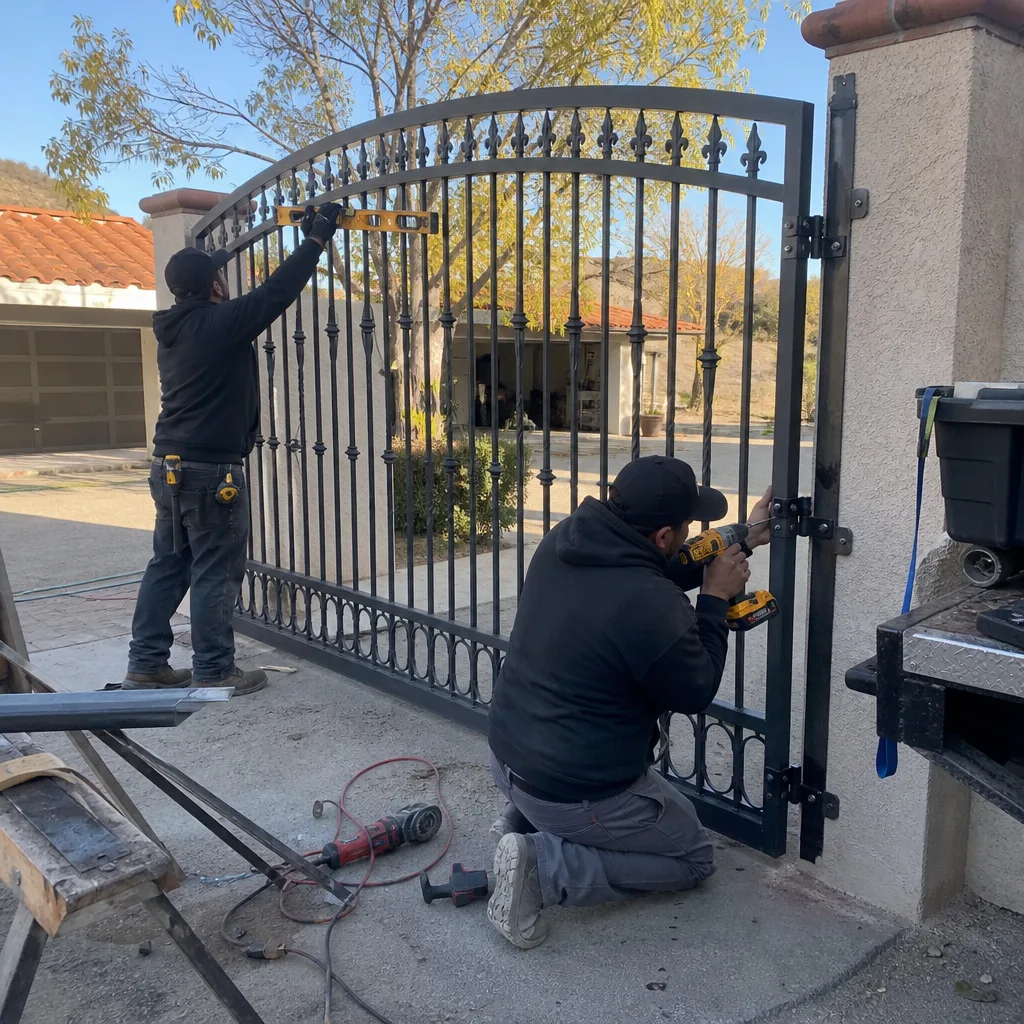
When to Call a Professional
Some gate issues are safe to identify, but not safe to fix yourself. High-tension springs on a gate are not as dangerous as garage-door springs, but they are still under load, and a spring let go incorrectly can throw hardware. The same caution applies to any repair that involves moving a heavy gate off its hinges, resetting a concrete footing, or working inside an operator’s electrical enclosure. If the gate is misbehaving intermittently, if a post has shifted after an earthquake, or if the control board shows visible heat damage or corrosion, get a trained eye on it.
Vance Gate Repair Santa Clarita home offers free estimates in Santa Clarita, and the price is written before any work starts. Call (747) 294-2900 and a live person answers, any hour. If you are considering a Gate Installation in Santa Clarita, we will give you a written scope, a written price, and a documented record when the job is done.
Frequently Asked Questions
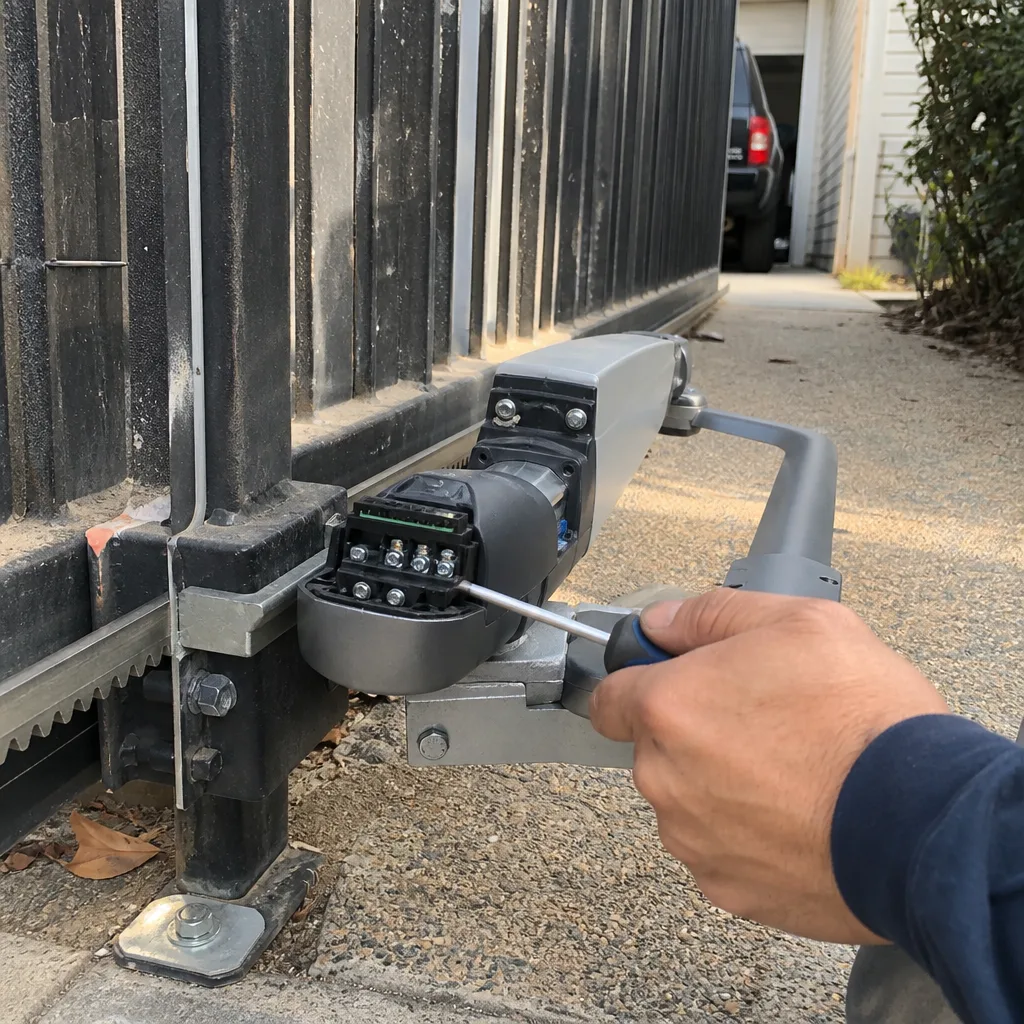
Twice a year at minimum, timed to the Santa Clarita climate rather than the calendar: once in May before the heat arrives, and once in late September before the Santa Ana wind season peaks. If your gate is exposed to direct sun or wind, add the August peak-heat check and the November post-wind inspection. Call (747) 294-2900 for an exact service schedule tailored to your property, and we will write the price before any work starts.
Sustained 100°F+ temperatures push the control board inside the operator housing past its stable operating range, which causes intermittent failures, and they harden rubber drive components over repeated cycles. The result is the classic Santa Clarita August pattern: gate works in the morning, fails in the afternoon, works again the next morning. The fix is usually a board replacement or a belt replacement, and the May pre-heat inspection is what prevents it.
Yes, and the damage is concentrated in three places: photo-eye lenses get coated with dust and the gate refuses to close, limit-switch contacts get fouled and the gate stops at the wrong point, and rack gear channels on slide gates pack with debris that wears the gear teeth. A late-September prep inspection addresses all three before the wind arrives.
Check the gate’s travel path for hesitation, the latch alignment, the concrete footing around the post for fresh cracks, and the operator mounting bolts for looseness. If the post has moved measurably, the repair is usually a re-set and re-anchor. Our Gate Repair in Santa Clarita service includes a written price before any work starts, so you will know the cost of the re-set before you commit to it.
We service nine major gate-automation brands, including LiftMaster, DoorKing, Elite, Mighty Mule, FAAC, BFT, Linear, Viking, and Ghost Controls. The brand on your existing motor does not need to steer you toward replacement; most failing operators have a specific, repairable issue.
Take a short video of the gate failing, photograph the operator’s brand plate, and note the date, weather, and time of day. A ten-second clip of the exact failure is the single most useful piece of information you can hand a technician. We leave a documented photo record on every visit, and your own photo log makes that record more valuable.
The Bottom Line
Santa Clarita gates fail on the valley’s schedule, not on a spring/fall calendar. The six events to plan around are pre-heat in May, peak heat in August, Santa Ana prep in late September, post-wind in November, rain drainage in December and January, and post-freeze in February. Heat kills control boards and rubber drives. Wind kills photo eyes, limit switches, and rack gears. Rain exposes drainage and grounding problems. Earthquakes shift posts. Maintain on this schedule, document each check with a photo, and when something looks wrong, call before the broken part drags the rest of the system with it. For additional help, see our more guides & resources. Vance Gate Repair Santa Clarita writes the price before any work starts and leaves a documented record when the job is done.
Written by Adrian Vance, Owner at Vance Gate Repair Santa Clarita, serving Santa Clarita since 2014.